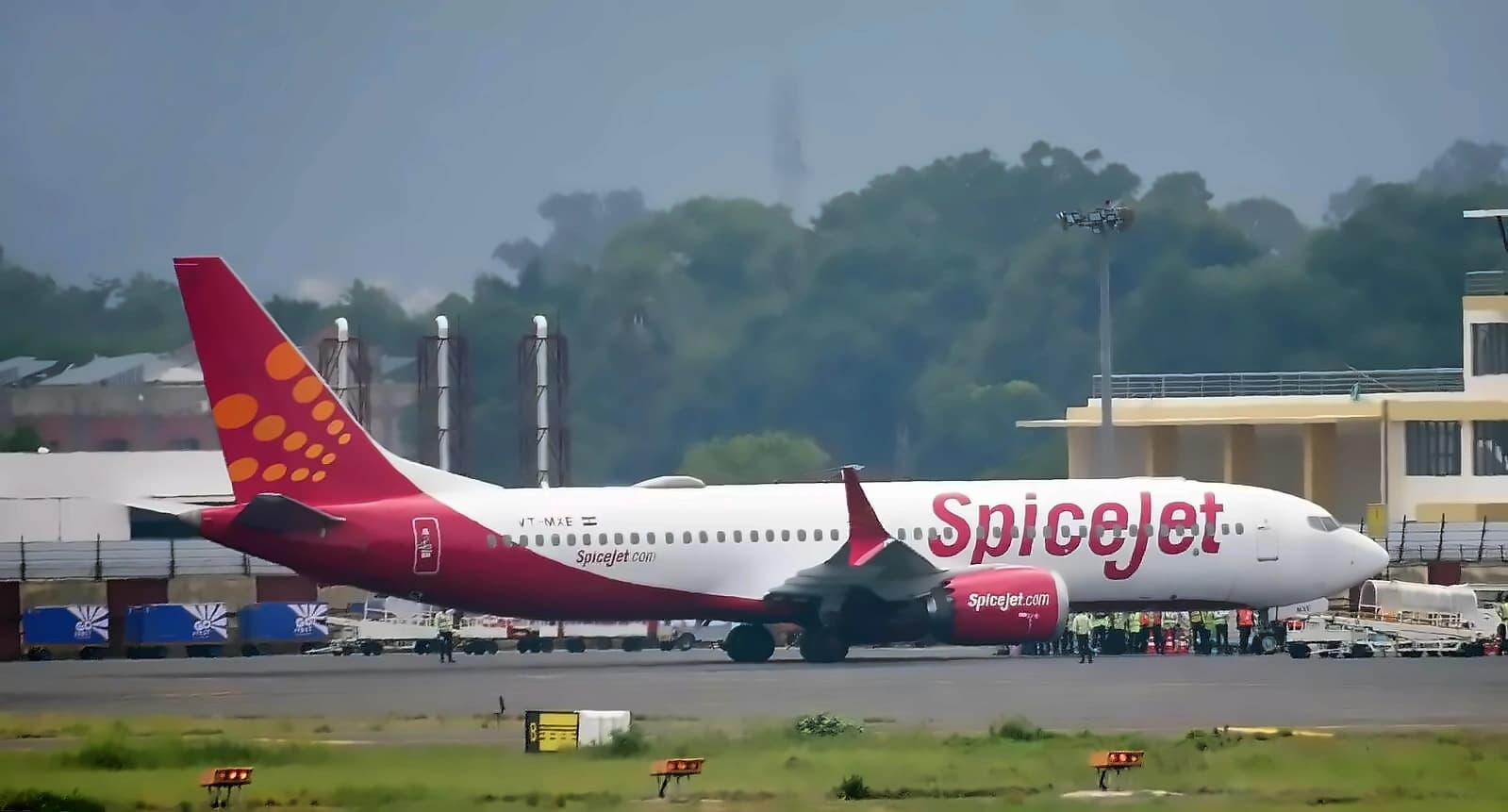
The ₹5,000 crore emergency credit support under ECLGS 5.0 provides significant liquidity relief to Indian airlines facing severe financial stress from rising Aviation Turbine Fuel (ATF) prices, airspace closures, and reduced international operations. Airlines can access up to ₹1,000 crore per borrower, with an additional ₹500 crore available subject to equivalent equity infusion by promoters, taking total eligibility to ₹1,500 crore per airline. The loans carry a seven-year tenure including a two-year moratorium on principal repayments, providing immediate breathing space for cash-constrained carriers. Additionally, up to 50% of interest can be converted into a Funded Interest Term Loan (FITL), reducing near-term repayment pressure and improving cash flows.
For an airline accessing ₹1,500 crore under ECLGS 5.0, the annual principal repayment avoided during the moratorium period amounts to approximately ₹214 crore, while interest cash savings from FITL conversion could reach ₹45-67 crore annually, delivering total annual cash flow improvement of ₹259-281 crore. The scheme also provides 90% credit guarantee coverage, enhancing lender confidence and improving credit flow to the sector.
MSME Credit Distribution and Beneficiary Segments
The ₹2.55 lakh crore ECLGS credit support for MSMEs follows a formula-based distribution mechanism. Eligible MSMEs can avail additional credit of up to 20% of their peak working capital utilized during Q4 FY26, capped at ₹100 crore per borrower. SBI Research estimates that approximately 1.1 crore MSME accounts, representing around 45% of India's MSME loan portfolio, will be eligible to benefit from the scheme, with an average additional credit flow of ₹2-2.3 lakh per account. The scheme provides 100% government guarantee coverage for MSMEs, compared to 90% for non-MSMEs and airlines.
Micro enterprises are likely to benefit most, as they historically received 88% of guarantees by borrower count under previous ECLGS iterations. MUDRA borrowers, who accounted for 78% of beneficiaries in earlier schemes, and women-led MSMEs, representing 68% of borrowers, are also well-positioned to benefit. Manufacturing MSMEs, particularly those dealing with supply chain disruptions from the West Asia conflict, and export-oriented businesses facing payment delays and working capital stress, are expected to see significant relief. The scheme aims to support businesses that are operationally strong but facing temporary financial constraints due to global economic uncertainty.
Credit Allocation Mechanism: Airlines vs MSMEs
The credit allocation mechanism differs fundamentally between airlines and MSMEs under the emergency support framework. For airlines, the government has specifically earmarked ₹5,000 crore exclusively for the aviation sector. The allocation is targeted, with higher per-entity limits of up to ₹1,500 crore per borrower, reflecting the larger capital requirements of airlines. The guarantee coverage is 90% for airlines, and loans carry a longer seven-year tenor with a two-year moratorium, accounting for sector-specific cash flow patterns. Additionally, airlines must meet an equity infusion requirement to access the additional ₹500 crore, ensuring promoter skin in the game.
In contrast, MSMEs benefit from a broad-based, inclusive approach with a larger overall pool of ₹2.55 lakh crore but lower individual limits capped at ₹100 crore. The guarantee coverage is higher at 100% for MSMEs, encouraging lending to smaller, higher-risk borrowers. The loan tenor is shorter at five years with a one-year moratorium, aligning with typical MSME business cycles. The allocation is formula-driven based on 20% of peak working capital utilization, ensuring proportional support without equity requirements, making it more accessible to smaller businesses without promoter capital capacity.
Airline Profit Margins and Stock Market Impact
The emergency credit support will deliver moderate improvement to airline profit margins in the near term, primarily through cost structure optimization rather than revenue enhancement. The scheme provides interest rate caps at 9% for banks and 13% for NBFCs, FITL conversion of up to 50% interest, and a two-year moratorium on principal repayments, which could collectively improve net margins by 50-150 basis points. However, current margin compression remains severe, with IndiGo's PAT margin declining to 2.34% in Q3 FY26 from 11.08% in Q3 FY25.
Stock market reaction to the ECLGS 5.0 announcement was immediate and positive. IndiGo shares surged 7.6% on announcement day, while SpiceJet hit the 5% upper circuit. Based on current financial distress levels, SpiceJet offers the highest valuation upside potential of 79-114% in optimistic scenarios, but carries critical insolvency risk with negative book value and operating cash outflows.
MSME Financial Ratios and Lender Perception
The ECLGS credit support will temporarily deteriorate leverage ratios for MSMEs despite improving overall financial health. Access to additional credit of ₹2-2.3 lakh crore on average could increase debt-to-equity ratios by 15-25% in the near term. However, the 100% government guarantee reduces effective risk weight, and the extended five-year tenor with one-year moratorium spreads repayment obligations. Interest coverage ratios may improve by 20-40% during the moratorium year due to interest-only payments, but could normalize or deteriorate post-moratorium if revenue recovery is insufficient.
The scheme is expected to significantly influence investor perception of MSME-focused banks and NBFCs. PSU banks like SBI, which expects to open ₹70,000-80,000 crore credit lines through ECLGS 5.0, and NBFCs with strong MSME exposure like Cholamandalam Investment and M&M Financial Services are key beneficiaries. The 100% guarantee structure enhances lender confidence, while the potential for credit growth of ₹2-2.3 lakh per eligible MSME account drives AUM expansion and NIM improvement. Historical ECLGS performance shows contained bad loan formation of less than 6%, with MSME sector GNPA improving to 3.3% in September 2025 from 11% in March 2020.
Regulatory Oversight and Compliance Framework
PHDCCI and other industry bodies play a crucial monitoring role in ensuring effective deployment of the airline credit support. PHDCCI's "Tourism and Hospitality Resilience Report" specifically emphasized financial resilience mechanisms and liquidity support for aviation stakeholders, providing a benchmark for monitoring effectiveness. The chamber will track whether credit support is used for operational expenses like fuel and maintenance, and assess cascading economic impacts on hospitality, travel services, and employment generation.
Regulatory bodies, led by the National Credit Guarantee Trustee Company (NCGTC), have implemented multi-layered safeguards to prevent leakage and misallocation. The scheme requires Standard account classification as of March 31, 2026, excluding NPAs and Special Mention Accounts. Banks must identify eligible borrowers through Core Banking System queries rather than relying on borrower self-identification. MSME Registration is required for 100% guarantee coverage, while exporters need valid Import Export Code (IEC) details. The NCGTC portal (app.eclgs.com) provides transparency, audit trails, and real-time monitoring of guarantee utilization.
For airlines, eligibility requirements include DGCA licensing as scheduled passenger airlines, outstanding credit facilities as of March 31, 2026, and Standard account status. The additional ₹500 crore requires equivalent equity infusion by promoters, ensuring commitment to the business. MSMEs must have valid Udyam Registration for classification verification, existing working capital limits as of the cut-off date, and Standard account status. The scheme operates on a first-come, first-served basis with a fixed overall funding limit, creating urgency for eligible borrowers to act promptly.
Strategic Implications for Airlines and MSMEs
The emergency credit support will significantly influence competitive dynamics among Indian airlines. The timing is particularly strategic relative to the Noida International Airport launch on June 15, 2026, where IndiGo will be the first operator. The 40-day gap between ECLGS 5.0 announcement and airport launch allows airlines to secure credit and position for the new infrastructure. IndiGo, with its first-mover advantage and access to ECLGS credit, is well-positioned to expand its 60-64% market share through aggressive route deployment on metro connections including Bengaluru, Mumbai, Hyderabad, and Lucknow.
For MSMEs, access to ECLGS credit support enables strategic decisions across technology upgradation, market expansion, capacity building, and human capital development. The government is promoting digitization through initiatives like the MSME Champions Scheme, which has certified 1,92,689 enterprises under ZED certification and 7,394 MSMEs under LEAN certification. MSMEs can invest in automation, Industry 4.0 tools, and digital platforms like ONDC and GeM for market access. However, businesses must balance growth ambitions with risk management, as the emergency credit increases overall debt burden that must be serviced through future revenue recovery.