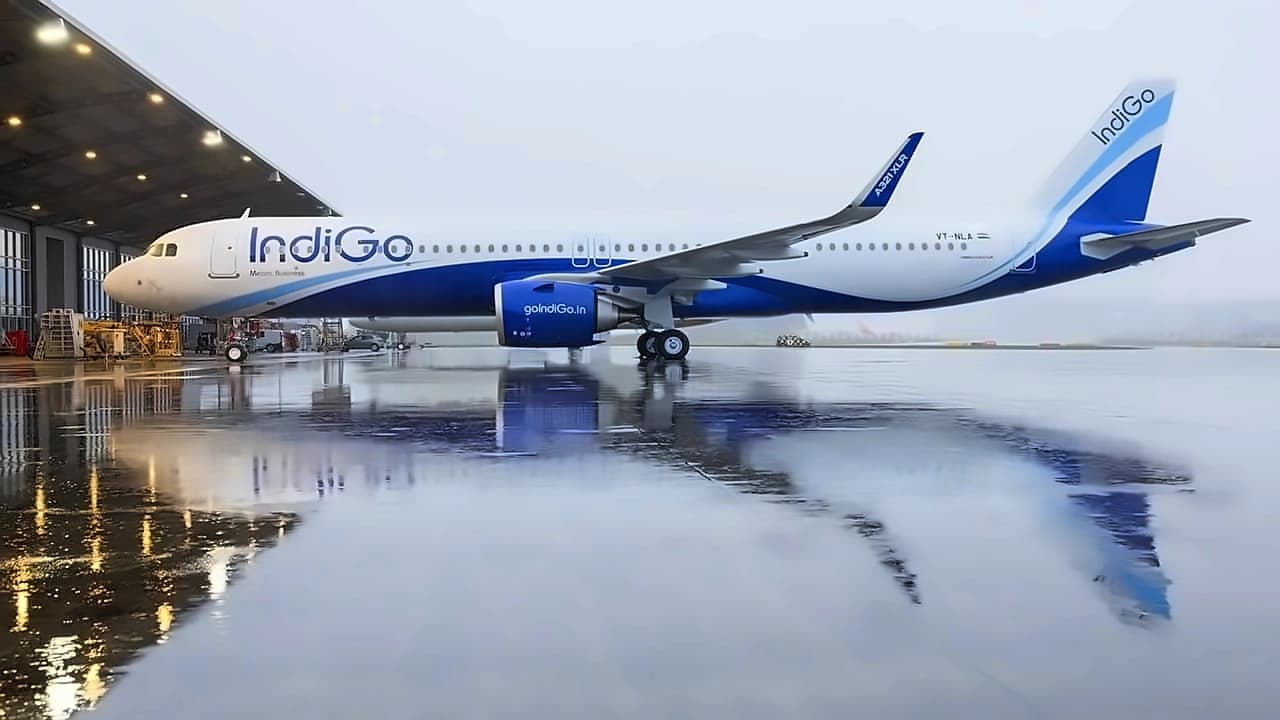
IndiGo’s 20th anniversary isn’t just a celebration of milestones—it’s a strategic pivot point.
But as the airline enters its third decade, it faces a complex landscape: ambitious global expansion plans, fierce domestic competition, and significant operational headwinds. Here’s how IndiGo is navigating this critical inflection point.
Workforce and Operational Efficiency: The Competitive Edge
IndiGo’s dominance isn’t built on planes alone—it’s built on people and processes. With a workforce of 42,887 employees, including 5,456 pilots and 10,212 cabin crew, the airline has achieved operational metrics that competitors struggle to match. Its 99.9% technical dispatch reliability and industry-leading on-time performance create a reliability moat that keeps customers coming back. AnnualReports +1
This operational excellence directly translates to competitive advantage.
The airline’s disciplined approach to cost management—deferring senior-level salary increments during elevated cost environments while maintaining frontline investment—shows a workforce strategy aligned with financial realities. This balance of human capital efficiency and operational reliability has helped IndiGo maintain a 64.2% domestic market share despite aggressive competition from the consolidated Air India Group. Transcripts
Fleet Composition: The Engine of Cost Leadership
IndiGo’s fleet strategy is the foundation of its cost leadership.
This youth matters—78% of its fleet consists of next-generation A320neo and A321neo aircraft that are 15% more fuel-efficient and 50% quieter than older models. The result? A cost per available seat kilometer (CASK) of ₹5.71 that, while rising, remains competitive against peers. AnnualReports +1
The scale advantage is equally significant. As the largest operator of Airbus A320neo family aircraft globally, IndiGo commands purchasing power and operational efficiencies that smaller carriers can’t match. Its fleet strategy extends beyond simple ownership—the airline employs a mix of owned, finance-leased, and operating-leased aircraft to optimize capital deployment. With 500 aircraft on order and visibility through 2035, IndiGo’s fleet pipeline provides both growth capacity and negotiation leverage with manufacturers. This scale and modernization strategy has created a cost structure that competitors struggle to replicate, particularly as fuel costs surge. AnnualReports +1
Financial Drivers for Global Expansion
IndiGo’s global ambitions are backed by formidable financial strength. With total cash of ₹529 billion (including ₹390 billion in free cash), the airline has the liquidity to fund expansion while weathering volatility. This balance sheet strength is particularly crucial as IndiGo pursues its 2030 vision: 550+ aircraft, 200 million annual passengers, and 3,000 daily departures. Transcripts
The financial strategy supporting this expansion is multifaceted. Revenue growth remains robust—total income reached ₹256.14 billion in Q1 FY27, up 18.9% year-over-year, driven by yield improvements of 21.3%. However, the international expansion comes with margin pressures. International operations currently represent 33% of capacity but face fuel costs 120% higher than domestic rates due to the absence of price caps.
The challenge will be maintaining profitability while scaling international operations, particularly as the airline inducts wide-body A350 aircraft starting in 2027. Transcripts +1
Margin Pressures and Competitive Dynamics
The expansion narrative faces significant headwinds.
This dramatic increase—driven by 50% higher Brent crude prices and 120% elevated jet fuel crack spreads—has compressed margins severely. EBITDAR margins fell from 28.0% to 15.6% year-over-year, turning a ₹21.76 billion profit into a ₹2.38 billion loss in Q1 FY27. InvestorPresentations +1
Competitive dynamics are evolving rapidly. The Indian aviation market has consolidated into a duopoly, with IndiGo and the Air India Group controlling over 91% of domestic market share. While IndiGo maintains its lead, Air India’s share has grown to 27.3%, and newer players like Akasa Air are carving out niches with operational efficiency. Regulatory pressures add another layer of complexity—fuel taxes in India remain among the highest globally at 40-50% of ticket prices, and potential airport-airline cross-holding raises conflict-of-interest concerns. IndiGo’s response has been disciplined: measured capacity deployment, pricing actions to offset cost pressures, and strategic cost controls including deferred senior management increments. Transcripts
The 20,000 Free Tickets Strategy
Against this backdrop, IndiGo’s 20th anniversary “IndiGoFree” campaign—giving away 20,000 free domestic flight tickets—represents sophisticated strategic thinking. Rather than a simple discount promotion, the offer drives customers to direct booking channels (website, mobile app, AI assistant 6Eskai), reducing distribution costs that typically run 10-15% through OTAs. This direct channel migration strengthens customer relationships while capturing margin.
The campaign also serves competitive objectives. With Air India Group gaining ground and Akasa Air establishing itself, IndiGo needs to reinforce its 64.2% market leadership. The promotion creates buzz and differentiation while targeting tier-2 and tier-3 cities for weekend getaways—routes where IndiGo’s network density provides competitive advantages. The refund-based mechanism (customers book first, then get selected for refunds) creates engagement without immediate revenue impact, while the ₹10,000 per PNR cap limits financial exposure. It’s customer acquisition, brand reinforcement, and competitive defense wrapped in one promotional package.
Regional Network Strategy: The Mysuru Signal
The choice of Mysuru airport for the 20th anniversary celebration speaks volumes about IndiGo’s strategic priorities. Operating two scheduled flights from this tier-2 Karnataka city, IndiGo is signaling its commitment to regional penetration. This isn’t symbolic—IndiGo has aggressively expanded into tier-2 cities like Leh, Agra, Darbhanga, and Rajkot, recognizing that these markets represent growth engines as metro markets saturate.
Regional airports like Mysuru play crucial roles in IndiGo’s network optimization. They provide feed traffic to major hubs, reduce congestion at primary airports, and allow the airline to capture demand from emerging economic centers. The strategy aligns with the government’s UDAN regional connectivity scheme, where IndiGo has become the largest participant. With 649 regional routes now operational under UDAN, connecting 93 unserved/underserved airports, IndiGo is positioning itself at the forefront of India’s aviation democratization. This regional focus not only supports growth but creates competitive moats—network density that becomes increasingly difficult for competitors to replicate.
The Path Forward
IndiGo’s 20th anniversary marks both celebration and strategic crossroads. The airline has built formidable advantages in workforce efficiency, fleet modernization, and network scale. Its financial strength provides the cushion for ambitious expansion, while its promotional strategies demonstrate sophisticated customer acquisition thinking. But the path forward is fraught with challenges—fuel cost volatility, competitive consolidation, regulatory complexity, and the execution risks of transitioning from domestic low-cost leader to global network carrier. Transcripts
The next four years will be critical. With targets of 550 aircraft and 200 million passengers by 2030, IndiGo is attempting one of the most ambitious aviation transformations globally. Success will require balancing growth with economics, domestic dominance with international expansion, and cost leadership with service quality. If IndiGo can navigate these tensions while maintaining the operational excellence that defined its first two decades, it won’t just lead Indian aviation—it will redefine what a global airline from an emerging market can become.