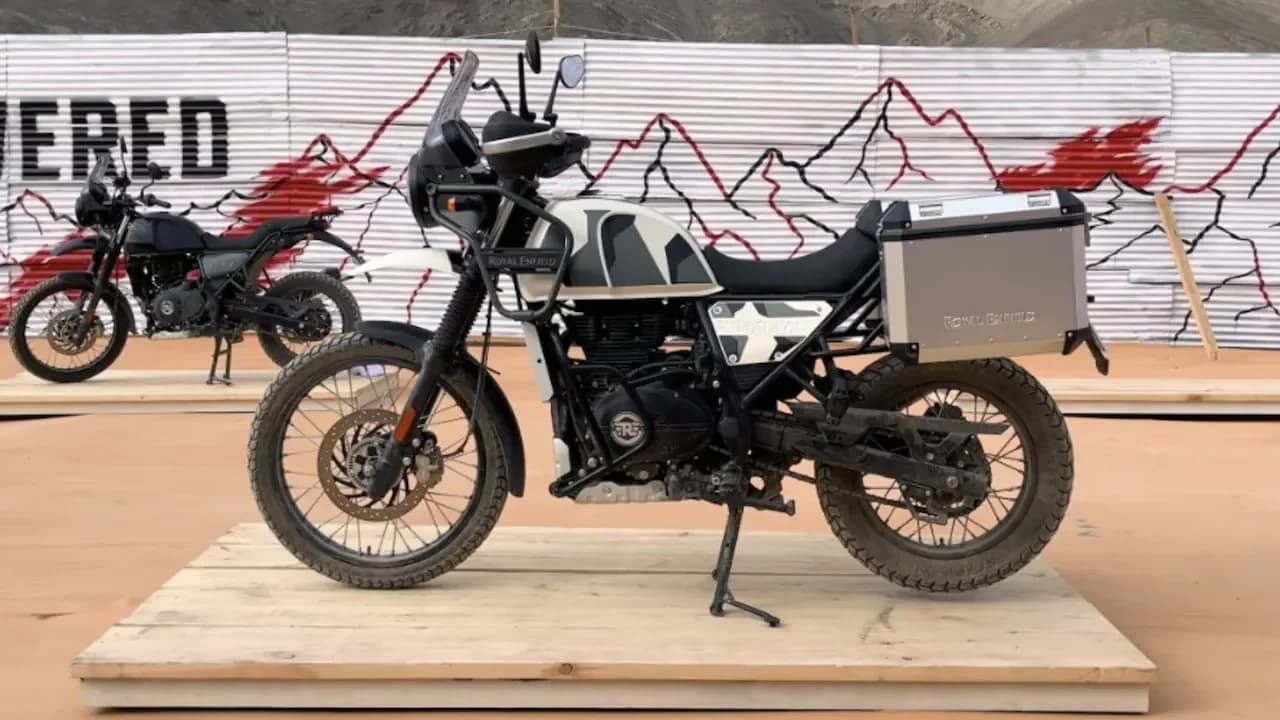
Eicher Motors kicked off FY27 with a bang, reporting a 21.4% year-on-year surge in consolidated net profit to Rs 1,463 crore. Revenue from operations climbed 31.5% to Rs 6,632 crore, comfortably beating analyst estimates that ranged between Rs 5,527-6,225 crore. The star of the show? Volume. Royal Enfield sold 332,940 motorcycles in Q1, its highest-ever quarterly sales, up 27.4% from the year-ago period. VE Commercial Vehicles (VECV) chipped in with its best-ever Q1 performance, selling 24,815 units, a 14.8% increase.
Product Mix and Pricing: The Volume-First Strategy
Eicher's product mix strategy leaned heavily on volume expansion over premium pricing this quarter. Royal Enfield's average realization actually dipped approximately 8.2% year-on-year to around Rs 1.99 lakh per unit, down from Rs 2.17 lakh in Q1 FY26. This wasn't a mistake—it was a deliberate choice. Management explicitly shifted focus toward "absolute profit growth rather than margin percentage expansion," signaling that market share gains through competitive pricing took precedence.
The product portfolio saw meaningful expansion. The Bullet 650, launched in late May 2026, began contributing to volumes, targeting the higher-displacement premium segment. Perhaps more significantly, Royal Enfield commenced deliveries of its Flying Flea C6 electric motorcycle in Bengaluru, marking its entry into the EV space while maintaining its premium positioning. Fresh color options for the Hunter 350 also helped sustain momentum in the mid-segment.
VECV told a different pricing story. The commercial vehicle joint venture demonstrated genuine pricing power, with average realization climbing 14.2% year-on-year to Rs 26.63 lakh per unit. This divergence—Royal Enfield sacrificing price for volume while VECV commanded premium pricing—highlights the different competitive dynamics in motorcycle versus commercial vehicle markets.
Operating Margins: Steady Despite the Pressure
Here's where things get interesting. Despite higher marketing expenditures for brand-building and new product launches, Eicher's EBITDA margin didn't collapse—it actually expanded marginally by 12 basis points to 23.98%, up from 23.86% in Q1 FY26. EBITDA grew 32% to Rs 1,591 crore, outpacing revenue growth.
How did they pull this off? Operating leverage from strong volume growth played a crucial role. Royal Enfield's 27.4% volume surge and VECV's 14.8% growth spread fixed costs across more units. VECV specifically delivered margin expansion to 24.0% from 23.9%, driven by better product mix and that strong pricing power we just discussed.
Cost management mattered too. Management faced commodity cost headwinds of 3-3.5% but implemented a 1.75% price increase in April FY27, recovering roughly half of the expected inflation. The remaining gap is being addressed through value engineering, austerity measures, and inventory usage. The result? Margins remained resilient despite significant investments in future growth.
Volume vs. Price: What Really Drove the Beat?
Eicher's earnings beat relative to analyst estimates was overwhelmingly volume-driven. Analysts had expected revenue in the Rs 5,527-6,225 crore range and PAT between Rs 1,215-1,547 crore. Actual revenue of Rs 6,632 crore significantly exceeded the upper end of estimates, while PAT of Rs 1,463 crore came in near the top of the projected range.
Breaking down the drivers, volume growth contributed approximately 70% of the earnings beat. Royal Enfield's 27.4% volume surge to 332,940 units and VECV's 14.8% growth to 24,815 units far exceeded analyst projections. Price realization contributed the remaining 30%, but this was entirely due to VECV's strong 14.2% pricing power. Royal Enfield's 8.2% price realization decline actually acted as a drag, but management accepted this trade-off to drive market share gains.
The strategic calculus proved correct. By prioritizing volume over margin percentage in the motorcycle business while leveraging pricing power in commercial vehicles, Eicher achieved both market share expansion and healthy profit growth. It's a balancing act that requires confidence in demand sustainability—and management clearly has it.
Demand Factors: Structural Premiumization
The demand story supporting Eicher's outlook isn't cyclical—it's structural. Premium motorcycle demand continues to outperform entry-level segments, with the above 125cc segment growing 6.7% to reach 3.0 million units (now 24.4% of the overall motorcycle market). The above 250cc premium segment grew even faster at 9.9% to 1.0 million units. AnnualReports
Demographics are shifting in Eicher's favor.
The GST reduction in September 2025 boosted affordability, particularly for models like the Hunter 350, while improved financing availability supported premium motorcycle purchases.
On the commercial vehicle side, infrastructure expenditure budgeted at 3.4% of GDP provides a sustained demand tailwind. Rural demand is growing faster than urban markets, driven by agricultural logistics organization and rising rural consumption. The bus segment showed robust 16.1% growth, supported by increased demand for school and staff transport. AnnualReports
Market Share: Dominance in Premium Segments
Royal Enfield's market position remains exceptionally strong. The company commands approximately 85% market share in India's mid-size motorcycle segment, 30.3% share in >125cc motorcycles, and 9.1% overall market share in the Indian motorcycle segment for Q1 FY27. In the premium motorcycle category above 250cc, Royal Enfield held 87% market share in Q4 FY26. InvestorPresentations +1
Brand metrics tell the story of competitive moat durability.
Top-of-mind awareness is 56% versus 17% for the nearest rival. Share of voice in the global two-wheeler space is 50.3% with 94.9% net sentiment. InvestorPresentations
VECV maintains leadership positions in its chosen segments. Light & Medium Duty Trucks hold the #1 position with 34.9% market share in FY26, up from 25.4% in FY09. Heavy Duty Trucks rank #3 with 9.7% market share, and Buses hold #3 with 19.3% share. Customer satisfaction surveys rank Eicher #1 in both LMD and HD truck segments. InvestorPresentations +3
Competitive Dynamics: Navigating a Shifting Landscape
The two-wheeler competitive landscape shows mass market players facing pressure while premium segments thrive. Hero MotoCorp, Honda, and TVS all reported growth but largely in commuter and value segments. Royal Enfield's 27% year-on-year growth to 114,032 units in June 2026 significantly outperformed premium competitors.
Electric vehicle competition is intensifying, with electric two-wheeler registrations crossing five lakh units in Q1, up 68% year-on-year. However, this growth is primarily in lower price points. Royal Enfield's Flying Flea C6 launch strategically addresses the EV segment while maintaining premium positioning, avoiding direct competition with mass-market electric scooters.
In commercial vehicles, the market is dominated by four major players controlling over 88% share. Mahindra & Mahindra leads with ~26.7% overall share, while VECV holds ~8.2%. VECV's focused strategy in LMD and HD segments allows it to maintain leadership in specific niches despite smaller overall share.
H2 Outlook: Headwinds and Strategic Responses
Looking ahead, Eicher faces several macroeconomic headwinds. Commodity cost inflation of 3-3.5% is expected for FY27, though management has implemented price increases and value engineering to mitigate impact. Export markets remain challenging, with Royal Enfield exports declining 33% in May and 11.8% in June 2026. Europe is experiencing a "market adjustment year," and the US market faces tariff-related issues.
Regulatory changes are creating both challenges and opportunities. Delhi's EV Policy 2.0 mandates that only electric two-wheelers will be registered from April 1, 2028, creating urgency for EV portfolio development. The vehicle scrappage policy supports replacement demand, with Eicher offering incentives ranging from 1.25% to 3% of base vehicle cost.
Despite these challenges, demand indicators remain strong. Dealer inventory is tight at 7-8 days, indicating healthy retail pull. VECV utilization levels are running at 80-90%, suggesting strong demand. Management expressed positive outlook for FY 2025-26, with growth expected across key CV segments as demand revives post-general elections. AnnualReports
Strategic Initiatives: Investing for the Long Term
Eicher is backing its confidence with significant capital investment.
A Rs 958 crore brownfield expansion at Cheyyar, Tamil Nadu, targets annual capacity expansion to ~20 lakh units by FY28. The board also approved Rs 1,225 crore for Phase I of a greenfield facility in Andhra Pradesh, adding 4.5 lakh units of annual capacity at full utilization by FY 2029-30.
Product development remains a priority, with the balance of capex going toward new product development and EV-related investments. The Flying Flea electric motorcycle portfolio is expanding, with the S6 Scrambler confirmed as part of the upcoming lineup. All EICMA-2025 products including Bullet 650, Flying Flea, and S6 are on track with no delays.
In a significant strategic move, Eicher is entering the financial services business through a 50:50 joint venture with Volvo Financial Services India. Eicher will invest up to Rs 750 crore, targeting AUM of Rs 9,000-10,000 crore over the next 5 years. This captive financing arm will initially serve VECV and Volvo products, with Royal Enfield added at a later date.
The bottom line? Eicher Motors' Q1 performance wasn't just about beating numbers—it was about executing a clear strategic vision. By prioritizing volume growth in premium segments, maintaining pricing discipline where possible, and investing aggressively for future capacity and product expansion, the company has positioned itself to sustain momentum despite near-term headwinds. The structural premiumization trend in motorcycles and infrastructure-led growth in commercial vehicles provide a solid foundation for continued growth.