The Physical Squeeze: LME Stocks Collapse and Backwardation Spikes
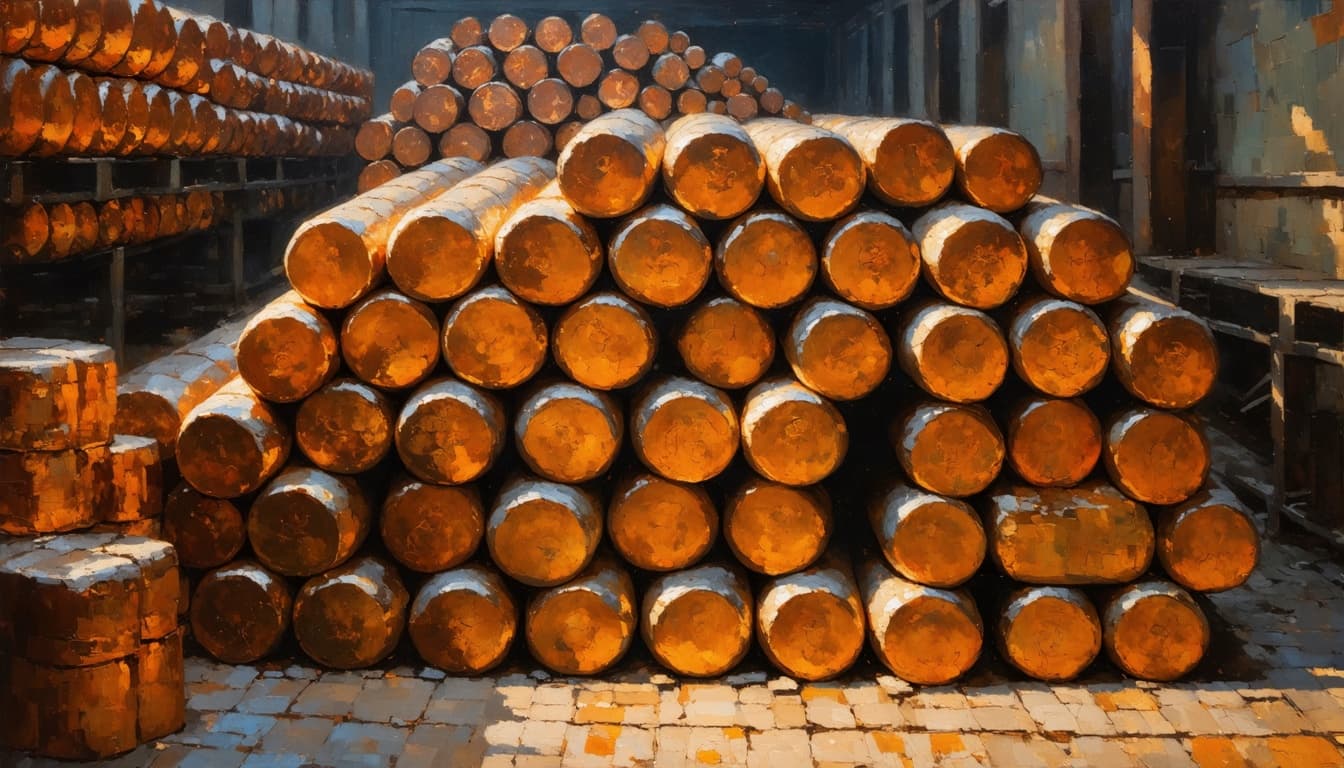
The dramatic 14% decline in LME warehouse stocks to 214,550 tonnes since end-July has triggered extreme market stress. LME cash copper settled at $14,424.50 per tonne on August 11, 2026, with the cash-to-three-month premium rocketing from $69 to $207.50 per tonne. This backwardation signals immediate metal scarcity that defies the International Copper Study Group's forecast of a 96,000-tonne refined copper surplus for 2026. The disconnect arises because the real constraint sits in copper concentrates, not refined metal. Treatment charges (TC/RCs) have collapsed to a record-low $0 per tonne for the 2026 annual benchmark, while Chinese refined copper output fell 2.83% year-on-year to 1.05 million tonnes in August 2026 as concentrate availability constrained smelters. With replacement copper supply facing roughly a 17-year discovery-to-production timeline and average global ore grades down 40% since 1991, the market structure reflects genuine physical tightness that annual balance forecasts miss.
The COMEX-LME Arbitrage: Tariffs Drive Regional Price Divergence
The US has imposed aggressive tariffs on copper imports, including a 50% duty on semi-finished products, creating a structural price gap that traders exploit by shipping metal from cheaper LME regions to the more expensive US market. This arbitrage has led to record COMEX inventory builds while draining LME stocks, amplifying the regional price dislocation. US copper imports surged to over 200,000 tonnes in July alone—the highest monthly level in at least 12 years—as traders positioned ahead of potential tariff decisions. The spread has evolved from a technical curiosity to a central question for anyone trading or hedging copper, with Societe Generale noting it now reflects a "policy-driven trade" rather than traditional supply-demand fundamentals.
Supply Shocks: From Indonesia's Gresik to Chile's Production Crisis
The August 8 boiler leak at PT Smelting's Gresik copper smelter in East Java, Indonesia, created a significant supply shock. The facility, with designed capacity of approximately 342,000 metric tons per year, processes ore exclusively from Freeport's Grasberg mine—the world's second-largest copper operation. The smelter will remain offline for several weeks for assessment and repairs, while Freeport's separate Manyar smelter isn't expected to restart until September 2026. This outage removes substantial processing capacity precisely when the market can least afford it. Meanwhile, Chile's state copper commission Cochilco cut its 2026 output forecast to 5.27 million tonnes, representing a 2.6% decline from 2025 levels. The downgrade reflects weak first-half performance from Codelco, BHP's Escondida, and Spence mines, alongside broader operational constraints. Chile, which produces roughly one-quarter of global mined copper, faces structural challenges including declining ore grades, water scarcity, and aging infrastructure that constrain supply growth despite record prices.
Chile's Mining Crisis: Operational Issues and Strategic Impacts
The specific operational issues at Chile's largest mines reveal deep structural problems. Codelco's El Teniente mine remains in recovery mode following a fatal collapse in July 2025 that killed six workers, with annual production stuck around 300,000 tonnes—below the pre-incident 356,000 tonnes from 2024. The company has paused expansion work at the Andes Norte section after identifying new seismic risks greater than previously understood, with no firm restart date established. This has forced Codelco to abandon its earlier target of 1.7 million tonnes annually by 2030, with the company now expecting flat copper output in coming years. BHP's Chilean operations face their own challenges—Escondida production fell 3% year-on-year to 1.26 million tonnes in fiscal 2026, while Spence declined 21% to 212,600 tonnes, both due to aging deposits and lower ore grades. These operational issues have significantly increased cost structures, as declining ore grades require processing more material to obtain the same amount of copper, while safety investments following accidents have added substantial operational expenses.
Project Delays and Valuation Pressures: Tampakan to Panguna
The extension of Tampakan's startup to 2028 represents a significant delay from earlier projections of 2026 operations. The project, containing one of the world's largest undeveloped copper-gold deposits with over 2.5 billion metric tons of potential mineral deposits, faces substantial regulatory and environmental hurdles. For Atlas Consolidated Mining and Development, this delay means missing revenues during the current record copper price environment. CLSA had expected Atlas to double output over the next three years as work to widen its mine pit nears completion, with expectations to return to profitability in 2026. The missed opportunity window extends the investment horizon and reduces net present value of future cash flows. For Dominion Holdings, which recently acquired a 20.43% stake in Atlas and may receive SM Investments' 34% stake in 2027, the Tampakan delay complicates the consolidation strategy and creates uncertainty about the timing of value realization. Meanwhile, Lloyds Metals & Energy faces significant capital expenditure and timeline risks at Panguna. The project contains 5.3 million tons of copper and 19.3 million ounces of gold worth approximately $160 billion at today's prices, but Lloyds is currently authorized only for preparatory works and feasibility activities. Separate approvals will be required for construction and production phases, with the redevelopment proceeding "one step at a time". The 40-year operational gap since the mine closed in 1989 means significant infrastructure rehabilitation and technology updates will be required, while the complex political context of Bougainville's autonomy and independence aspirations adds execution risk.
European Strategic Response: Boliden's Laver and Regulatory Support
Boliden's Laver deposit, with 849.5 million tonnes grading 0.24% copper, represents a strategic response to Europe's copper supply security challenges. While the low grade requires large-scale mining operations for economic viability, the deposit's by-product credits from gold, silver, and molybdenum can improve overall project economics. Once operational, Laver could double Sweden's copper production and increase Europe's copper self-sufficiency by approximately 10%. The project benefits from strong European regulatory support under the Critical Raw Materials Act, which designates copper as both strategic and critical. The Swedish government's rejection of appeals against Boliden's mining concession demonstrates political backing, while the CRMA framework provides shorter permitting timeframes (27 months for extraction permits) for strategic projects. Boliden's existing integrated operations and low-carbon positioning may command premium pricing in environmentally conscious European markets, while the company's technical expertise and operational synergies provide competitive advantages.
Mining Stock Performance: Quality Wins in Volatile Markets
The divergent performance among copper miners reflects the importance of asset quality and operational execution. Ivanhoe Mines gained 18% since end-July as its Kamoa-Kakula operation gathers momentum, with the company stating it has "turned the corner" and intends higher copper production in the second half of 2026. First Quantum Minerals' 14% gain reflects operational resilience and diversified asset portfolio. In contrast, Vale's 4% decline stems from its heavy iron ore exposure rather than pure copper leverage, while CMOC's 5.2% drop occurred despite record Q1 2026 results, likely due to Chinese market exposure and investor rotation toward Western miners. Teck Resources, Freeport-McMoRan, and Anglo American all posted similar 10-11% gains despite varying geographic exposures, reflecting their quality asset bases and production growth trajectories aligned with copper demand growth. Teck's Q2 2026 adjusted NPAT increased fivefold year-over-year "mainly due to increased copper prices and volumes," demonstrating the leverage quality operators have to the copper price surge.
The Gold-Copper Performance Gap: Structural Challenges
Copper miners are lagging gold producers by two to three times in stock performance despite copper's 47% price gain over 12 months. This divergence reflects structural challenges in the copper sector, including higher capital intensity, operational complexity, and long development timelines. Copper mining requires massive ongoing capital expenditure, limiting free cash flow generation compared to gold producers. Large-scale copper operations face more operational challenges, maintenance requirements, and cost pressures. Additionally, new copper projects take 10-15 years from discovery to production, limiting near-term growth visibility. Cost inflation pressures from energy, labor, and equipment rising faster than copper prices in some cases further constrain margins. Gold producers benefit from safe haven appeal during geopolitical uncertainty, anticipated interest rate cuts, and traditional inflation hedge positioning, leading to higher valuation multiples and stronger investor preference.
Speculative Excess vs. Physical Reality: The Inflation Data Impact
The tame US inflation reading, with July 2026 inflation cooling to 3.4% from 3.5% in June and core inflation easing to 2.5%, reduced expectations of aggressive Federal Reserve interest rate hikes. This decreased the cost of carry for commodities, making long positions in copper futures more attractive and supporting speculative and institutional demand. However, more than $30 billion flowed into base metal markets in 2025—the largest annual speculative inflow on record—with copper absorbing more than half of this capital. This financial positioning amplified price movements beyond what physical fundamentals alone would justify. Goldman Sachs projects copper could retrace toward $11,000 per tonne by December 2026, representing an 18% correction from recent highs, noting that "the price has overshot its fair fundamental level". The $207.50 backwardation premium on LME cash copper signals immediate supply tightness but also creates challenges for traditional producer hedging strategies, as locking in future prices means giving up substantial immediate revenue. For diversified miners like BHP and Anglo American, divergent price movements in related commodities create both opportunities and challenges—palladium (+5.39%) and silver (+7.47%) provide by-product revenue enhancement, while crude oil (-4.21%) reduces energy costs. The question now is whether copper's current price levels are sustainable or positioning-driven, with the answer likely determining whether the sector continues its historic run or faces a sharp correction.