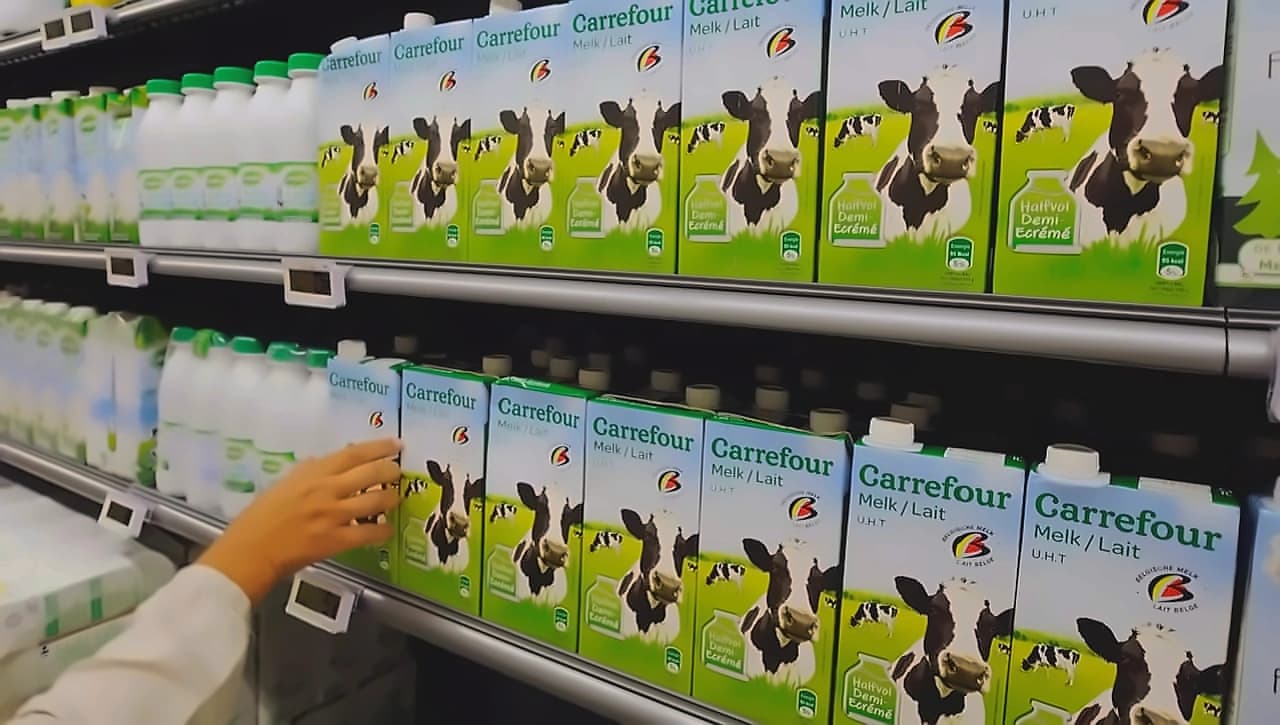
Carrefour is back in India, but this time the French retail giant is playing a very different game.
The strategy is strikingly different: smaller stores, a local partner, and a relentless focus on profitability over rapid expansion. It is a calculated bet that physical retail still matters in a market racing toward 10-minute delivery.
The Format Shift: Smaller Stores, Smarter Economics
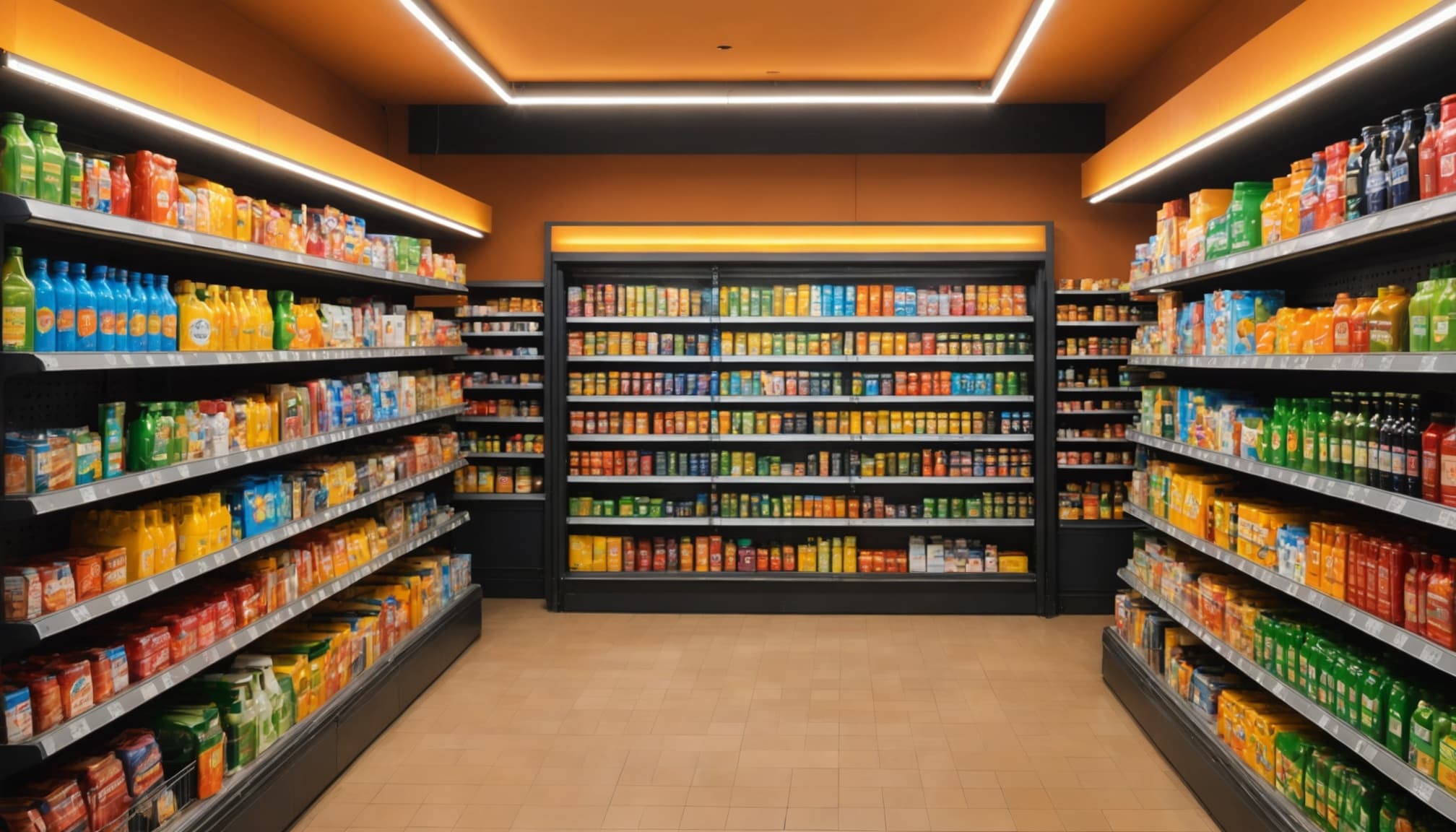
Carrefour has abandoned its traditional 10,000-12,000 square metre hypermarkets for compact formats ranging from 10,000 to 50,000 square feet. The first flagship in Greater Noida spans 50,000 sq ft, but the second Delhi-NCR store opening in October will be just 10,000 sq ft. This shift is not just about real estate—it is about economics.
Smaller formats mean significantly lower capital investment. Real estate costs, which typically consume 5-7% of revenue for traditional retailers, are spread across a more manageable footprint. Inventory carrying costs drop because smaller stores with curated assortments enable faster turnover. Staffing productivity improves as compact layouts allow better labor utilisation per square foot.
The break-even target remains 1.5-3 years per store, consistent with Carrefour's global benchmarks, but management believes India could achieve this faster. The key is sales density. Smaller stores must generate 2-3x higher sales per square foot than large-format competitors to cover their fixed cost base. Carrefour plans to achieve this through premium positioning, private labels, and omnichannel integration.
The DMart Challenge: Beating the Value King
DMart's large-store model presents a formidable competitive hurdle. The Indian retailer owns its properties rather than renting, eliminating the 5-7% rental burden that competitors carry. Its stores average 40,000 sq ft, and it achieves profit margins of 7.1%—the highest in Indian retail.
DMart's inventory turnover of 148 days (compared to Reliance Retail's estimated 287 days) translates to 48.4% more revenue per square foot. This efficiency advantage stems from cluster-based expansion, quick vendor payments (7 days vs. the industry norm of 30-40 days), and an everyday low-price model that drives massive footfall.
Carrefour's smaller format strategy cannot match DMart's owned real estate advantage. Instead, it must compete on differentiated value: international quality at competitive prices, a broader assortment of 15,000+ SKUs versus DMart's curated selection, and private labels that eventually target 37% of sales (matching Carrefour's global performance). The break-even timeline depends on achieving sufficient sales density in premium locations where Carrefour's international positioning resonates.
The Store-as-Fulfillment Model
Carrefour is not building separate dark stores for e-commerce. Instead, it plans to use the "back of the house" of its physical stores to fulfill online orders. This hybrid model could reduce last-mile delivery costs by 40-60% compared to dedicated dark store networks.
Quick commerce players like Blinkit, Zepto, and Instamart face significant fixed cost burdens. Blinkit's 526 dark stores averaging 1,200 sq ft in metro areas represent an estimated monthly real estate commitment of over ₹5.4 crore at ₹85/sq ft lease rates. These stores operate at 58-67% of optimal capacity during off-peak hours, with lease, staffing, and shrinkage costs running continuously regardless of order volume.
Carrefour's approach spreads these fixed costs across both walk-in customers and digital orders. The economics work because large basket grocery trips (₹3,000-8,000) coexist with quick commerce top-up orders (₹300-500). Carrefour can serve both from the same infrastructure, using stores as fulfillment engines for scheduled delivery while maintaining the physical shopping experience that drives discovery and larger baskets.
Reliance Retail's experience validates this approach. Its omnichannel customers spend 2.7 times more than pure offline customers, with spending growing 20-25% year-on-year. JioMart uses a hybrid model of 3,100+ physical stores and 600+ dark stores to service 1,200+ cities. Carrefour is betting that productive physical stores can be the foundation for digital commerce, added once economics and customer behavior are understood.
The Partnership Advantage
The franchise partnership with Apparel Group addresses the operational failures of Carrefour's 2010 standalone entry. That first attempt, a cash-and-carry wholesale model, invested ₹300 crore but never achieved profitability. This time, Carrefour is leveraging Apparel Group's existing infrastructure.
Apparel Group operates 300+ stores across 50 cities in India, with established landlord relationships, supplier ecosystems, and regulatory compliance expertise. This network accelerates market entry by 17-27 months compared to a standalone approach. Real estate negotiations benefit from portfolio leverage, potentially improving terms by 15-25%. Supplier relationships are already in place across 20+ brands, including Victoria's Secret, Charles & Keith, and Tim Hortons.
The partnership also transforms the capital allocation model. Rather than heavy upfront investment, costs are shared between Carrefour and Apparel Group. The focus is profitable growth rather than investment-led expansion. While quick commerce players like Zepto raised $1.95 billion in 2024 and Blinkit received ₹2,600 crore from Zomato, Carrefour is targeting store-level profitability within 1.5-3 years. This disciplined approach contrasts with competitors burning cash to acquire customers.
The Private Label and Export Opportunity
Carrefour's private label strategy is central to its margin improvement plans. Globally, private labels account for 37% of group sales, and the company targets 40% of food sales by 2026. In India, Carrefour plans to develop local private labels within 9-18 months of reaching critical mass, focusing on Indian price points, pack sizes, and taste preferences.
Private labels deliver 25-30% higher gross margins than national brands through 40-50% lower manufacturing costs and direct supplier relationships. This margin advantage enables Carrefour to compete on price against Indian retailers offering 30-50% discounts while maintaining profitability. The strategy creates a differentiated value proposition versus DMart's pure value focus and Reliance Retail's scale-driven approach.
India's agricultural and manufacturing base provides an additional revenue stream. Carrefour plans to source products like chocolates, spices, and rice from India for export to international markets within five years. India's agricultural exports reached $51.1 billion in FY25, growing at 8.2% CAGR. The country is the world's largest exporter of basmati rice ($9.9 billion) and non-basmati rice ($10.4 billion). This export opportunity turns the Indian operation into more than retail expansion—it becomes a sourcing hub for Carrefour's global private label business.
The Competitive Reality Check
India's retail market is projected to grow from ₹82 lakh crore in 2024 to ₹190 lakh crore by 2034, with 58% of purchase journeys remaining offline. This validates Carrefour's bet on physical retail despite quick commerce expansion. The offline market alone represents ₹47.6 lakh crore in 2024, growing to ₹110.2 lakh crore by 2034.
However, Reliance Retail's competitive advantages are substantial. The company reported gross revenue of ₹3.71 lakh crore in FY26, with 20,160 stores, 78.4 million sq ft of retail area, and 387 million registered customers. Its hybrid network of 3,100+ physical stores and 600+ dark stores covers 5,100+ pin codes across 1,200+ cities. This scale creates distribution density and customer insights that Carrefour cannot replicate in the near term.
Carrefour's acquisition strategy aims to accelerate its store count to 50 in three years, targeting struggling food retailers with established locations and customers. This approach can provide 12-23 month acceleration per acquisition compared to organic growth, but it cannot match Reliance Retail's 403x larger store network or DMart's 24-year head start in building customer loyalty.
The competitive reality is stark: Reliance Retail, DMart, Flipkart, and Amazon have established distribution density and customer bases that will take years to challenge. Carrefour's strategy is not to match their scale, but to build a profitable niche focused on quality-conscious urban consumers, international assortment, and export-integrated operations.
The Path Forward
Carrefour's India 2.0 strategy represents a calculated bet on profitable, focused growth rather than investment-led expansion. The compact format model reduces real estate and inventory costs while improving staffing productivity. The partnership with Apparel Group mitigates operational risks and accelerates market entry. The private label and export strategy creates margin advantages and additional revenue streams.
Success will depend on execution excellence in operations, merchandising, and customer experience. The 1.5-3 year break-even timeline is achievable if Carrefour can generate sufficient sales density in premium locations while building private label penetration to 37% of sales. The omnichannel integration must follow store productivity, not precede it.
The Indian retail market is large enough to support multiple successful players with different strategies. Carrefour is not trying to be another Reliance Retail or DMart. It is building a differentiated business focused on international quality, local adaptation, and sustainable profitability. In a market growing to ₹190 lakh crore by 2034, there is room for a retailer that gets the economics right, even if it takes longer to build scale.