The Strategic Fit: Ports, Terminals, and Energy Transition
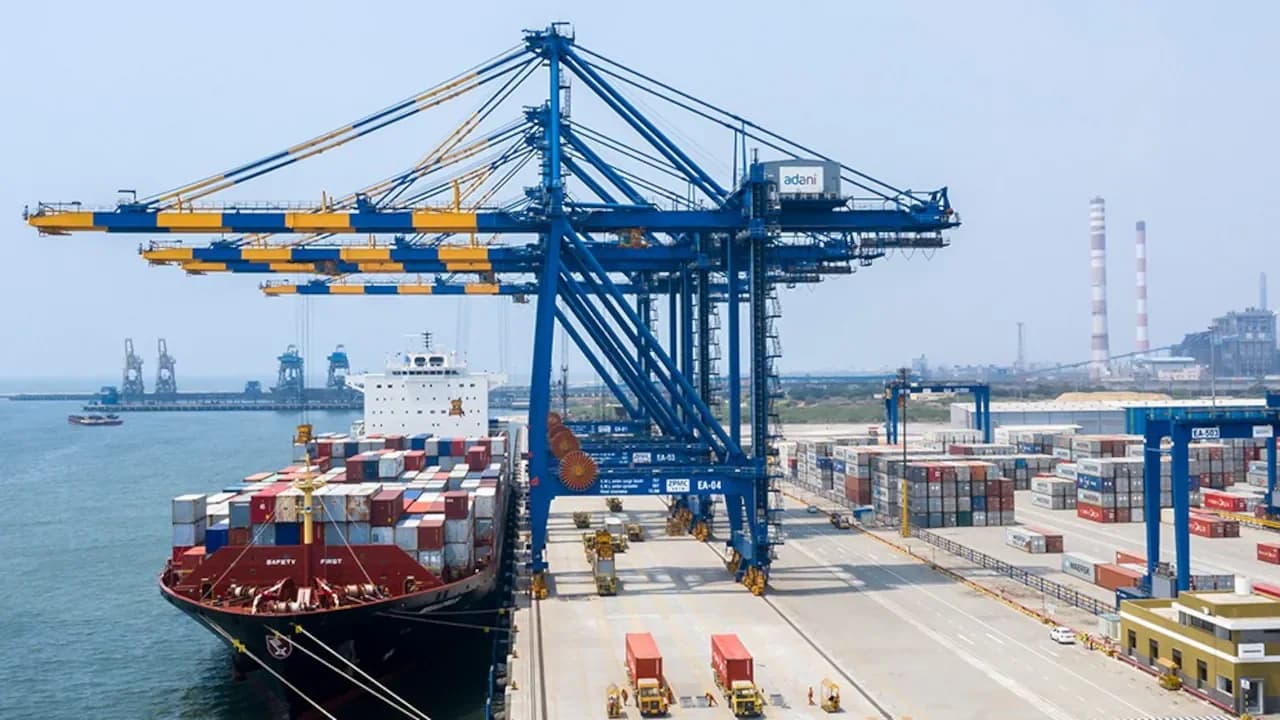
Adani Group’s reported interest in VTTI isn’t random—it’s a logical extension of its existing infrastructure empire. The conglomerate already operates ports, airports, roads, and data centers.
This creates potential operational synergies with Adani Ports and Special Economic Zone, which already owns Indian Oiltanking, India’s largest third-party liquid storage player.
The synergy isn’t just about geography. VTTI’s terminals are strategically located at key trade crossroads, connecting ships, pipelines, and industrial users. For Adani, this means integrating storage with its port ecosystems, potentially creating end-to-end logistics solutions for energy commodities. VTTI is also aggressively expanding into LNG and transitional fuels like biofuels and sustainable aviation fuel (SAF), aiming for over half its earnings from low-emission sources by 2028. This aligns with Adani’s broader energy transition ambitions, though the group’s current portfolio is still heavily weighted toward fossil fuels.
However, it’s crucial to note that VTTI is a fee-based storage business, not a trading house. The trading prowess comes from its co-owner, Vitol, the world’s largest independent energy trader. Adani doesn’t have a comparable global trading arm, which means capturing trading-linked margins would require building new capabilities or partnering strategically.
Valuation: €3 Billion and the Storage Premium
The reported €3 billion ($3.4 billion) price tag for VTTI places it at a premium compared to Adani’s historical acquisition multiples.
Recent global deals for storage terminals have fetched multiples in the low-to-mid-teens. If VTTI’s EBITDA is around $230–280 million (back-calculated from the reported valuation range), the deal sits squarely in that premium bracket.
Several factors drive this premium. First, storage terminals are scarce assets. Building new ones requires land, port access, and complex permits, making existing facilities hard to replicate. Second, global supply disruptions have made these assets more valuable for energy trading, as they provide critical buffer capacity when supply chains are under stress. Third, VTTI’s growth pipeline in LNG and transitional fuels offers a future earnings stream that traditional infrastructure assets lack.
Compared to Adani’s failed bid for Associated British Ports (ABP), valued at over £10 billion ($13.4 billion), VTTI is a much smaller ticket. ABP offered regulated, long-contracted port cash flows with high margins. VTTI is a commodity-linked storage business with higher cyclicality and geopolitical exposure, such as the temporary closure of its Fujairah terminal after a drone-debris fire. The valuation reflects this risk-reward profile.
Financing and Leverage: Can Adani Afford It?
Adani Enterprises recently raised ₹15,000 crore ($1.6 billion) via a Qualified Institutional Placement (QIP) in July 2026. However, most of these funds are earmarked for capital expenditure, debt repayment, and strategic investments in green energy and airports. A €3 billion acquisition would require significant additional financing, likely a mix of debt and equity.
The more likely acquirer is Adani Ports, which has a stronger balance sheet for this type of deal.
It also holds ₹12,502 crore in cash. A fully debt-funded acquisition could push leverage above its policy ceiling, so a partial stake or a partnered structure seems more plausible. Investor Presentation +2
Adani Enterprises, on the other hand, carries higher leverage. Its net external debt rose to ₹72,233 crore in September 2026, with a net debt/EBITDA ratio of 3.3x in Q1 FY27. Adding a large, debt-funded acquisition here would strain its balance sheet, especially given its ongoing capex commitments in airports, roads, and new energy projects. Investor Presentation +1
Seller Motivations and Adani’s Negotiating Position
The current owners—IFM Investors, Vitol, and Abu Dhabi National Oil Company (ADNOC)—have appointed Macquarie Capital to run the sale process.
For IFM, a long-standing infrastructure investor, this is an opportunity to recycle capital after holding the asset since 2017. The firm also recently committed to a major stake in ABP, which may free up capacity for new deals. For Vitol, a partial sale allows it to crystallize value while retaining commercial access to the storage network. ADNOC’s exit may signal a strategic shift, but it also removes a partner with deep Gulf energy ties, which could affect VTTI’s customer relationships in the region.
Adani’s negotiating leverage is mixed. On one hand, it’s a strategic operator with existing terminal experience and a strong ports balance sheet. On the other, there are other bidders in the fray, and the sellers are not under immediate pressure to sell—the process began before the Iran war and may be delayed by market volatility. If Adani is bidding for a minority stake alongside IFM and Vitol, its control rights would be limited, affecting the premium it might be willing to pay.
Supply Disruptions and the Urgency Factor
Global energy market disruptions have played a key role in boosting VTTI’s perceived value. The Iran war, which began in February 2026, caused oil prices to spike nearly 50% and disrupted trade routes through the Strait of Hormuz. This has increased demand for strategic storage and created arbitrage opportunities for traders like Vitol. Terminals at key hubs like Rotterdam and Fujairah become more valuable when supply chains are unpredictable.
However, this volatility is a double-edged sword. While it enhances strategic value, it can also hurt short-term profitability if traders choose to sell quickly rather than store oil, reducing storage demand. Physical risks, such as the Fujairah terminal closure, add another layer of uncertainty.
Adani’s acceleration of overseas acquisitions also coincides with the resolution of its legal troubles in the US.
While there’s no direct evidence linking this to the VTTI bid, resolving these overhangs likely improves Adani’s access to global capital and reduces reputational risks in cross-border deals.
Regulatory Hurdles and Integration Challenges
A deal for VTTI would face significant regulatory scrutiny. VTTI is headquartered in the Netherlands, which has a robust foreign direct investment (FDI) screening regime under the Vifo Act, in force since June 2023. The Act applies to acquisitions of control or significant influence in vital providers and sensitive technologies, and it applies to both EU and non-EU acquirers. Mandatory notification is required, and penalties for non-compliance can reach 10% of turnover.
Beyond the Netherlands, VTTI’s assets span the UK (Dragon LNG), Italy (Adriatic LNG), the UAE, China, and other jurisdictions. Each may require its own national security or competition clearance. The UK’s golden power regime, for instance, could review the Dragon LNG stake given its role in UK gas supply.
Integrating VTTI’s operations with Adani’s compliance and governance frameworks would be complex. Adani Ports has strong ESG and safety certifications, including ISO 14001 and ISO 45001, and zero reported corruption incidents in FY26. However, VTTI operates under EU environmental, safety, and sanctions rules, which are stringent. Adani’s recent Iran-sanctions settlement could also draw scrutiny from regulators and lenders, especially given VTTI’s Gulf exposure. Annual Report +1
Operationally, managing a portfolio of fossil fuel, biofuel, and chemical storage terminals amid evolving energy transition regulations poses risks. VTTI’s push into LNG and transitional fuels is a growth opportunity, but it also requires execution in new technologies and markets. Adani would need to navigate these transitions while maintaining safety and environmental standards across diverse jurisdictions.
The Road Ahead
The VTTI deal represents a bold step in Adani’s global infrastructure expansion, but it’s far from a done deal. Deliberations are ongoing, and there’s no certainty they’ll result in a transaction. The valuation is rich, the financing is complex, and the regulatory path is fraught. Yet, the strategic logic is clear: owning critical energy storage infrastructure at a time of global supply disruption could provide long-term competitive advantages.
For Adani, the challenge will be balancing ambition with prudence—securing the assets without overstretching its balance sheet or underestimating the integration risks. As the group sets its sights on becoming the world’s largest transport utility, VTTI could be a crucial piece of the puzzle—or a costly misstep in a high-stakes global game.