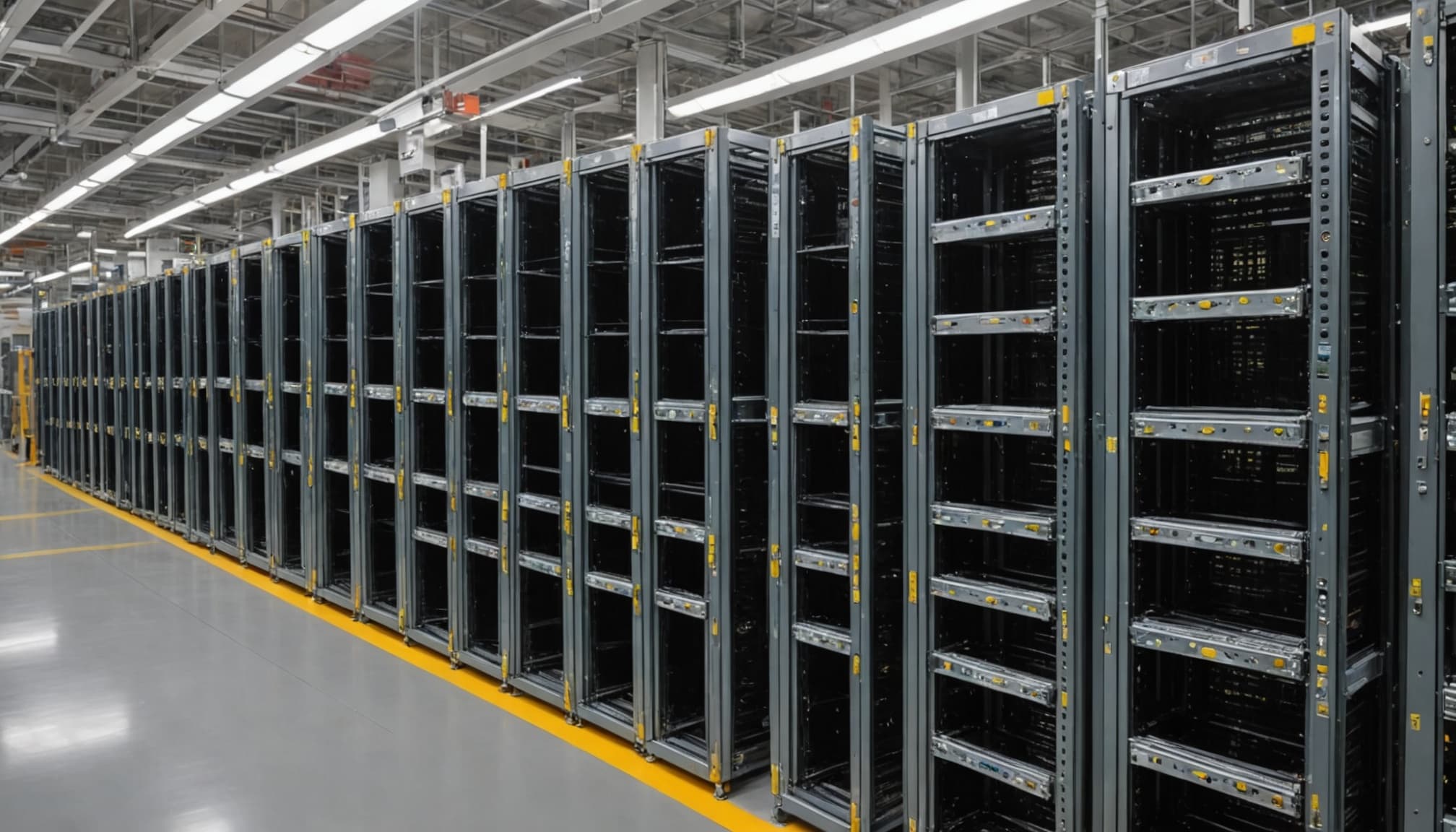
On June 15, 2026, Adani Enterprises and US-based Jabil Inc. announced their intent to form a strategic alliance to build a vertically integrated AI and data centre infrastructure manufacturing platform in India. The media release, filed with exchanges the same day, talks about GW-scale AI rack manufacturing and positioning India as an export hub for AI hardware. Other
Here’s the first catch: the announcement describes an “intent to form” the alliance. The companies said they are still working on definitive agreements and operational frameworks. The documents I found do not state an equity split, a capital commitment, or a legal form. I could not confirm a 50:50 ownership structure from the available filings, so please check the definitive agreement or a later exchange filing before relying on it. Other +1
The $100 Billion Context: Energy Meets Compute
The proposed venture aligns with Adani Group’s previously announced USD 100 billion investment commitment to develop 5 GW of green-energy-powered, AI-ready data centres by 2035. That’s the backdrop. The idea is straightforward: Adani brings the infrastructure, renewable energy portfolio, logistics network, and rapidly expanding domestic data centre operations. Jabil brings six decades of engineering and manufacturing expertise, including experience supporting hyperscale data centre deployments around the world. Other +1
The GPUs would still be supplied by the final client. Management also linked the Jabil venture to bringing a wider ecosystem to India, which they said should help de-risk construction and development. Transcript +1
What They Plan to Build: Racks, Cooling, and Power
The platform plans to deploy multi-GW of high-density AI rack manufacturing capacity in India. This covers liquid-cooled AI racks, servers, storage and networking systems, using SMT (Surface Mount Technology) and complex box-build processes. Beyond computing racks, the alliance covers white-space and grey-space equipment, including Power Distribution Units (PDUs), Coolant Distribution Units (CDUs), transformers, switchgear, bus bars and thermal management systems. Other +1
Jabil’s capabilities in power management and precision thermal solutions come through its acquisitions of Hanley Energy Group and Mikros Technologies. Adani plans to co-invest in domestic manufacturing of high-capacity transformers, advanced power electronics, grid systems, inverters, and industrial thermal management solutions. Other +1
The companies estimate a global AI infrastructure market opportunity exceeding USD 3 trillion over the next seven years. They cite Indian data centre capacity forecasts of 5–8 GW by 2030. A third-party estimate puts India’s data centre IT-load capacity at 4.48 GW in 2025, rising to 12.47 GW by 2030. The estimates differ, so treat them as indicative. Other +1
Capex, ROCE, and Revenue: The Numbers We Don’t Have
Adani Enterprises has not disclosed any figures for the Jabil alliance. That covers investment size, revenue targets, margins, installation and commissioning scope, and ROCE guidance. The Q1 FY27 earnings call and investor presentation say little beyond the rationale. Transcript
What we do know is that Adani’s capex has been rising while returns are under pressure.
Management has given some data centre economics, though not specific to Jabil. Construction cost is roughly ₹70–75 crore per MW, with a run-rate return of about 12% in US dollar terms. Funding follows an infrastructure project finance structure, with coupons expected in line with investment-grade debt. Tied-up data centre capacity exceeds 960 MW, including a new 400 MW hyperscale order at Vizag. Operational capacity is 65.4 MW. Transcript +4
My inference: the data centre build-out is the larger capex driver. At ₹70–75 crore per MW, a 2 GW platform implies a very large outlay, so ROCE will likely stay diluted while assets are under construction. The rack manufacturing alliance is, by structure, a smaller and faster-turn capital commitment. ROCE improvement over 3–5 years therefore depends mainly on how quickly the data centres and other incubating businesses reach operating maturity.
On revenue, Q1 FY27 consolidated revenue was ₹33,546 crore, with EBITDA of ₹5,642 crore (up 49% YoY). The segment mix is concentrated: Copper led at ₹10,922 crore, followed by Integrated Resources Management at ₹7,424 crore, New Energy at ₹3,937 crore, and Airports at ₹3,763 crore. Until a capacity, customer or timeline is disclosed for the AI hardware platform, any meaningful contribution is likely to take several years to show up in the consolidated numbers. Investor Presentation
Cost Efficiencies, Cooling, and Scalability
The announcement gives qualitative reasons for the combination but no quantified cost savings. The stated advantages are a single-source, design-to-deployment model, supply-chain resilience, and the Union Budget 2026 data centre tax holiday until 2047, which the release says improves export competitiveness. Other +2
Possible savings sources, which are my inference and not company guidance, include captive demand from Adani’s own data centres, lower logistics and inbound cost through Adani’s ports and logistics network, access to Adani’s renewable power for energy-intensive manufacturing, and shared engineering across racks, power and cooling.
Liquid-cooling systems and PDUs are central to the differentiation. Most equipment makers specialise in one layer. The alliance targets racks plus power and cooling in one offering for infrastructure builders. Jabil’s power management and precision thermal capabilities came through the acquisitions of Hanley Energy Group and Mikros Technologies. Adani’s domestic push includes co-investing in high-capacity transformers, power electronics, grid systems, inverters and industrial thermal solutions. Other +2
On scalability, Adani has tied up over 960 MW of data centre capacity, including a 400 MW hyperscale order at Vizag, against 65.4 MW operational. It has committed to a 2 GW platform by 2030. A captive supply chain could reduce dependence on imported hardware and shorten delivery timelines for Adani’s own builds. Export orders would let the plant run at scale beyond Adani’s own demand. Investor Presentation +1
Approvals, Timeline, and Execution Risks
No list of regulatory approvals or conditions precedent has been disclosed. The announcement is a non-binding intent, not a signed agreement. The available filings contain no conditions precedent, approval list, closing timeline, investment size or ownership split. Other +1
Jabil’s forward-looking statement lists several risk factors: events that could terminate work on the alliance, including failing to negotiate and execute a binding agreement; unexpected costs or liabilities; changes in economic, market, political or social conditions; and future regulatory or legislative actions that could adversely affect the parties. These are general risk factors, not a list of specific approvals. Other +1
Depending on the final structure, approvals that may be relevant (general inference, not disclosed) include the Competition Commission of India (CCI) if the structure crosses merger thresholds, foreign investment rules (FEMA) if Jabil takes equity, board and shareholder approvals, project-level approvals for land and power, and eligibility for government manufacturing incentives.
Execution risks in scaling AI rack, server and storage manufacturing in India include the deal not moving from intent to binding terms, component dependence (AI servers rely on GPUs, memory and advanced chips, most of which are imported), ecosystem depth in India’s supplier base for liquid-cooling components and precision parts, capex and working capital pressure, customer qualification cycles for hyperscalers, competition from established global manufacturers and Indian electronics firms, technology cycles that could strand capacity, and policy or trade changes.
Competitive Landscape and Revenue Diversification
The sources do not include any competitive benchmarking of the alliance. They do show the range of listed Indian players already serving data centre equipment. Netweb Technologies supplies AI GPU servers and high-performance computing systems. FY26 revenue was ₹2,184 crore (+90% YoY), with AI segment growth of 459.6%. Blue Star is a precision cooling player. Power and electrical equipment suppliers include Cummins India, ABB India, Siemens India, CG Power, and Hitachi Energy India.
Likely threat areas, which are my inference and not sourced, include incumbent relationships with hyperscalers, global OEMs and ODMs with scale, specialist depth in individual product layers, potential customer conflict if hyperscalers prefer suppliers that don’t also compete as data centre operators, and counterparty strength. Jabil’s reported fiscal 2025 revenue of USD 29.8 billion and its power and thermal acquisitions are the main mitigants. Other
On revenue diversification, the AI hardware platform would add an industrial, export-oriented revenue stream alongside the infrastructure-heavy portfolio, with a different cycle from commodities and airports. It could give some currency and customer diversification if export orders materialise. But because no capacity, timeline or investment is disclosed, any contribution is unlikely to be material to consolidated revenue in the near term. The existing segments are far larger, and revenue concentration in copper may stay high in the meantime.
What to Watch Next
The key things to watch are a Regulation 30 update from Adani Enterprises on definitive agreements, disclosures on structure, investment, and approvals, and Jabil’s SEC filings and quarterly commentary. Management has given two different capacity figures for data centres: the presentation said 2 GW, while the call referred to a 3 GW portfolio, and the company said it would correct its materials. Please check the latest company materials. Transcript
This is public information and analysis, not a recommendation. The alliance is still at the intent stage, and the numbers that matter for investors—capex, returns, and revenue contribution—remain to be disclosed.