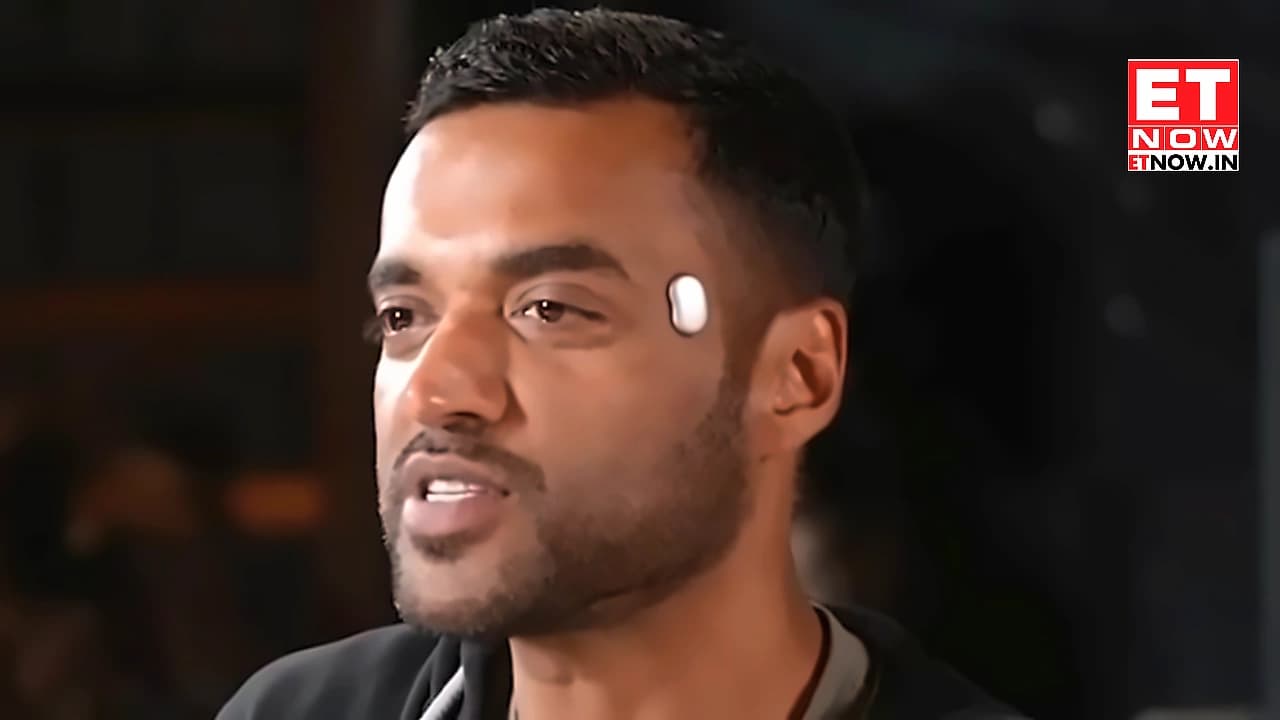
Temple is a wearable device developed by Zomato founder Deepinder Goyal that attaches to the side of the head, between the forehead and the ear. According to Reuters, the device is priced at ₹85,000 ($907) and uses proprietary BrainFlow technology to monitor changes in blood flow-related signals and includes an additional metric called Entropy, which indicates how hard the body is working to regulate its temperature. The device employs photoplethysmography (PPG), an optical sensing technology that measures changes in blood volume by analyzing how light interacts with tissue. Unlike traditional smartwatches and fitness bands that primarily monitor heart rate, sleep and physical activity, Temple is specifically designed to track physiological signals associated with cerebral blood flow. Temple is compact, measuring less than an inch in width and weighing under two grams, and is available in six colors. Beyond BrainFlow and Entropy, the device claims to track thermal, immune, digestive, cognitive and emotional metrics, positioning itself as a comprehensive wellness and fitness tool.
Doctors have raised significant concerns about Temple's scientific validity and measurement capabilities. As reported by Reuters, hepatologist Cyriac Philips, widely known as TheLiverDoc on social media, has been among the most vocal critics, describing the product as "the biggest health scam". Paediatrician and nephrologist Sanjeev Bagai has also criticised the product, calling it a "gimmick" and questioning the absence of formal approval or clearance. Dr Jason Philip wrote on X that assessing blood flow to the brain was not easy, and optical signals placed over the temple skin would only give data on the "superficial temporal artery" that supplies blood to the face and skin. The distinction matters because a measurement from a superficial blood vessel is not automatically equivalent to measuring cerebral blood flow. Dr Praveen Gupta, Chairman of the Marengo Asia International Institute of Neuro and Spine (MAIINS), questioned whether a sensor placed on the skin near the temples can accurately measure blood circulation inside the brain, cautioning that while the temple region is anatomically suitable for exploring optical monitoring devices, this does not automatically establish the reliability of measurements of intracranial blood flow.
The primary concern among medical professionals relates to the absence of large independent studies supporting Temple's claims. According to Reuters reports, the absence of peer-reviewed research has become a central point of contention in the medical community. Dr Gupta pointed out that while the company's reported correlation of around 0.80 during controlled physiological changes may be encouraging, there is no established evidence linking the readings to conditions such as stroke, dementia, stress or migraine. He emphasized that there are no large peer-reviewed studies apart from companies on their own data. Dr Biplab Das, Director of Neurology at Batra Hospital, stressed that such claims require strong scientific evidence and clinical validation, warning that inaccurate readings could create unnecessary anxiety or give users a false sense of reassurance. In a statement to Reuters, the company acknowledged that BrainFlow and Entropy were metrics based on "emerging science" and that further research would follow, also acknowledging that some of its metrics could eventually require regulatory approval. The key issue is what the device is actually measuring, with physician Jason Philip arguing that optical signals at the temple are likely dominated by the superficial temporal artery, which supplies the face and skin, not the brain.
Goyal has maintained that Temple is a fitness and wellness product and not a medical device, as reported by Reuters. He has defended the company's research efforts, stating that around $30 million has been invested in developing the wearable, including $20 million from his personal funds. The entrepreneur has also cited the 14-day return policy, allowing customers to return the device without providing a reason. Goyal has argued that scientific validation of new wearable technologies takes time and pointed to WHOOP as an example of a wearable company whose scientific research evolved over several years. "People must be aware of wellness hacks such as wearables also, even though they are not marketed as health devices," he told Reuters. The product has gained visibility through endorsements and appearances by prominent Indian sportspersons, including cricket captain Shubman Gill and Olympic medallist P.V. Sindhu. Temple raised $54 million in February at a valuation of around $190 million, with Goyal telling Reuters that the company had received orders from more than 62 countries since November 1. The venture also has an academic advisory network that includes professors from the University of Ottawa and Harvard.
Doctors believe Temple's claims need to be backed by larger, independent scientific studies before its readings can be considered reliable indicators of brain health. According to Reuters reports, the central question remains whether the device can accurately measure blood flow inside the brain or whether it is primarily recording signals from blood vessels closer to the skin. Dr Girish Nair, Senior Consultant Neurology at Apollo Hospitals, emphasized that a light sensor placed on the temple can only read what is happening in superficial vessels and cannot look inside the skull or tell how blood is flowing through the brain itself. Medical professionals stress that accuracy, reliability and consistency of readings must be established through independent clinical studies, with only marketing claims not sufficient to establish medical reliability of a health-tracking device. The controversy comes as Goyal turns his attention to building Temple, having stepped down as Zomato's chief executive earlier this year to focus on the wearable venture. The company is developing additional features intended to detect conditions such as snoring and jaw clenching, expanding its ambitions beyond the existing health and wellness metrics. The controversy comes amid growing questions globally over the distinction between consumer wellness trackers and medical devices, with wearable technology companies such as Apple and Whoop also facing regulatory scrutiny over health-related features. When a wearable says it can tell you how well your brain is being supplied with blood, the risk isn't only whether the number is "right" on average - it's whether people treat a skin-level optical signal like a body-wide diagnostic, using it to justify training harder, backing off, or feeling reassured that nothing's wrong.