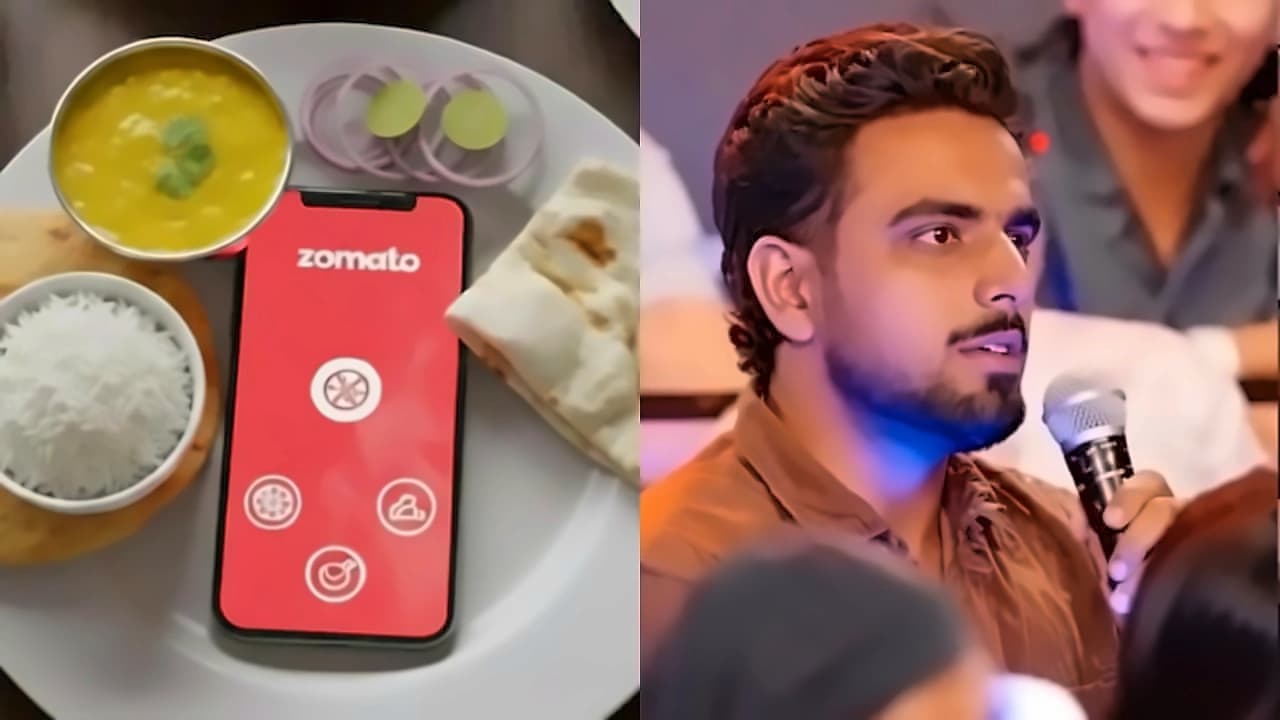
According to reports from Zomato, the company has firmly rejected claims that it circulated a viral 'Rs 370 biryani bhejdu' notification amid the ongoing controversy linked to comedian Pranit More. The food delivery platform has categorically stated that the screenshot widely shared on social media is fake and not an official communication from the company. In an important clarification issued through its official social media handles, Zomato stated, 'Biryani is dinner, not consent. The screenshot of the distasteful notification you may have seen with our name is fake. We did not write or send it.' The company reinforced this message by sharing a black graphic carrying the line: 'Biryani is dinner, not consent' on Instagram, alongside the clarification statement. The company has made it clear that the viral notification was never created or sent by Zomato, emphasizing that it had no role in its creation or distribution.
As reported by multiple sources, the controversy erupted after a screenshot went viral online, appearing to show a push notification from the Zomato app that read, 'BIRYANI BHEJDU? 370 KI HAI BAS 💀😜' (Should I send biryani? It's just for 370). The image was linked to the wider 'Rs 370 biryani' debate, which has triggered extensive discussion around consent, dating behaviour, entitlement, and the misuse of humour in sensitive contexts. The fake notification has been widely circulated on social media platforms, with users questioning the company's judgment in using such insensitive topics for brand promotion. By directly addressing the image, Zomato sought to make it clear that the notification was not created, approved or distributed by the company. The controversy has generated significant discussion across social media platforms, with users questioning whether such insensitive topics should be used for brand promotion.
According to reports, the debate stems from a stand-up clip that sparked backlash over comments misrepresenting consent and dating entitlement. In the viral video, a 22-year-old audience member named Himanshu Jangra from Gurugram, Haryana, spoke about a dating experience and implied that spending Rs 370 on a chicken biryani during a date entitled him to something in return - a remark widely understood as a reference to physical intimacy. The video was later deleted, and Pranit More also issued an apology. During the interaction, he reportedly said, 'Maine kaha ki ₹370 lage hain to use to wasool to karunga hi' (I said I spent ₹370 on biryani, so I should get something in return). While explaining the incident, he said that the woman asked him to drop her home, which for him, was a hint. He further went on to explain how he was 'charged' and how he exploited the woman despite her saying no. Amid mounting backlash, Jangra's employer, Starvik Design, terminated his employment. As the controversy spread widely online, many social media users, including prominent influencers like Uorfi Javed, Kusha Kapila and Dolly Singh, weighed in on the incident, criticising Jangra, More, and what they described as the normalisation of objectification of women. The fallout extended beyond the comedy show, with the audience member losing his job after the clip went viral.
Taking to Instagram, Starvik Design posted a video explaining their decision to terminate Himanshu Jangra's employment. In the video, the employer said, 'Let me be very clear, the statements shown in those clips are offensive. They are not something I agree with. They are not something our company stands for and they certainly should not be influencing young minds.' He further stated that after proper enquiry in the workplace, he wasn't able to find any complaint about Himanshu and that the team defined him as 'respectful'. However, whatever has happened outside has consequences. 'That is why, we have decided to part ways with Himanshu,' the employer announced in the video. The video was captioned with, 'We have fired Himanshu. Mistakes have consequences. But we also hope they become opportunities for reflection, learning, and positive change.' The employer emphasized that after carefully reviewing the situation, they have taken a decision and wanted to address it openly, stating this is their response to the controversy.
Recognising the potential brand damage and the insensitivity of the viral notification, Zomato quickly released an official clarification across its platforms. The company published a stark black graphic reading: 'Biryani is dinner, not consent. The screenshot of the distasteful notification you may have seen with our name is fake. We did not write or send it.' Meanwhile, Mumbai Police, known for pioneering moment marketing for civic awareness, immediately capitalised on the trend to deliver a public service message. Their official creative showed a plate of biryani subbed in for the number zero in 'Rs 370', accompanied by a sharp warning: '₹370 gets you one plate of biryani. Our lock-up serves free meals with a longer stay. #BiryaniIsNotConsent'. This creative approach demonstrated how law enforcement agencies can effectively use viral trends to deliver important public safety messages while the controversy was still trending nationwide.
Amid the controversy, Pranit More, who was equally blamed and slammed for bursting out in laughter and encouraging Himanshu for making those comments, has seemingly deactivated his Instagram account. The controversy has generated significant discussion across social media platforms, with users questioning whether such insensitive topics should be used for brand promotion. The debate has evolved into a much broader discussion about dating culture, consent, entitlement and the influence of online content, with the phrase 'Biryani is dinner, not consent' capturing the central point behind the backlash. The slogan has been widely shared by social media users seeking to emphasize that paying for a meal does not create an obligation, expectation or entitlement to intimacy. The incident has sparked a broader conversation about consent education and the responsibility of comedians and influencers in shaping public discourse around sensitive topics.