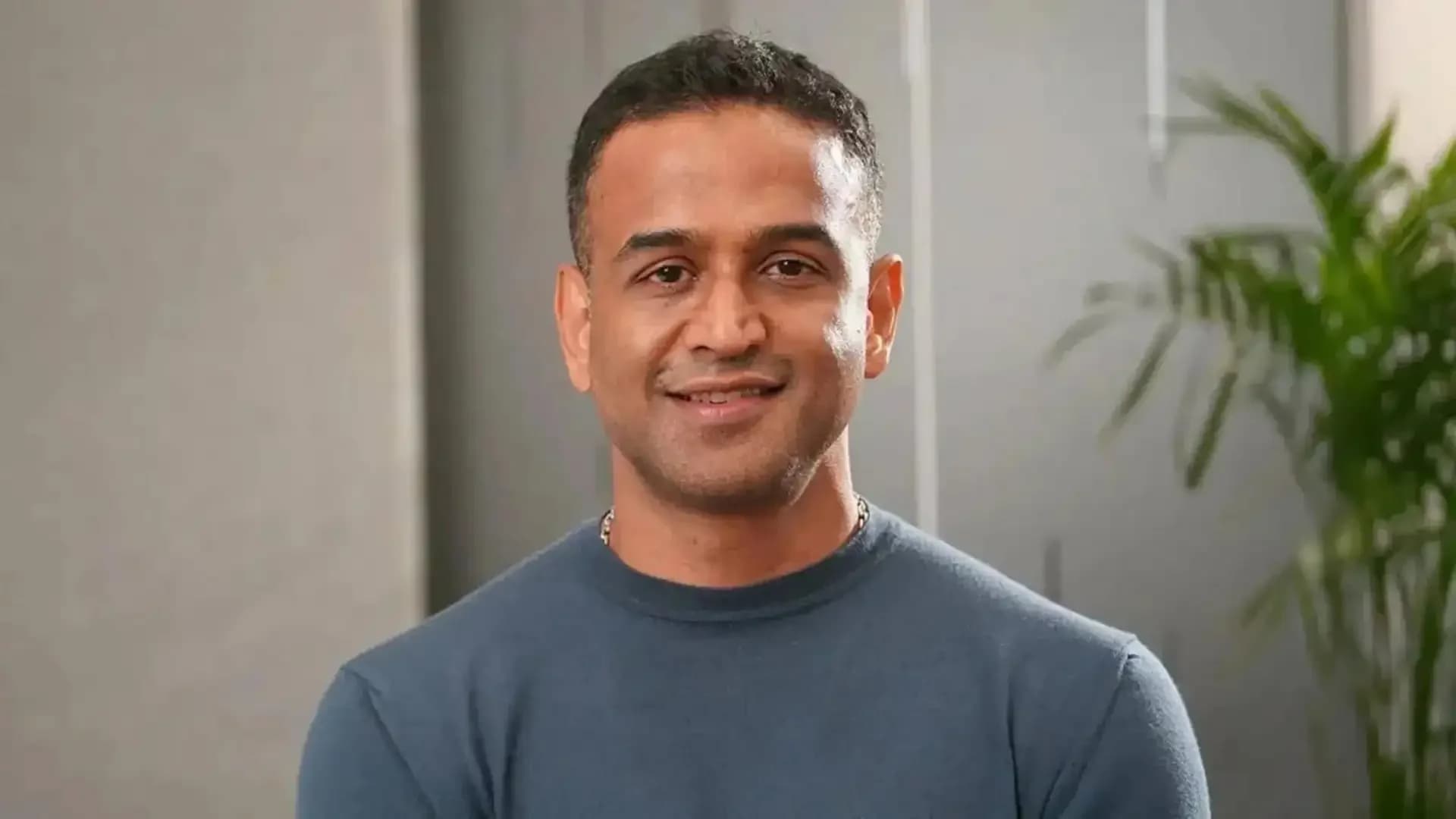
Zerodha's net profit increased by 1.2% to ₹4,283 crore in FY26, while revenue remained largely unchanged from the previous year's ₹8,847 crore. According to Business Standard, the brokerage's performance was supported by income from margin trading, which helped offset a slowdown in its core broking business. The flat performance came against a backdrop of subdued equity market activity after Indian equities peaked in September 2024, with Zerodha founder and CEO Nithin Kamath noting that the bull market has clearly hit a pause and the pace of new user growth and overall activity has slowed down significantly. In FY24, at the peak of the post-pandemic retail trading boom, Zerodha had reported revenue of ₹9,994 crore and net profit of ₹5,493 crore.
Zerodha CEO Nithin Kamath has issued his sharpest warning about margin trading funding, describing it as 'scary' in his latest annual customer letter. According to Mint, Kamath revealed that Zerodha's MTF book has swelled to about ₹9,000 crore in August, with clients having borrowed approximately ₹6,000 crore for stock investments, equivalent to about 25% of the firm's net worth. While acknowledging Zerodha is comfortable at its current level, Kamath warned that interest earned on leverage accounts for 10% of revenue and that brokers can borrow up to five times their net worth, creating significant risk of market contagion if leveraged positions unwind sharply. As reported by Mint, Kamath noted that MTF currently makes up ~10% of our revenue and stated that 'if you ask me whether MTF is a good product for customers, I'd say it isn't for most of them'. He emphasized that 'the only thing we can really do is educate customers on the risk and not push it constantly or nudge them into borrowing money to invest'.
Brokerage income fell nearly 11% to ₹2,738 crore in FY26, while net transaction-charge income dropped to zero from ₹400 crore after a regulatory change ended rebates brokers received from stock exchanges. According to The Hindu BusinessLine, annual maintenance charges rose to ₹180 crore, and interest income fell about 4% to ₹2,269 crore. The challenges reflect the impact of slower market activity after Indian equities peaked in September 2024 and regulatory changes that have hurt revenue. Despite these headwinds, Zerodha's customer assets continue growing, supported by trust, technology and financial content, with the retail AUM share continuing to expand. The company has also benefited from a bull market in the IPO space, with issues daily, positioning India as 'the IPO capital of the world right now'. However, Zerodha's account additions have moderated since the market peak in September 2024, with some rivals continuing to add customers, particularly in north and east India.
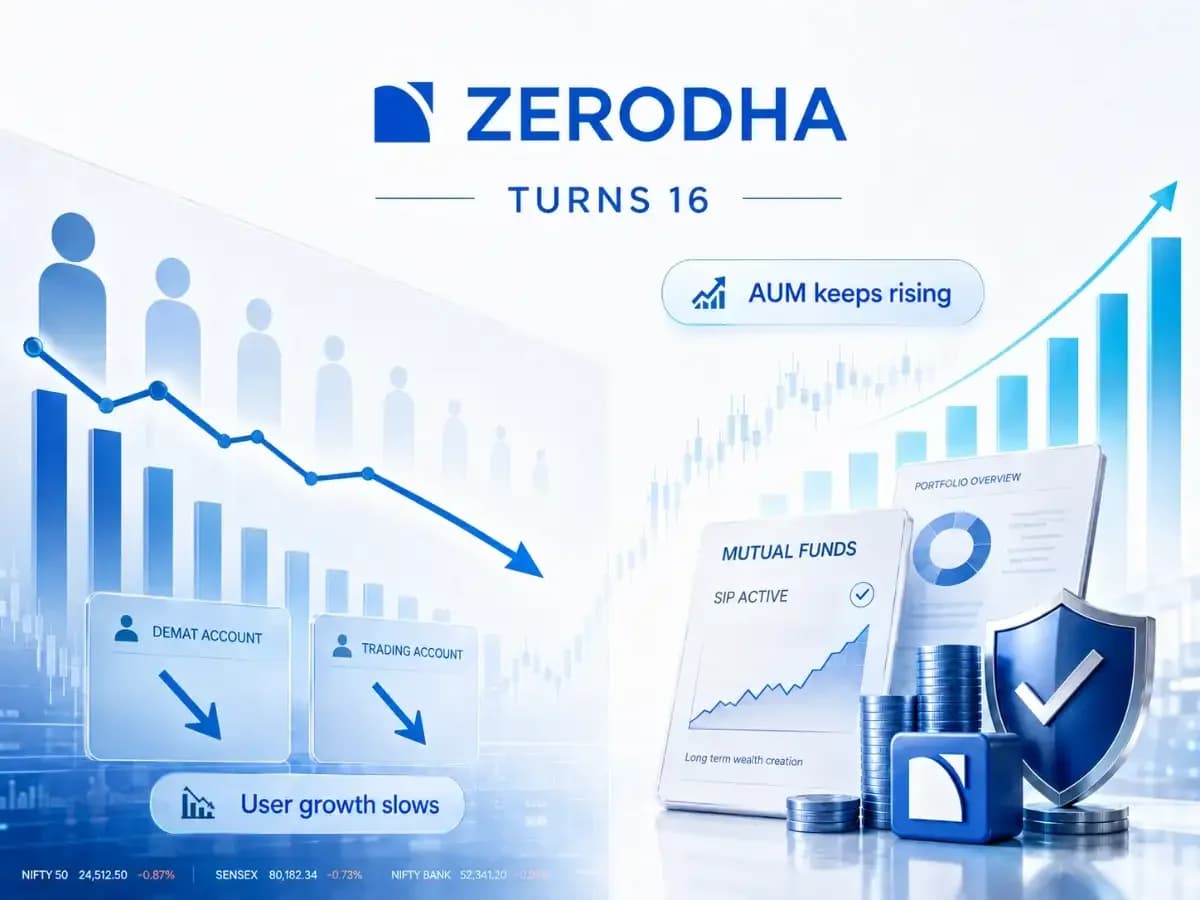
Smaller rival Groww expanded both revenue and profit by about 14% in FY26, reporting revenue of ₹4,644 crore and net profit of ₹2,083 crore. As reported by The Hindu BusinessLine, Zerodha remains nearly twice as large on both measures, although Groww has widened its lead in active customers and had 13.12 million users as of July. The competitive dynamics highlight the challenges facing established players in the evolving brokerage landscape, with newer platforms gaining ground in user acquisition despite Zerodha's substantial scale advantages. Zerodha is focusing more closely on AUM, which Kamath said is a more meaningful measure because assets tend to remain with a broker for longer, as its share of active NSE customers and total demat accounts has declined while retail AUM share continues to grow.
Despite the challenges, Kamath reported that Zerodha's active customer market share and demat account share may have reduced, but its retail AUM share has continued to grow, with the company now the largest broker in India by total AUM comprising retail and high-net-worth individual holdings. As reported by Mint, Kamath noted that 'the fact that being at our scale requires something like ₹11,000 crores is in itself a moat for us'. He highlighted that 'there are also a lot of small add-on costs that other brokers pass on that we don't. Like, if you sell shares once a day or multiple times, we charge the DP charge only once. A lot of our competition charges you every single time you sell'. The company is looking to diversify beyond its traditional broking business as regulatory scrutiny of derivatives trading and higher securities transaction taxes could continue to pressure the sector. Zerodha is increasing its investments through Rainmatter and public markets, while its core investment portfolio includes Zerodha Capital, Zerodha AMC and insurance platform Ditto. The company is also preparing to launch US investing and mutual fund transactions on Kite, which Kamath expects will improve customer experience and discoverability in the mutual funds segment.