According to reports from LiveMint, Wipro Ltd leads the list with 14 bonus issues, followed by Larsen & Toubro (L&T) with 10 bonus issues. Infosys Ltd and Bajaj Holdings & Investment have each announced eight bonus issues, while ITC Ltd has seven bonus issues during their corporate histories. These companies' bonus histories stretch back several decades, with some of the earliest bonus issues dating to the 1950s, 1960s and 1970s.
As reported by LiveMint, Wipro holds the distinction of having the highest number of bonus issues among the five companies, with 14 bonus issues over its corporate history. The company's most recent bonus issue came in 2024, when it announced a 1:1 bonus with an ex-date of December 3, 2024. Before that, Wipro issued a 1:3 bonus in 2019, a 1:1 bonus in 2017 and a 2:3 bonus in 2010. Its bonus history stretches much further back, with issues recorded in 2005, 2004, 1999, 1997, 1995, 1992, 1989, 1987, 1985 and 1981.

According to LiveMint, engineering and infrastructure major Larsen & Toubro (L&T) has announced bonus shares 10 times during its history. The company's more recent bonus issues included a 1:2 bonus in 2017, followed by another 1:2 issue in 2013. In 2008, L&T announced a 1:1 bonus, effectively doubling the number of shares held by eligible investors. Its bonus history goes back several decades, with issues recorded in 1981 in a 3:5 ratio, 1976 in a 1:2 ratio, 1973 in a 1:3 ratio and 1969 in a 1:10 ratio.
As reported by LiveMint, diversified conglomerate ITC has announced seven bonus issues during its history. The company's most recent bonus issue came in 2016, when it announced a 1:2 bonus, meaning eligible shareholders received one additional share for every two shares held. Before that, ITC issued a 1:1 bonus in 2010 and a 1:2 bonus in 2005. Its earlier history includes bonus issues in 1994, 1991, 1989 and 1980, with the 1991 issue in a 3:5 ratio and the 1980 issue in a 1:5 ratio.
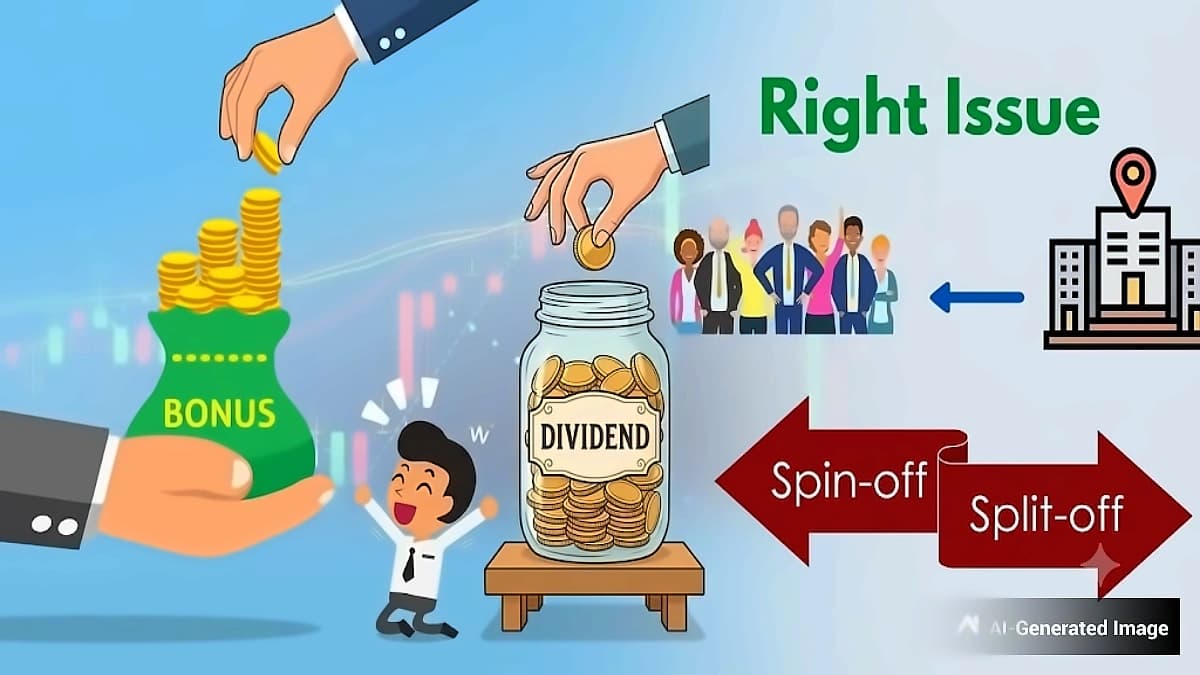
According to LiveMint, the impact of repeated bonus issues becomes more visible over a long holding period. For example, if an investor owns 100 shares and receives a 1:1 bonus, the holding increases to 200 shares, although the market price adjusts correspondingly and the immediate value of the investment does not automatically double. If another 1:1 bonus is subsequently announced, those 200 shares could become 400 shares. Repeated bonus issues can therefore significantly increase the number of shares held over several decades, though actual returns depend on the company's share-price performance and other factors beyond the number of bonus shares received.