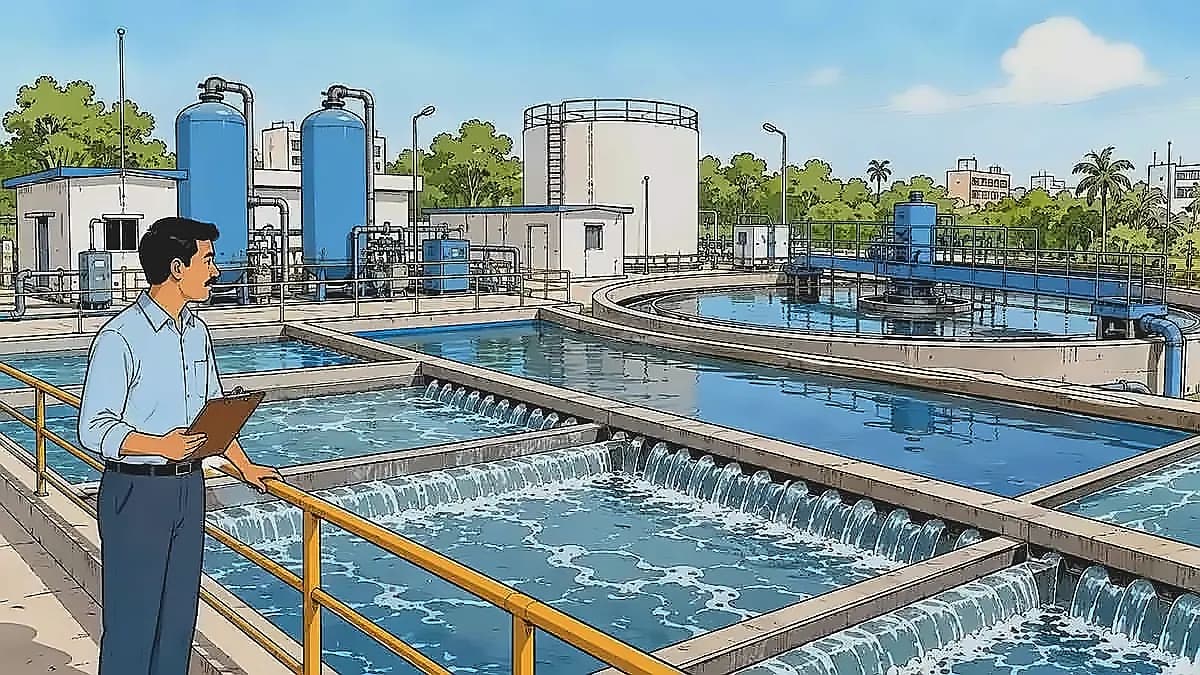
Va Tech Wabag (WABAG) and PEAK Sustainability Ventures (PEAK) have successfully completed their first Bio-CNG plant in Ghaziabad, Uttar Pradesh. According to latest reports, this project represents the first milestone under their waste-to-energy initiative announced on 29 January 2024, with a shared vision to establish 100 Bio-CNG plants at sewage treatment facilities across India and other markets. The 70 MLD STP project is the first tangible execution of their framework agreement to develop 100 CBG plants nationwide.
The Bio-CNG plant has been developed at the 70 MLD Sewage Treatment Plant (STP) in Dundaheda, Ghaziabad, under a 15-year Build-Operate-Transfer (BOT) model on a Public Private Partnership basis. As reported by Business Standard, the project will be executed through a newly incorporated special purpose vehicle, Ghaziabad Bioenergy Private Limited, formed jointly by WABAG and PEAK with a 51:49 JV structure. WABAG will lead project execution and undertake operations and maintenance for a period of 15 years, while PEAK will provide strategic inputs, technology insights and support in raising capital from climate-focused investors. The plant captures raw biogas generated at the STP, preventing methane emissions into the atmosphere and upgrading it into high-quality renewable Bio-CNG fuel. The equipment used in the 70 MLD plant is primary sourced within India to support local manufacturing.

According to Business Standard, the initiative is expected to deliver significant environmental and socio-economic benefits. Methane has nearly 28 times higher Global Warming Potential than carbon dioxide, and preventing its release will substantially reduce greenhouse gas emissions. Over the life of the project, it is estimated to reduce approximately 250,000 metric tons of carbon emissions. Bio-CNG production offers a 3x-4x higher value realization compared to direct electricity generation from biogas, with the clean fuel replacing conventional fossil fuels in mobility and industrial applications. The project is expected to begin commercial operations within one year.
This completed project represents a fundamental shift in WABAG's business model, expanding from pure-play water treatment to the 'Future Energy Solutions' segment within the Waste-to-Wealth ecosystem. The company has transitioned from EPC-heavy to including more long-term, annuity-based O&M contracts linked to Bio-CNG sales, creating higher margin capture in the O&M phase compared to traditional EPC. With an order book that covers 4-5 years of projected revenue and a net cash-positive balance sheet (₹627 Cr+), WABAG is well-capitalized to scale this asset-light model. The success of this pilot in Ghaziabad is likely to trigger similar municipal tenders across Tier-1 and Tier-2 cities in India, reinforcing the 'Circular Economy' theme where waste management companies are re-rated as energy infrastructure players.
The Indian Bio-CNG market is witnessing an inflection point driven by the SATAT (Sustainable Alternative Towards Affordable Transportation) initiative, with the government increasing blending mandates and improving procurement pricing for CBG. As reported by Business Standard, integrated players like WABAG who control the feedstock (STP sludge) have a competitive advantage over standalone energy developers. WABAG recently secured a ₹1,000 crore 'mega' order from CMWSSB in Chennai for a city-wide water grid in April 2026, and earlier in Q1 FY26 reported 17.2% YoY revenue growth and a 19.6% jump in PAT. The company also recently entered the CIS region with a ₹250-600 Cr wastewater project in Georgia funded by the EIB. With an existing order book of ₹16,300 crore, these BOT projects provide stable cash flows and improve EBITDA margins toward the 14-15% range. Ace Investor Rekha Jhunjhunwala held 8.02% stake in VA Tech WABAG as of the March 2026 quarter, as per the latest shareholding pattern filed by the company.