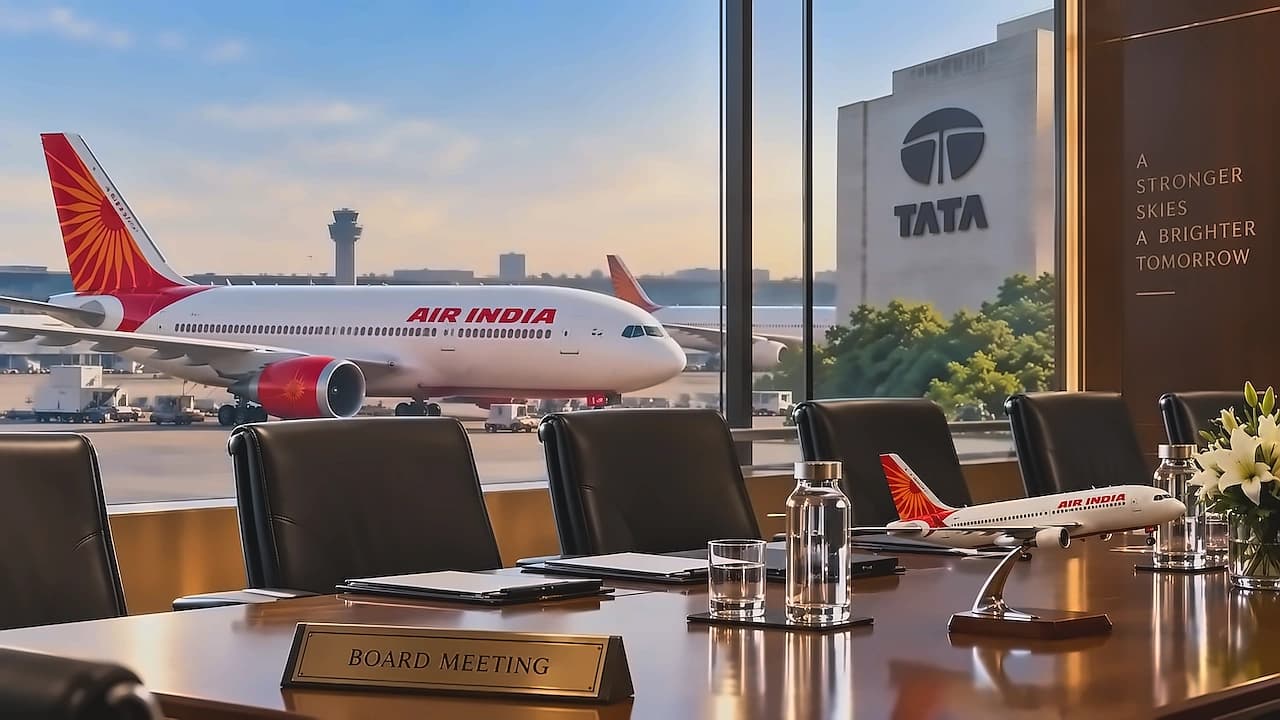
Tewolde Gebremariam has officially been appointed as Chief Executive Officer and Managing Director of Air India, following his month of meetings with Tata Group leadership. His appointment reflects Tata's intent to bring in globally seasoned leadership, as Gebremariam led Ethiopian Airlines Group's transformation into Africa's largest and most profitable carrier. Gebremariam joins Air India after a month of meetings with Tata Group leadership and will become chief executive officer and managing director following regulatory approvals. Gebremariam is not yet officially designated as CEO as he awaits security clearance from the Ministry of Home Affairs (MHA), with security clearance expected by the end of September as required under India's civil aviation rules. The airline's mounting losses will be a key challenge for Tewolde, with opposition MPs from Singapore already questioning Singapore Airlines' funding to the Indian carrier, while Noel Tata has raised concerns over Air India's losses.
Air India is increasingly exiting smaller-city and regional domestic markets in favour of its low-cost carrier Air India Express, as the Tata group sharpens the roles of its two airlines. In August, Air India decided to stop servicing seven cities—Coimbatore, Bhopal, Chhatrapati Sambhajinagar (Aurangabad), Madurai, Tirupati, Jodhpur and Jamnagar—which its budget carrier Air India Express took over. Select routes, including Mumbai-Kochi and Kochi-Delhi, have also transitioned to the low-cost carrier. The latest move was on 1 September, when Air India Express started operations at the above six destinations, connecting these cities with Delhi, Mumbai, Chennai and Hyderabad. The decision on Air India moving away from some smaller cities was taken under its outgoing chief executive, Campbell Wilson, with it being a conscious strategy for Air India's increased focus on international and long-haul destinations while Air India Express takes on a larger role in regional markets. Air India Express operated at 46 domestic and 17 international stations with 474 daily flights in FY26, adding 16 destinations between FY26 and FY27 year-to-date.
Air India faces a severe financial crisis with the airline seeking around $1.5 billion in fresh equity from shareholders at a time when losses have more than doubled and operating cash flows have turned negative. Air India Group, comprising Air India and Air India Express, reported a combined net loss of ₹22,238 crore in FY26, more than double the ₹10,859 crore loss recorded a year earlier. Group revenue declined to ₹70,086 crore from ₹76,754 crore in the same period. Operating cash flow swung from a positive ₹5,447 crore in FY25 to a negative ₹1,790 crore in FY26 — a deterioration of more than ₹7,200 crore in a single year, translating into an average operating cash burn of nearly ₹5 crore a day. The accumulated financial strain is visible on Air India's balance sheet, with reserves deteriorating to negative ₹33,147 crore at the end of FY26 from negative ₹18,070 crore a year earlier, while total liabilities increased to ₹1,10,452 crore from ₹94,005 crore. Air India accounted for a ₹15,368 crore loss while Air India Express contributed another ₹6,767 crore loss in FY26. The deterioration came during what Chandrasekaran described as Air India's most challenging year, with airspace closures, higher fuel prices amid the West Asia conflict, foreign exchange fluctuations and the crash of AI171 weighing on the airline during FY26.
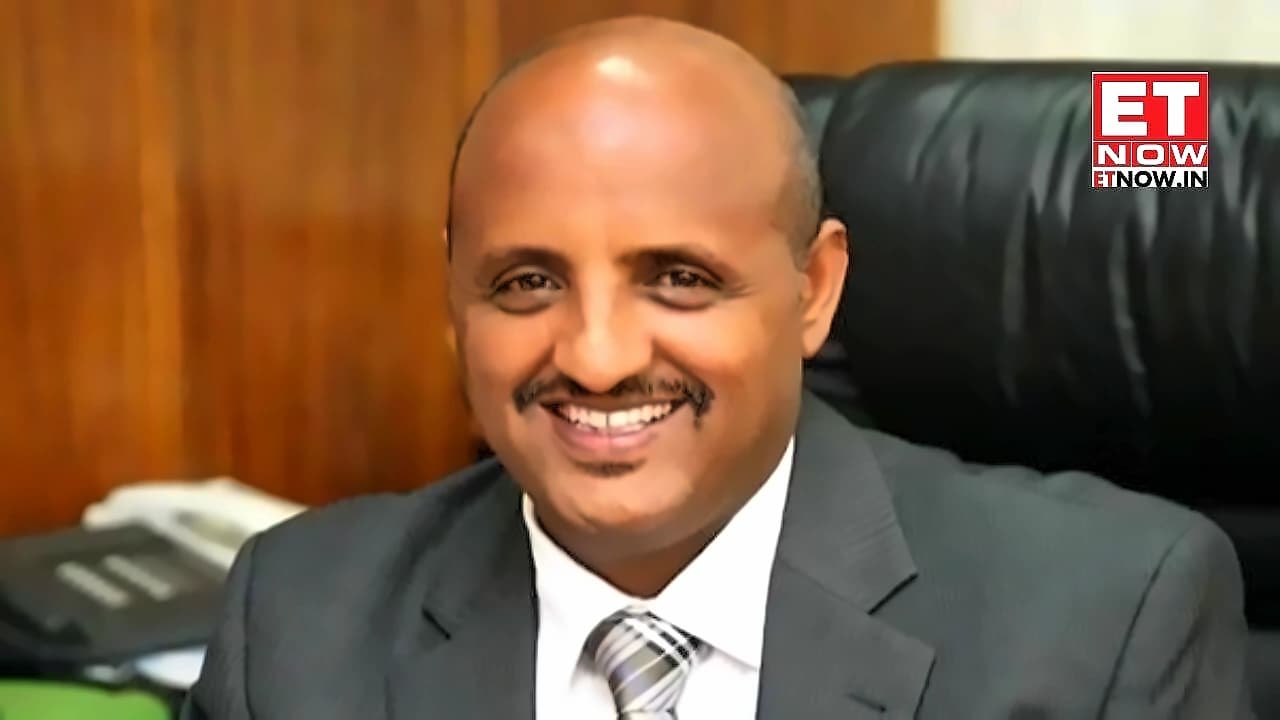
**Tata Sons Chairman N Chandrasekaran has cautioned that Air India's transformation must be seen as a five- to ten-year journey, acknowledging the complexity of the rebuilding process. The reasons extend beyond the airline's financial losses, with Tata inheriting an ageing fleet, legacy technology and systems, service issues and an organisation requiring extensive operational and cultural restructuring. Every great airline in history was built over decades, not quarters, as Chandrasekaran emphasized, with the transformation involving fleet renewal, training, service improvements and network expansion while simultaneously rebuilding technical capabilities. Some elements of the overhaul are already visible, with refurbishment of Air India's narrow-body fleet completed and its wide-body refurbishment programme expected to continue until the end of FY28. Customer satisfaction, measured through Net Promoter Score, has also improved, though aircraft refurbishment is only one part of the comprehensive programme. The airline faces a difficult sequencing problem, needing to spend heavily on product improvements and operating economics, but those investments increase funding requirements before their benefits show up in earnings.
Gebremariam joins Air India at a critical time when the airline faces intense scrutiny over safety and reliability issues. In June last year, an Air India aircraft crashed in Ahmedabad, killing more than 270 people. Most recently, 20 passengers and four crew members of an Air India Phuket-Delhi flight suffered injuries after the aircraft experienced sudden loss of altitude. The captain of the flight was terminated from services after testing positive for a psychoactive substance, as confirmed by the airline. The airline has endured a turbulent 18 months marked by geopolitical disruptions, airspace closures, fuel-price volatility and the June 2025 crash of an Air India Boeing 787 shortly after take-off from Ahmedabad. Gebremariam emphasized that safety must be the top priority, stating "A safety-first culture has to be our number one priority. It is not enough to say it. We must live it every day. If something is not right, stop. Every employee should feel empowered to raise concerns, and I will support that culture." He stressed that operational excellence is about getting the basics right every day - on-time departures, on-time arrivals, baggage delivery and clean aircraft, as reported by The Times of India. The incidents will put Air India's engineering, maintenance, pilot-training and compliance systems high on Gebremariam's agenda.
Analysts said the reallocation makes economic sense if the right routes are moved between the two carriers, with Air India increasingly being positioned as a full-service, premium and international-focused carrier, while Air India Express is structurally better suited to thinner, price-sensitive domestic and short-haul markets. "We believe it makes economic sense, provided the right routes are shifted. The bigger opportunity was not just cost saving but better fleet and network utilization," said Jainam Shah, analyst at Equirus Securities. Air India Express could increasingly feed passengers from smaller cities into Air India's international hubs, strengthening the group's hub-and-spoke model, though the challenge would be coordinating schedules and ensuring the economics of feeding long-haul flights work. The Singapore government, SIA and Temasek have responded to political questioning over SIA's exposure to Air India, with Workers' Party MP Kenneth Tiong raising questions in Singapore's parliament over SIA's investment and potential implications for Temasek. Singapore Transport Minister Jeffrey Siow responded on September 8, stating that SIA's investment in Air India had not adversely affected its ability to provide essential air connectivity to Singapore. The responses are significant because the political questioning in Singapore should not be conflated with the position of SIA or Temasek, with neither indicating an intention to retreat from the Air India investment.