Natarajan Chandrasekaran's announcement that he will step down as Tata Sons chairman in February 2027 has sent shockwaves through India's corporate landscape. The departure follows a six-month failure to secure unanimous board support for his reappointment, with one board member opposing the resolution in February 2026. This isn't merely a changing of the guard—it's a fundamental recalibration of strategic direction at a critical juncture for the group's most ambitious turnaround project: Air India. Others +1
The timing couldn't be worse. Air India has accumulated losses exceeding ₹58,000 crore over four years since Tata's acquisition in January 2022, with FY26 alone accounting for over ₹22,000 crore—the largest single-year loss since privatization. The airline's turnaround, already struggling under Campbell Wilson's leadership, now faces a governance vacuum at precisely the moment decisive action is required. Others
Capital Allocation Under the Microscope
The leadership transition represents a fundamental shift in capital allocation philosophy. Chandrasekaran championed a $120 billion investment program over five years spanning semiconductors, batteries, EVs, and aviation.
This tension has now come to a head.
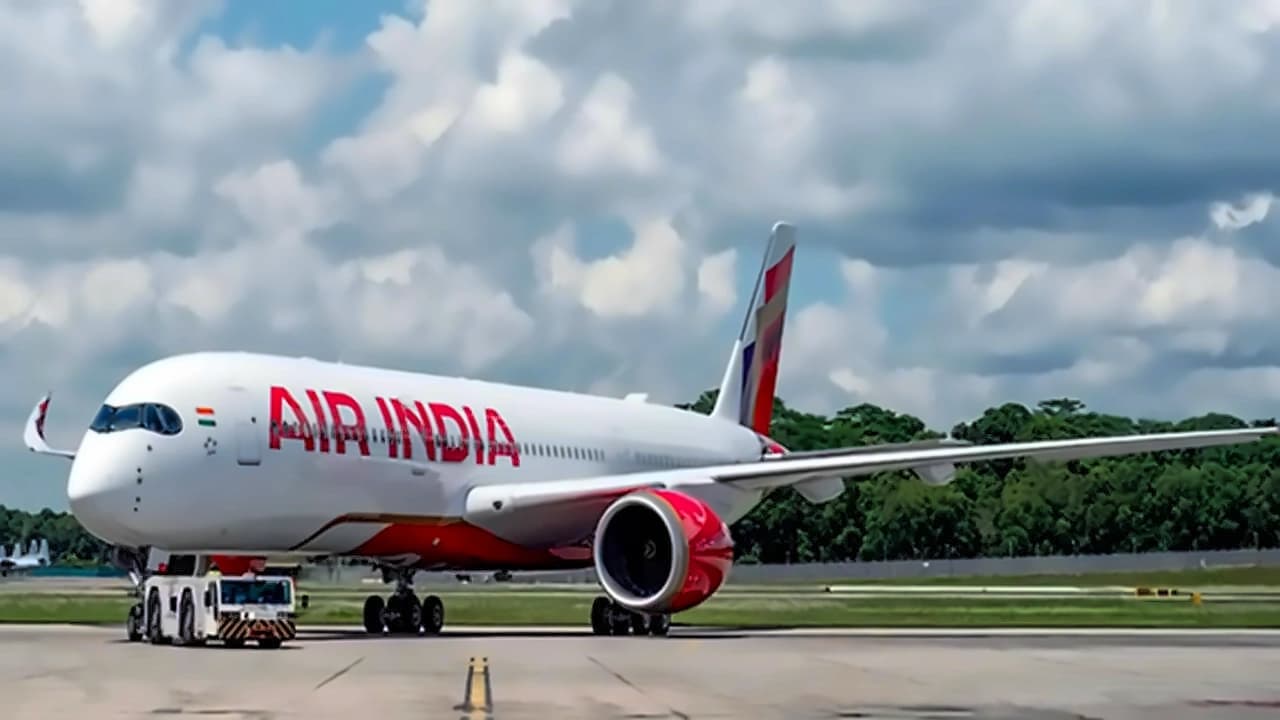
For Air India, the implications are stark. The airline has committed to 470 aircraft worth $70 billion—the world's largest aircraft order—plus additional orders of 100 Airbus aircraft and 30 Boeing 737 MAX. A $400 million refurbishment program for 67 older aircraft is underway. Yet the Tata Sons board has already begun pressing management to reassess or slow down capital-intensive projects, most notably the airline investments. Board discussions are already underway on capacity cuts of over 20%, bonus freezes, and furloughs.
The new leadership will likely apply stricter ROI criteria to Air India investments, prioritizing immediate survival funding over discretionary expansion. Singapore Airlines, which holds a 25.1% stake, is actively engaged in turnaround discussions, but capital injection amounts may not fully meet requirements. This creates a dangerous scenario: an airline requiring massive capital infusion during a period when its parent is recalibrating toward financial discipline.
Why Internal Candidates Hold the Edge
Tata Group's succession process is leaning heavily toward internal executives, and the reasons are structural rather than sentimental. The governance architecture demands it. Tata Trusts collectively hold 66.4% of Tata Sons, with Sir Dorabji Tata Trust (27.98%) and Sir Ratan Tata Trust (23.56%) holding the majority. Under Article 121A of Tata Sons' Articles of Association, key board decisions require the affirmative vote of directors nominated by Tata Trusts, granting them veto power over strategic plans, investments, and leadership changes.
Leading internal candidates include T.V. Narendran (61), Tata Steel CEO with 36+ years of group experience; Praveer Sinha (64), Tata Power CEO; Saurabh Agrawal, Group CFO who engineered balance sheet restructuring; Puneet Chhatwal, who delivered exceptional turnaround at Taj hotels; and K. Krithivasan, TCS CEO. Each understands the complex governance structure and the delicate balance between Tata Sons and Tata Trusts.
Noel Tata, as Tata Trusts Chairman, is legally barred from becoming Tata Sons Chairman. This makes him the kingmaker rather than the king, with control over succession while maintaining separation of powers. An internal candidate familiar with this unique structure is essential for navigating the relationship between professional management and the dominant shareholder.
Governance Transformation: From Consensus to Scrutiny
Noel Tata's emergence as the central authority represents a fundamental reshaping of Tata Group's governance structure. Under Chandrasekaran, the Tata Sons board functioned with professional management enjoying considerable operational latitude, anchored by broad strategic alignment with the Trusts. That equilibrium has been shattered. The atmosphere has shifted from deference to dialogue, with divergent views voiced more openly and differences no longer seen as a threat to unity.
The Trusts, under Noel Tata's leadership, are asserting their role not merely as custodians of legacy but as active shareholders demanding accountability, capital discipline, and long-term clarity. Strategic assumptions that once passed with limited resistance are now subjected to closer scrutiny. The board is less inclined to view sustained losses in new businesses as inevitable transformation costs and more inclined to demand defined timelines, measurable milestones, and clearer pathways to profitability.
This transformation aligns with broader Corporate India trends toward enhanced board accountability, formal succession planning, and active shareholder oversight. However, it also creates risks. The more rigorous deliberations, while improving governance quality, have slowed decision-making. For Air India, which requires rapid, decisive action to stem losses and execute integration, this governance recalibration could prove costly.
Financial Performance Under Pressure
The succession uncertainty has already impacted financial metrics.
On the announcement day, Tata counters lost around ₹64,000 crore intraday, with TCS falling 5.36% as the group's crown jewel and largest profit contributor.
Tata Sons reported strong FY26 performance—revenue grew 9.1% to ₹42,367 crore while profits after tax grew 21.8% to ₹31,961 crore. At the aggregate level, Tata Group revenue grew 7.8% to ₹16,24,030 crore while profits after tax grew 51.9% to ₹1,70,525 crore. The group has delivered total shareholder returns of 287% compared to Nifty 50 returns of 253% over the past decade. However, this strong performance masks underlying pressures.
New-age ventures have reported heavy losses. Tata Digital reported a loss of more than ₹10,905 crore in FY26, sharply higher than ₹1,557 crore in FY25. Tata Electronics remains loss-making. Together, these unlisted entities lost close to ₹32,000 crore last fiscal. Traditional businesses face headwinds too—TCS is grappling with AI disruption, while Jaguar Land Rover's revenue fell 20% in FY26 amid US tariffs and a cyberattack.
The Path Forward: Risks and Resilience
The leadership transition creates a critical 12-18 month window where capital allocation decisions will determine whether Tata Group can execute Air India's turnaround without compromising group financial health. The new leadership's approach to capital allocation will be the single most important factor determining outcomes.
A shift toward financial discipline and ROI-focused deployment, while potentially slowing expansion momentum, may ultimately strengthen the group's long-term financial foundation. However, the execution risks are significant. Decision-making delays during the succession process could stall critical Air India initiatives. Strategic direction uncertainty—continue aggressive expansion or shift to consolidation—creates paralysis. Market confidence erosion affects group valuations. Tata Trusts' dividend requirements constrain capital flexibility.
Mitigating factors exist. Strong group cash flows from established businesses provide resilience. TCS's dividend engine offers capital flexibility. A deep management bench across operating companies ensures continuity. Proven succession planning processes support smooth transitions.
The selection committee, expected to be formed with three Tata Trusts nominees and two Tata Sons board nominees, will take 1.5-2 months to identify a successor once constituted. The target is completion by end-2026, allowing transition before February 2027. Noel Tata is likely to chair the committee as kingmaker, wielding considerable influence over the choice.
For Air India, the stakes couldn't be higher. The airline's Vihaan transformation program—a five-year restructuring plan—requires sustained investment and decisive leadership. The merger with Vistara, completed in November 2024, demands seamless integration of operations, cultures, and systems. Fleet modernization with A350 induction and 777X orders requires capital commitment. Cargo operations consolidation targets 2.5 million tonnes by 2027.
The leadership vacuum presents moderate-to-high execution risks for these initiatives. Yet Tata Group has navigated such transitions before. The group's resilience lies in its diversified portfolio, strong operating company leadership, and cultural continuity. The question is whether these strengths can compensate for the governance uncertainty and strategic recalibration at the apex during this critical period for Air India's turnaround.
The next six months will determine whether Tata Group can balance modernization with tradition, preserve its governance premium while adapting to contemporary expectations, and maintain its unique trust-based ownership structure while enhancing transparency and accountability. For Air India, the clock is ticking.