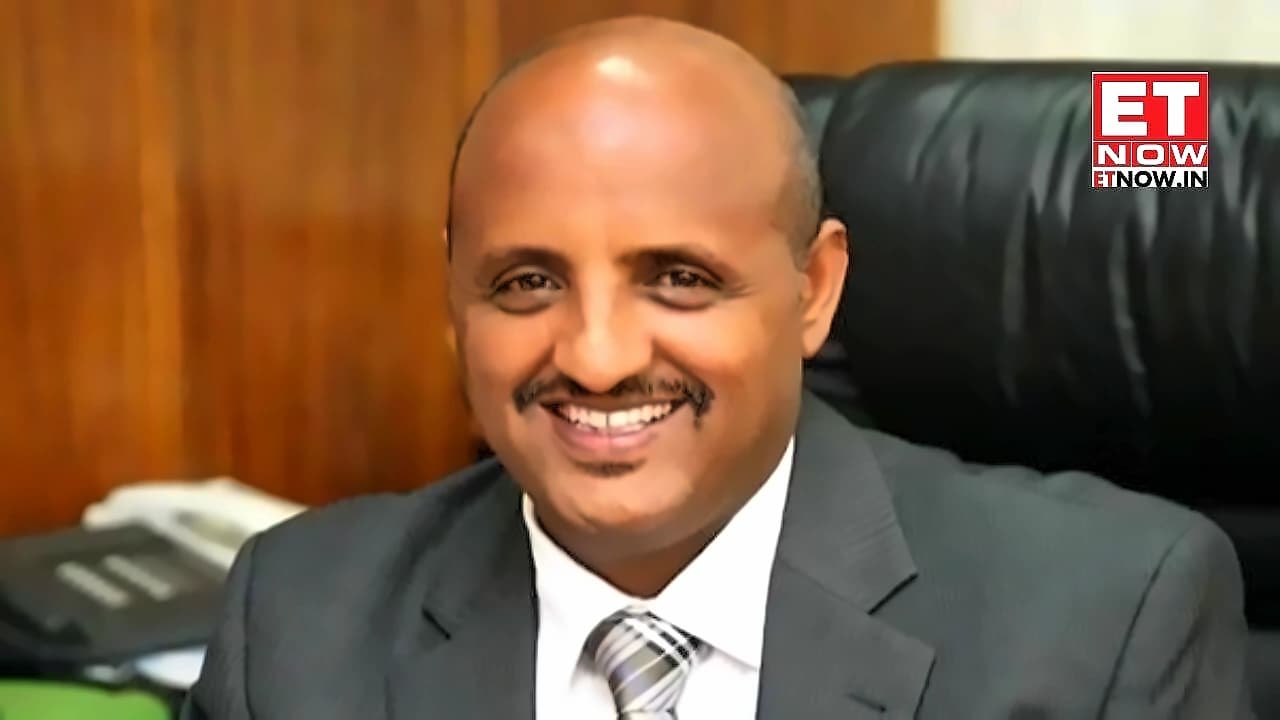
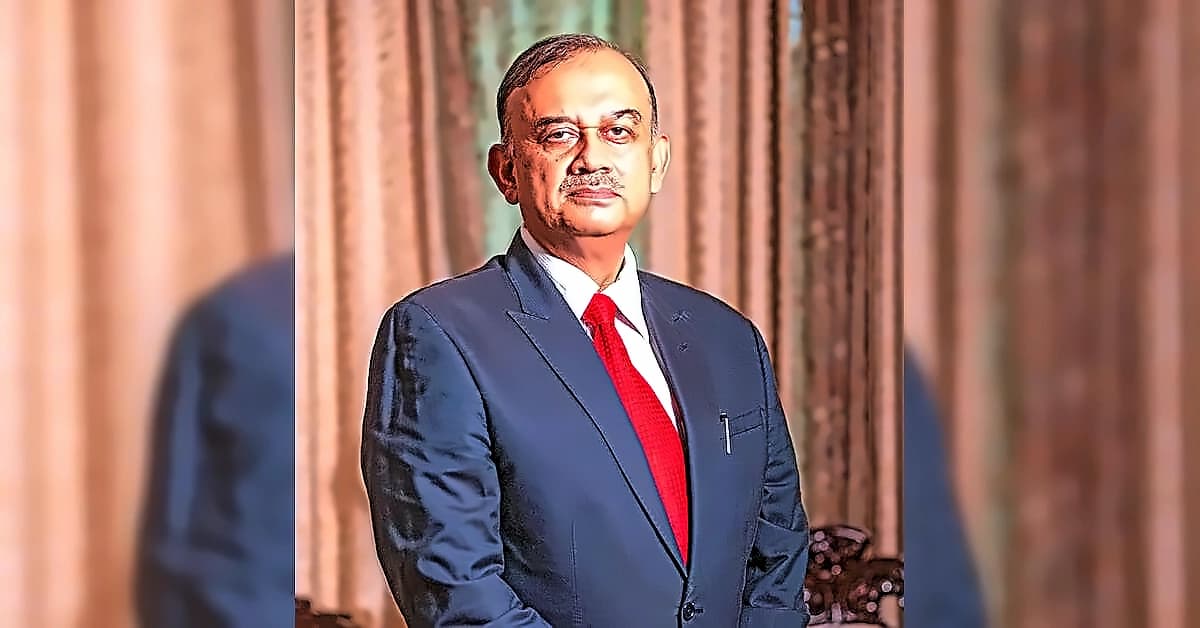
Tewolde Gebremariam, the incoming CEO and managing director of Air India, officially assumed operational leadership on Monday, taking over from former chief executive Campbell Wilson. According to reports from The Economic Times, while Gebremariam's security clearance is expected by month-end, chairman N Chandrasekaran introduced him to employees at a town hall meeting on Monday, marking the beginning of operational charge. The 61-year-old former Ethiopian Airlines CEO, credited with turning Ethiopian Airlines into Africa's largest and most profitable airline, expressed confidence in making Air India a strong brand again. As reported by Rediff Moneynews, Chandrasekaran formally introduced Gebremariam to the staff, noting that the appointment was announced on August 5 after a comprehensive search overseen by a dedicated board committee. In his first address to employees, Gebremariam said Air India has a powerful heritage, a strong brand and enormous potential, stating "If we do the right things at the right time, the sky is the limit."
Gebremariam's leadership approach centers on establishing a safety-first culture as the number one priority. As reported by Moneycontrol, he stressed that it is not enough to say safety is important - employees must live it every day. The incoming CEO emphasized that if something is not right, employees should stop operations and that every individual should feel empowered to raise concerns. His comments come after Air India sacked the pilot-in-command of a Phuket-Delhi flight on August 4 after he tested positive for a psychoactive substance. According to The Economic Times, the airline dismissed the captain of the aircraft after the preliminary investigation said he was tested "non-negative" for a psychoactive substance in a confirmatory test. Chandrasekaran urged staff to help build a stronger culture of cost consciousness and emphasized that the airline's safety record should be better than the best, stating the most important thing Air India should aspire to have is trust in people's minds. Gebremariam reinforced this message, stating that safety-first culture has to be the number one priority and emphasizing the need to minimize disruptions when they occur. The emphasis on safety comes more than a year after the airline made headlines after its flight 171, from Ahmedabad to London crashed into the hostel block of the B. J. Medical College campus, claiming 248 casualties.
Gebremariam outlined specific operational improvements as key priorities for Air India's transformation. According to Moneycontrol reports, he stressed the need for operational excellence in getting basics right every day: on-time departures, on-time arrivals, baggage delivery and clean aircraft. He emphasized that customer experience depends on consistent execution and that the airline must minimize disruptions when they occur, handling them professionally and taking care of customers. The focus on operational reliability addresses challenges faced by the carrier over the past 18 months. In his address to staff, Gebremariam stressed the importance of minimizing disruptions and handling them professionally when they do occur, stating that "I need your support and cooperation. We cannot bring about meaningful change without the commitment of our people." As reported by The Economic Times, the new CEO brings extensive experience in building operational and engineering capabilities from his tenure at Ethiopian Airlines, and is expected to strengthen Air India's technical organisation and maintenance systems as the airline prepares to operate a significantly larger fleet.
Recent safety incidents highlight the urgency of Gebremariam's safety-first approach. An Air India Express flight returned to Cochin after detecting a rapidly falling oil quantity, with pilots shutting down Engine 1 when oil pressure entered the danger zone before landing safely at Cochin International Airport. According to The Economic Times, this incident follows recent technical diversions and a preliminary report on another flight. The Ministry of Civil Aviation may tighten safety audit frameworks following these developments. Additionally, Amritsar airport operations were suspended for nearly ninety minutes on Sunday night after drones were spotted across the airfield, prompting runway closure and diverting seven scheduled flights to other airports. Airport operations resumed after the situation was declared normal around eleven fifteen PM, with police currently investigating the drone sighting incident. These incidents underscore the critical need for enhanced safety protocols and operational reliability that Gebremariam is prioritizing in his leadership.
For FY26, Air India reported a loss of around ₹26,800 crore and has also sought ₹10,000 crore in fresh equity infusion from its owners, Tata Sons and Singapore Airlines. According to The Economic Times, the airline faces mounting pressure to improve safety and operational reliability and stem losses. The carrier has been under intense scrutiny following the fatal Ahmedabad crash in June last year that killed over 270 people. As reported by Moneycontrol, chairman N Chandrasekaran acknowledged the past 18 months had been challenging, citing geopolitical disruptions, airspace closures, fuel volatility and the AI171 accident. The chairman emphasized that the next phase must focus on safety, customer trust, operational execution and cost discipline. Outgoing CEO Campbell Wilson thanked the chairman, board and employees for their support during his four-year tenure and acknowledged the transformation was not yet complete, expressing confidence that Air India's best days are still ahead and emphasizing he will remain the airline's biggest cheerleader from the sidelines.
Chairman N Chandrasekaran emphasized that bringing Air India back to the Tata Group is one of the most important milestones of his career, calling it a very significant event. Speaking at the internal meeting, he said "Air India belongs to a billion people. It is not just another business." He acknowledged that the past 18 months had been particularly challenging for the airline, with geopolitical disruptions, airspace closures, fuel volatility and the tragic AI171 accident impacting operations and performance. Chandrasekaran stressed the need to deliver a more consistent customer experience and remain agile amid a rapidly evolving operating environment. The new CEO will assume the role of CEO and MD after receiving necessary approvals and is expected to have significant autonomy to drive sustainable operational practices. As reported by The Economic Times, Chandrasekaran and former Air India chairman and managing director Pradeep Singh Kharola will continue to work closely with Gebremariam in the initial few months. Gebremariam, who comes with nearly four decades of experience at Ethiopian Airlines Group, including as its CEO for over 11 years, drew parallels to his previous success, recalling his stint in Mumbai in the 1990s when Air India was at the top of the industry. He stated that "I am coming from the US and that 'we will Make Air India Great Again (MAGA)' while emphasizing his focus on enhancing engineering and maintenance functions while prioritizing financial discipline and profitability.