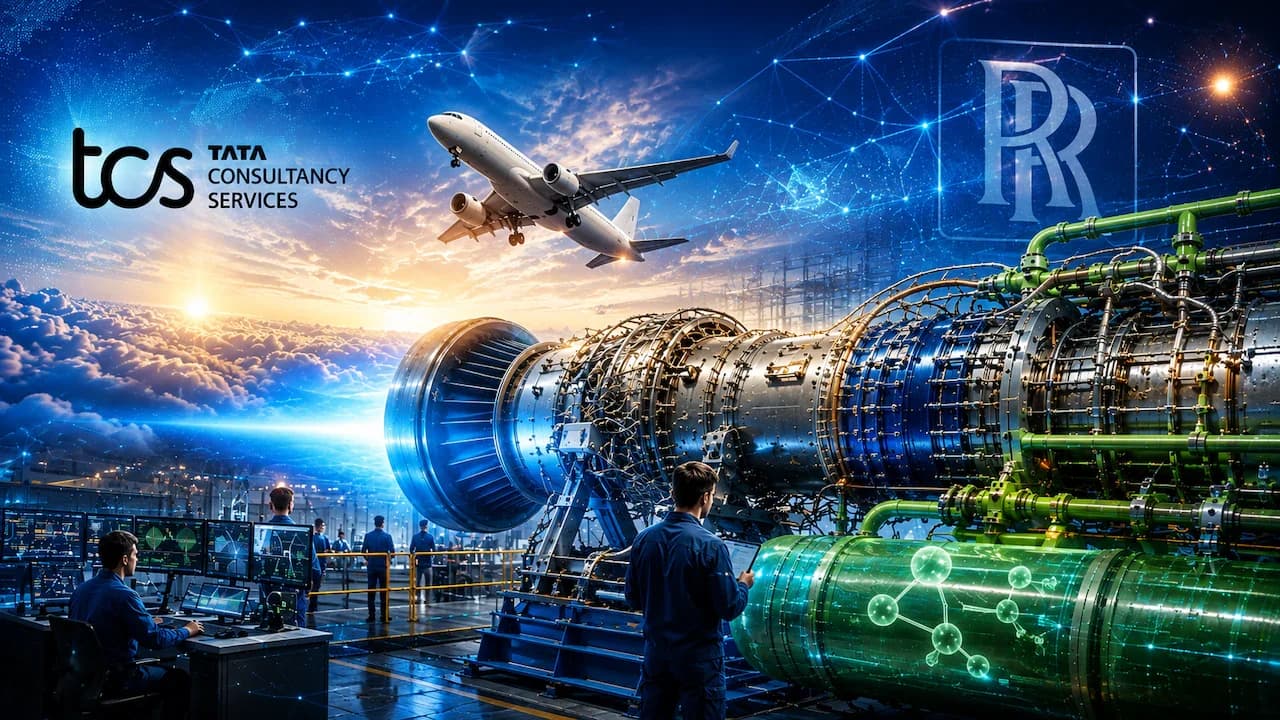
Tata Consultancy Services (TCS) and Rolls-Royce have successfully completed a fully simulated flight cycle of a modern aero gas turbine using 100% hydrogen, marking a major milestone in the development of hydrogen-powered aviation. According to reports from NDTV Profit, IT Voice, and Business Standard, the demonstration covered key stages of a flight, including take-off, cruise and landing, making it an industry first. The modified aero engine successfully operated on 100% hydrogen through the simulated flight cycle, focusing on technologies needed to make hydrogen propulsion viable for future aircraft. Tests validate that 100% hydrogen propulsion can power an aeroplane engine, bringing hydrogen-powered flight closer to reality. Adam Newman, Chief Engineer, Hydrogen Demonstrator Programme at Rolls-Royce, stated that the testing provided valuable insights into how 100% hydrogen behaves in a modern aero gas turbine across a complete flight cycle, while validating critical combustion, fuel-system and engine-control technologies.
The test was designed to assess how hydrogen performs as an aviation fuel while validating critical combustion, fuel-system and engine-control technologies. As reported by NDTV Profit, IT Voice, and Business Standard, the four-year hydrogen propulsion programme was first announced by Rolls-Royce and easyJet in 2022, with TCS joining the initiative in 2024 as an engineering and technology partner. TCS supported Rolls-Royce across several areas including hydrogen combustion analysis, fuel-system and engine-control integration, test preparation, validation, data analytics, risk management and detailed engineering design. As IT Voice reports, TCS provided engineering expertise that helped fast track the development, testing and successful delivery of the hydrogen propulsion programme. Anupam Singhal, President of Manufacturing, TCS, emphasized that the achievement demonstrates what can be achieved by combining advanced engineering, digital capabilities and collaboration across the aviation ecosystem, stating that this milestone reflects what becomes possible when advanced engineering is combined with digital capabilities and deep ecosystem collaboration to move breakthrough innovation closer to the real world.
Adam Newman, Chief Engineer, Hydrogen Demonstrator Programme at Rolls-Royce, stated that the testing provided valuable insights into how 100% hydrogen behaves in a modern aero gas turbine across a complete flight cycle while validating critical combustion, fuel and control system technologies. According to NDTV Profit, IT Voice, and Business Standard, the learnings could support future propulsion technologies, including Rolls-Royce's UltraFan programme. Anupam Singhal, President of Manufacturing, TCS, emphasized that the achievement demonstrates what can be achieved by combining advanced engineering, digital capabilities and collaboration across the aviation ecosystem, with the milestone reflecting what becomes possible when advanced engineering is combined with digital capabilities and deep ecosystem collaboration to move breakthrough innovation closer to the real world.
Aviation currently accounts for around 2-3% of global carbon dioxide emissions, making hydrogen-powered aviation a significant environmental initiative. As reported by NDTV Profit, IT Voice, and Business Standard, unlike conventional aviation fuels, hydrogen can potentially eliminate in-flight CO₂ emissions when used in suitable propulsion systems and deployed at scale. The success of this demonstration marks a significant step towards enabling lower-carbon aviation, with the programme providing one of the clearest demonstrations to date of how hydrogen could power future aircraft engines. The demonstration brought together expertise from across the aviation ecosystem, with Rolls-Royce and TCS working alongside easyJet, NASA, the UK Health and Safety Executive (HSE) and other industry partners to bring hydrogen-powered flight a step closer to reality.
The successful completion of the simulated flight cycle provides important data on the performance and integration of hydrogen combustion, fuel and control systems. According to NDTV Profit, IT Voice, and Business Standard, the knowledge gained from this programme will be the bedrock that will help inform future propulsion technologies and support the aviation industry's transition towards low-carbon air travel. Building on this milestone, IT Voice reports that TCS will continue working with Rolls-Royce to advance hydrogen-powered aviation technologies, supporting the broader aviation industry's sustainable transformation goals. For TCS, the programme highlights its expanding role beyond traditional IT services into engineering, digital technology and advanced manufacturing solutions. However, the latest demonstration does not mean commercial hydrogen-powered passenger aircraft are ready for service, as reported by NDTV Profit.