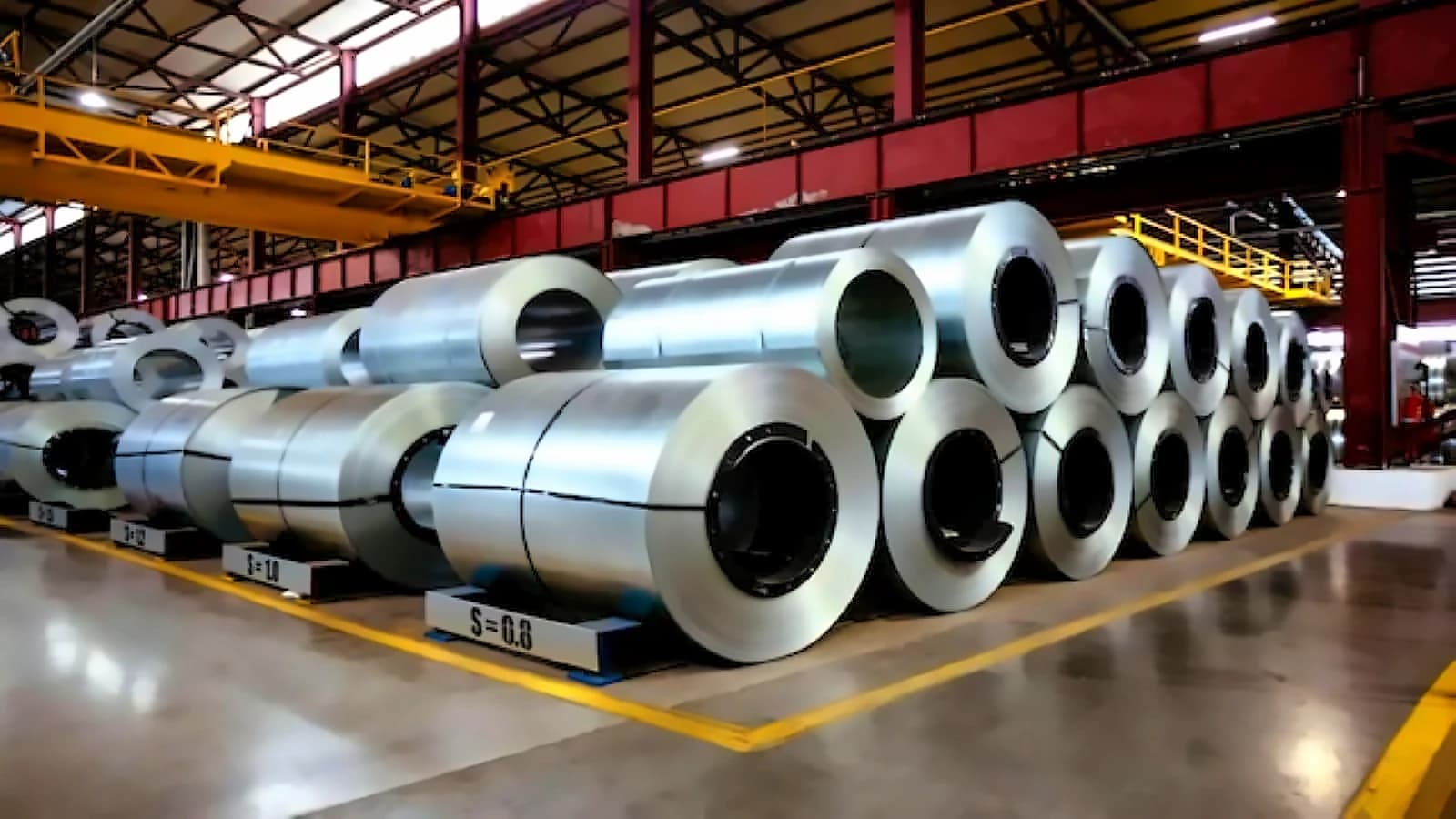
Tata Steel delivered robust domestic performance in Q1FY27 with 8.8% year-on-year growth in steel delivery volumes to 5.17 million tonnes, as reported by The Financial Express. This strong domestic performance contrasts sharply with the company's European operations, which faced significant challenges due to the Middle East crisis and regional conflicts. The company's automotive and construction segments achieved what it described as 'best-ever' Q1 volumes, with the automotive and special products vertical reaching nearly 0.9 million tonnes and construction sector demand remaining particularly strong. The performance represents a significant improvement from the 4.75 million tonnes delivered in the June 2025 quarter, demonstrating the company's ability to capitalize on favorable market conditions.
The strong domestic performance was significantly boosted by Tata Steel's recent capacity expansion at its Kalinganagar facilities in Orissa, which increased capacity from nearly 3 million tonnes to nearly 8 million tonnes. According to The Financial Express, the company highlighted enhanced deliveries in the June 2026 quarter from higher output at its Jamshedpur and Kalinganagar facilities. Tata Steel ended FY26 with a total capacity of 36 million tonnes, with domestic capacity of nearly 26.1 million tonnes. The expanded local capacity came at a time when user industries like two-wheelers and four-wheelers enjoyed buoyant sales in the quarter, with the company benefiting from the 33% year-on-year growth in Tata Tiscon branded steel products for the construction sector.
Tata Steel's European operations continued to struggle, with Netherlands delivery volumes declining 6.6% year-on-year to 1.4 million tonnes and UK operations falling 20% to 0.48 million tonnes, as reported by The Financial Express. The company attributed the Netherlands decline partly to the shutdown of Direct Sheet Plant in April 2026, though local environment authorities have permitted trial runs ahead of full operations restart. In the UK, Tata Steel is working on a £1.25 billion (₹16,000 crore) electric arc furnace at Port Talbot with 3 million tonnes capacity, expected to be commissioned by end-2027. The Middle East crisis and Ukraine war have led to a surge in crude prices and made European consumers very cautious, with numerous economic surveys pointing to broad stagnation in key French and German economies.
Despite strong domestic performance, Tata Steel's stock ended Thursday broadly flat at ₹187.8, trading at a consolidated P/E of 20.8 times, according to The Financial Express. JSW Steel, which ended 0.4% higher at ₹1,224.4, trades at a higher P/E of 32.6 times, while SAIL ended 2.4% higher at ₹165.9 with a P/E of 17.9 times. The company's total delivery volumes reached 7.38 million tonnes in Q1FY27, representing a 2.6% year-on-year increase driven primarily by strong domestic operations. Steel stocks tend to be volatile and respond immediately to changes in the global economy and trade cycles, with SAIL trading at valuations lower than its peers and potentially worth adding to the watch list for 2026.