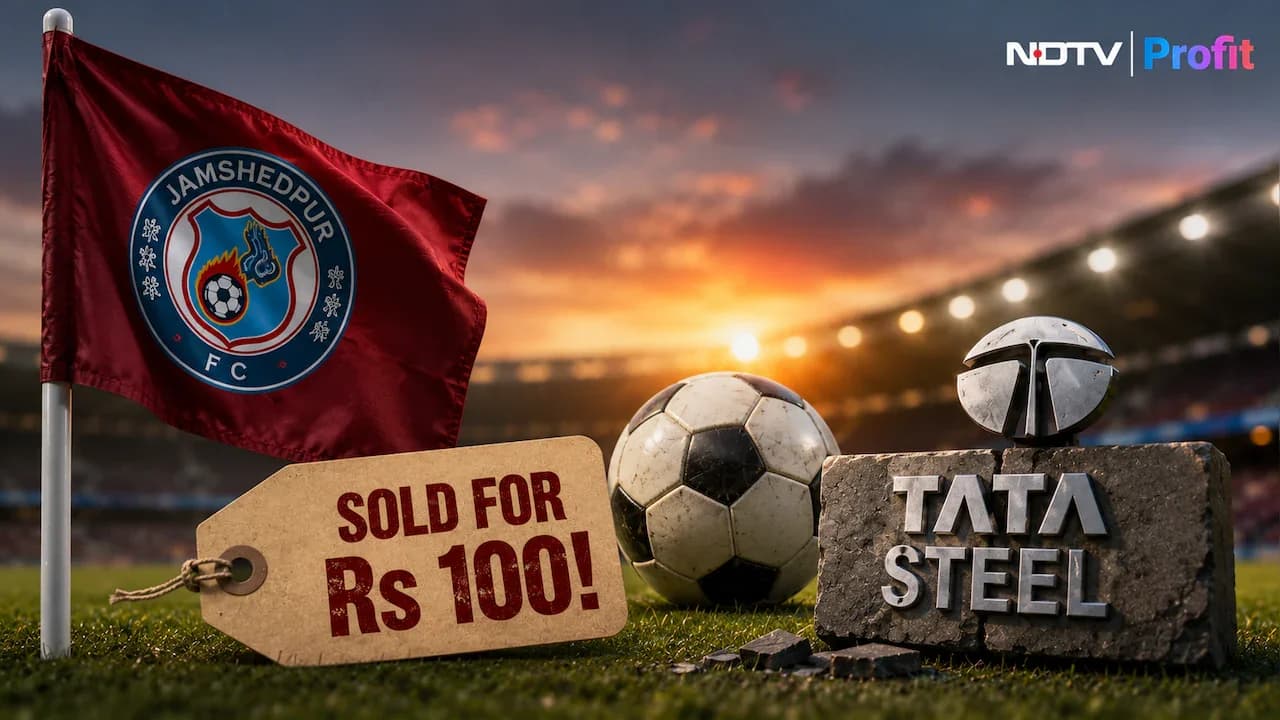
Tata Steel has completed its exit from professional football ownership by selling its entire stake in Jamshedpur Football and Sporting Private Limited (JFSPL) to Churchill Brothers Sports Club for a token sum of ₹100. According to reports from CNBC TV18, The Hindu BusinessLine, and Business Standard, the Committee of Directors approved the transfer of all 4,08,00,000 equity shares in JFSPL at its meeting on August 14, with the share purchase agreement signed on the same day. The transaction is expected to close by August 31, subject to approval from the All India Football Federation and other customary conditions. As reported by CNBC TV18, the deal remains subject to certain conditions, including approval from the All India Football Federation (AIFF) and completion of other customary formalities. This development comes in the aftermath of Tata Steel confirming that Jamshedpur FC would withdraw from the upcoming ISL season, stating that the club's focus would be on grassroots football. The company had decided against paying the ₹55 lakh participation fee required under the league's new club-led model and subsequently confirmed that the club's operations would be shut down.
The sale price represents a significant discount, with the deal valued at approximately 150 times cheaper than the official FIFA World Cup 2026 match ball, which retails for close to ₹15,000. As reported by CNBC TV18, The Hindu BusinessLine, and Business Standard, the transfer includes JFSPL's ISL sporting licence along with contracts of 12 players and two coaches, who will move to Churchill Brothers with effect from September 2026. Churchill Brothers will also be responsible for meeting the club's immediate operating commitments, including the ₹1.1 crore ISL participation fee for the new season. JFSPL posted a turnover of ₹32.23 crore in FY26, representing a fraction of Tata Steel's consolidated revenue, and had a negative net worth of ₹5.8 crore as of March 31, 2026. According to Business Standard, the company's financial deterioration was particularly pronounced in FY26, with operating revenue falling 41.2% from ₹54.37 crore in FY25 to ₹31.95 crore in FY26. The decline was primarily driven by a 98.5% collapse in ISL central rights income from ₹21.24 crore in FY25 to just ₹32.37 lakh in FY26, while sponsorship revenue remained relatively stable at ₹26.8 crore in FY26.
Tata Steel shares were down 1.1% at ₹182.85 per share at 1 pm on Friday following the announcement, as reported by CNBC TV18. The stock has declined 2.9% in the past month but is up 0.5% this year so far. According to CNBC TV18, Tata Steel said Churchill Brothers is not related to its promoter or promoter group and the transaction does not constitute a related-party transaction. The exit has prompted strong reactions from fans and players, including former India captain Sunil Chhetri, who urged the Tata Group to reconsider its decision. As reported by Livemint Sports, Chhetri wrote on social media: "To know that Jamshedpur has folded first team operations is a punch to the gut. The players and staff will be without clubs, and they might find one by the end of it all. The League will have a team less, but the season will go on. However, not having the TATA group involved in the top tier of Indian football — that would be a disaster with no alternative."
The exit comes as the Indian Super League faces growing commercial viability concerns, with Economic Times reporting that ISL media-rights value has fallen dramatically from ₹275 crore annually paid by JioStar to an ₹8.6 crore offer from FanCode for the 2025-26 season. The league has experienced other major exits, including Manchester City owner City Football Group's exit from Mumbai City FC last year, and the end of a 15-year commercial agreement between Football Sports Development Limited and AIFF after disputes over the league's commercial structure. Market estimates cited by Economic Times suggest the wider Indian football ecosystem has invested heavily over 15 years while incurring losses of more than ₹5,000 crore. The transaction also comes at a significant point for Indian football, with the ISL moving towards a new club-led model from this season, where participating clubs are reportedly required to pay an annual administrative fee of ₹1.1 crore to the federation in two instalments. As reported by Business Standard, Ajimon Francis, managing director of Brand Finance India, has argued that the withdrawal of large corporate investors from the ISL reflects concerns over whether the league is generating sufficient progress and long-term value.
According to CNBC TV18 and Business Standard, D B Sundara Ramam, Vice President, Corporate Services at Tata Steel, confirmed the company would continue to focus on grassroots and youth football through the Tata Football Academy, which has trained over 300 cadets since its founding in Jamshedpur in 1987, including 150 who went on to represent India. The company will maintain its investment in sporting infrastructure in partnership with the AIFF, even as it steps back from top-flight club ownership. Churchill Brothers, with close to four decades of history in Indian football and two I-League titles, stated the transfer would allow Jamshedpur's playing and coaching staff to continue their careers in the ISL without disruption. For Churchill Brothers, the acquisition represents a major development in its involvement in Indian football, having returned to the top tier after winning the 2024-25 I-League, though Inter Kashi were subsequently declared champions following a ruling by the Court of Arbitration for Sport regarding a player eligibility dispute. As reported by Business Standard, Tata Steel has emphasized that the ₹100 transaction should not be interpreted as Churchill Brothers buying the entire sporting ecosystem, but rather Tata Steel's shareholding in JFSPL and the professional club operation, while the company maintains its broader sporting infrastructure in Jamshedpur.