Tata Steel has successfully commissioned India's first coke oven gas (COG) injection project at its Meramandali steel plant in Odisha. According to reports from UNI, this initiative represents a significant milestone in the steel industry as it will help cut fossil-fuel consumption and carbon emissions from conventional blast furnace-based ironmaking operations. The project demonstrates the potential to make greater use of gases already generated within an integrated steel plant while improving resource efficiency.
The project involves cleaning COG to remove harmful tar and sulphur before piping it directly into the blast furnace through small nozzles called tuyeres. As reported by The Manufacturing Frontier, with support from technology partner M/s Paul Wurth-SMS and equipment supplier M/s Kobelco, Tata Steel has successfully implemented COG injection in the blast furnace. The gas, which contains over 55 per cent hydrogen and methane, is typically used for power generation, heating or flared in integrated steel plants. Instead of burning this gas for general heat or power, the project cleans the gas to remove harmful impurities before utilizing it as a reductant in blast-furnace operations. The COG is injected into the blast furnace through tuyeres, replacing a portion of fossil fuel used in the ironmaking process.
According to Subodh Pandey, vice-president – technology, R&D, NMB and Graphene at Tata Steel, the initiative will improve resource efficiency while lowering the carbon intensity of ironmaking by using COG as a reductant and partial substitute for conventional fossil fuels. As reported by The Manufacturing Frontier, the hydrogen in the gas replaces carbon as a chemical reducer, which lowers total carbon dioxide (CO₂) emissions. The project provides a unique opportunity to operate the blast furnace with a three-fuel system, enhancing operational flexibility and efficiency while reducing the amount of expensive metallurgical coke or coal needed to make iron. The initiative also strengthens Tata Steel's efforts towards green steel production through the safe and stable operation of advanced injection technologies. Subodh Pandey emphasized that this initiative of maximising the utilisation of process gases to reduce dependence on external fossil fuels reinforces Tata Steel's leadership in sustainable manufacturing.
Tata Steel Ltd, Meramandali, located in Odisha's Dhenkanal district, is one of India's leading integrated steel manufacturing facilities and the country's largest producer of auto-grade steel. According to UNI, the plant became part of Tata Steel following the successful acquisition by Bamnipal Steel Ltd (BNPL), a wholly owned subsidiary of Tata Steel, in 2018. Sudhir Kumar Mehta, vice-president – operations at TSM, emphasized that the project combines operational efficiency with environmental gains, stating the company continuously looks for ways to improve efficiency while reducing environmental impact by finding productive uses for coke oven gas within the blast furnace process. The project enables the productive use of coke oven gas within the blast furnace process while improving operational efficiency.
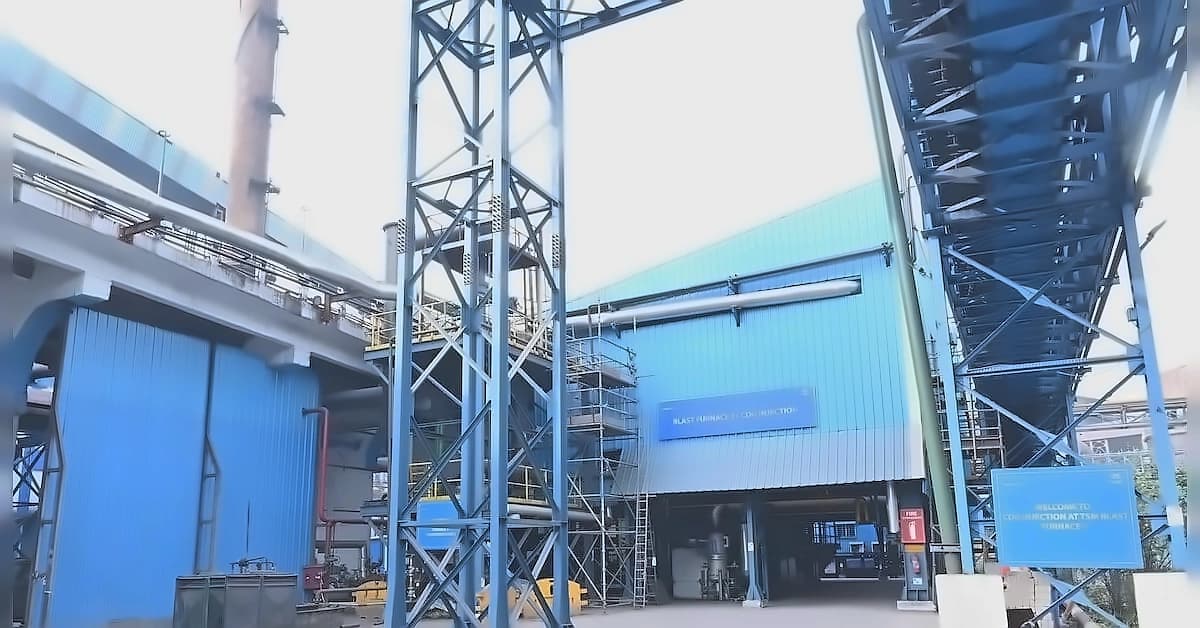
Tata Steel's decarbonisation push is being pursued alongside capacity expansion and technology investments across its operations. As reported by The Manufacturing Frontier, the project reinforces Tata Steel's commitment to achieving its Net Zero target by 2045 and underscores its focus on deploying innovative technologies for low-carbon iron and steel production. In FY26, the company logged a consolidated CO₂ emission intensity of 2.22 tonnes per tonne of crude steel (tCO₂/tcs) alongside an R&D expenditure of ₹1,456 crore. The initiative is expected to accelerate the company's journey towards Net Zero by 2045, with the hydrogen-rich gas injection providing a relatively direct route to reducing emissions without fundamentally changing the blast-furnace process. Tata Steel has previously tested other low-carbon injection technologies in blast furnaces, including coal bed methane, hydrogen and biochar injection, as part of its comprehensive approach to reducing emissions from steelmaking operations.