Tata Motors Ltd. is increasingly looking beyond vehicle sales for growth, with parts, services, connected-vehicle platforms and digital businesses emerging as key profit drivers as the company seeks to reduce dependence on industry cycles. According to Business Standard, Managing Director and Chief Executive Officer Girish Wagh stated in the company's FY26 annual report that opportunities in alternate powertrains, digital services and monetisation of parts and services remain significant. The company's non-cyclical businesses delivered growth of 18.2% in FY26, with spares and services making an increasing contribution to profitability. Fleet Edge, the company's telematics platform, has crossed one million connected vehicles, while Fleet Verse, its digital commerce platform, has seen growth in vehicle sales, bookings and customer enquiries. As reported by Business Standard, Wagh emphasized that the focus during this period was not on reacting tactically, but on staying anchored to fundamentals—maintaining execution discipline, protecting customer relationships and aligning supply with evolving demand signals.
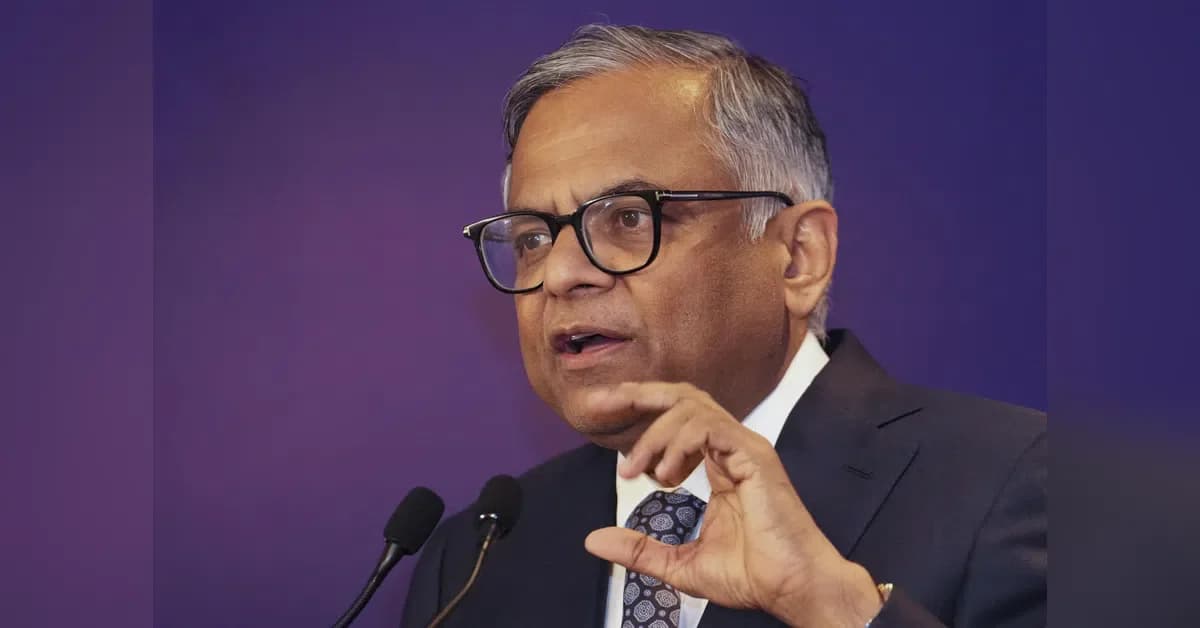
Tata Motors Ltd. recorded its highest ever revenues of ₹83,855 crore in FY26, representing a robust year-on-year growth of 9.8% compared to ₹76,359 crore in FY25, as announced by Chairman N Chandrasekaran in the company's annual report. The automotive business delivered an exceptional return on capital employed of 72.3%, positioning it among the highest in the global commercial vehicles industry. According to Chandrasekaran's address to shareholders, the company is well-positioned to sustain its profitable growth journey, supported by a strong balance sheet and improving returns. The chairman emphasized that the company's focus will remain on delivering industry-leading growth, profitability and returns, supported by disciplined capital allocation to address emerging mobility trends.
Chandrasekaran outlined Tata Motors CV's continued focus on electric mobility, hydrogen-powered technologies, connected vehicles and artificial intelligence-led transformation. In his annual report address, he emphasized that the transition to cleaner mobility requires a portfolio of electric, hydrogen and cleaner internal combustion engine technologies. The chairman noted that advances in digital technologies and AI are transforming how mobility products are designed, experienced and supported. While the company scales the portfolio of zero-emission electric CVs, it will continue to invest in hydrogen-based technologies for heavier-duty segments. The company expanded its electric commercial vehicle portfolio across buses, trucks and small commercial vehicles during FY26, while also progressing pilot deployments of hydrogen-powered trucks on select freight corridors. Focus areas include digital-led solutions, connected vehicle technologies, advanced driver assistance systems, data-driven fleet services and new-age powertrains.
The chairman highlighted the proposed acquisition of Iveco, expected to be completed in the second quarter of FY27, subject to regulatory approvals. According to Business Standard, the deal would provide access to advanced technologies, expand global market reach and strengthen product capabilities across geographies. Chandrasekaran noted that Tata Motors and Iveco together could emerge among the world's top four commercial vehicle companies. He emphasized that the acquisition would be a significant step in the company's global expansion strategy, providing the scale and technological capabilities needed to compete effectively in international markets. The acquisition would strengthen Tata Motors' presence across Europe, Latin America and other international markets, adding scale, manufacturing and powertrain capabilities, complementary markets and "a strong technology roadmap aligned to evolving emission norms and alternative fuel powertrains".
Jaguar Land Rover continues to be crucial for Tata Group's technology firms amid challenging IT sector conditions. According to latest reports, Tata Technologies seeks shareholder approval to increase its business from JLR to ₹1,750 crore in FY26, translating to almost a third of its revenue. The company received ₹1,337 crore from JLR last year, up 11% and accounting for about a fourth of its revenue. Together, the three Tata Group technology companies expect to get about ₹6,000 crore in revenue from JLR. Tata Elxsi got ₹845.9 crore from JLR for developing infotainment and internal software, while TCS earned ₹3,566 crore, down 2.6%. The partnerships have become increasingly important as the IT sector faces growth challenges due to rising automation tool usage and slow tech spending.