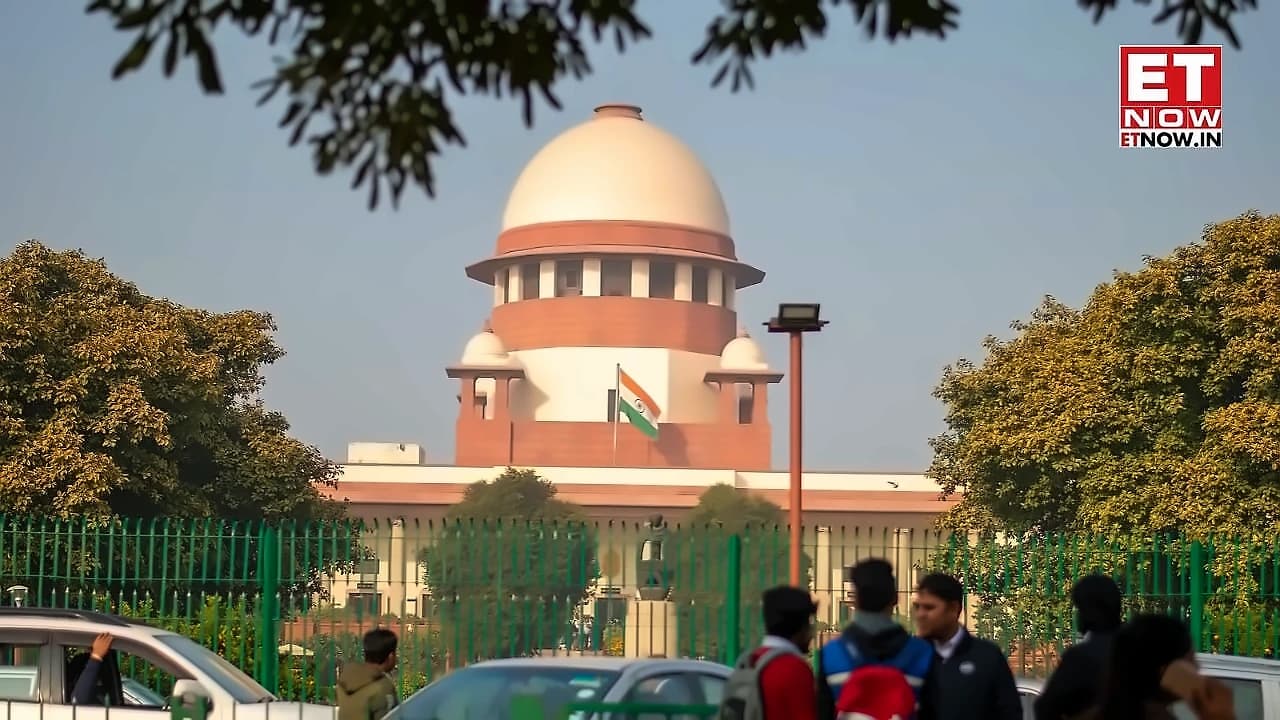
Vedanta has clarified that the Supreme Court ruling on the resolution plan for Videocon Industries does not pertain to the company, stating it was not a party to the proceedings. According to an exchange filing, the proceedings concern Twin Star Technologies and do not require disclosure under SEBI's Regulation 30. The clarification came after Vedanta shares fell nearly 3% in morning trade following reports on the court's decision. The ruling addresses the resolution plan for Videocon Industries and 12 other group companies, with the proceedings originally initiated in June 2018 following a petition by State Bank of India.
A bench of Justices PS Narasimha and Alok Aradhe upheld the National Company Law Appellate Tribunal's (NCLAT) 2022 order remanding Twin Star Technologies' resolution plan for Videocon Group companies to the lenders for reconsideration. The Supreme Court dismissed Twin Star Technologies' plea challenging the appellate tribunal's order and upheld NCLAT's power to send resolution plans back to the committee of creditors (CoC) for reconsideration. The Supreme Court also laid down certain guidelines on the issue, reinforcing its authority to remand resolution plans to the CoC for reconsideration when valuation parameters face legal challenge.
The resolution plan, worth ₹2,962 crore, had been approved by the CoC in 2020 but faced objections from dissenting lenders, including Bank of Maharashtra. As reported by Informist, the dissenting lenders argued that the amount offered by Twin Star was meagre compared with Videocon Group companies' admitted liabilities of around ₹65,000 crore. The proposed waiver amounted to nearly ₹62,000 crore of admitted claims and ₹69,000 crore of total claims, translating into a haircut of over 95%. The committee of creditors had approved the plan, which represented a recovery of around 4% of admitted claims, with the Mumbai bench of the National Company Law Tribunal (NCLT) approving it in June 2021.
The lenders highlighted significant disparities in recovery rates under the proposed plan. According to Informist, financial creditors such as State Bank of India had received less than 5% of their claims, while operational creditors would get barely 0.72% under the plan. The dissenting lenders' objections centered on the inadequate recovery rates and the substantial haircut proposed to creditors. The ruling opens opportunities for financial institutions to negotiate revised terms or discover higher resolution values, as the Committee of Creditors gains the mandate to re-run the corporate insolvency resolution process and evaluate new bids.
Shares of Vedanta fell nearly 3% in morning trade on Monday following the Supreme Court's decision, with the stock trading at ₹252.50, down ₹7.50, or 2.89%, on the NSE at 11:32 am. The market reaction reflects investor concerns over the setback to Twin Star Technologies' bid to secure the original resolution plan for the Videocon Group companies. The development avoids immediate capital outlay for Vedanta's promoter group while removing prospective asset consolidation from Videocon's consumer electronics and oil assets portfolio. For Vedanta Limited, the judicial decision holds neutral direct financial impact on its core operation balance sheet as Twin Star Technologies operates as a promoter-level investment vehicle, preventing immediate capital commitments while re-opening competitive asset bidding.