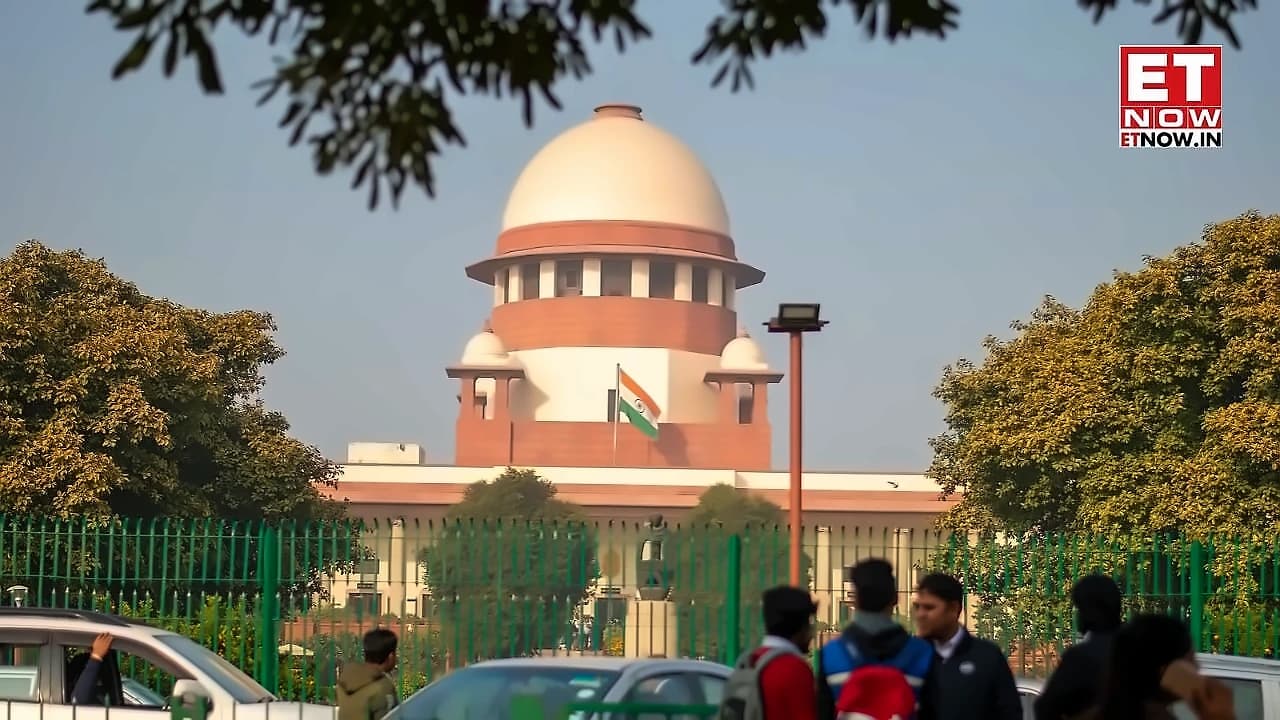
The Supreme Court has upheld the National Company Law Appellate Tribunal's (NCLAT) order to set aside the approval granted to Twin Star Technologies' resolution plan for the consolidated insolvency proceedings of 13 Videocon Group companies. As reported by Business Standard, the Supreme Court ruled on November 16 that courts can set aside lender-approved resolution plans that violate mandatory provisions of the Insolvency and Bankruptcy Code (IBC). The court specifically laid down five considerations to guide remand orders, emphasizing that remand must further the IBC's objectives including keeping the distressed company a going concern, ensuring fair recovery for creditor classes and maximising asset value. The court held that remand must be based on a finding of legal non-compliance, exercised sparingly and accompanied by strict timelines, with the NCLAT also having the power to remand where the NCLT has improperly modified a plan instead of returning it to the CoC. The court clarified that the NCLAT was wrong in holding that prior approval of the Competition Commission of India (CCI) had not been obtained, noting that a CCI communication dated December 8, 2020, showed that approval was secured before the CoC's voting concluded on December 11, 2020. The Supreme Court also ruled that the decision regarding the extent of the haircut falls within the domain of the Committee of Creditors (CoC), whose exercise of commercial wisdom is non-justiciable, meaning the insolvency proceedings are likely to be further delayed.
The case involves Twin Star's Videocon Plan, which was originally rejected by authorities. As reported by Business Standard, this restructuring plan was part of broader corporate reorganization efforts involving Twin Star and Videocon. The Supreme Court's decision to maintain the NCLAT's order suggests that the court has determined that the plan does not meet regulatory or legal requirements for approval under the IBC framework. The ruling comes as a major setback for Twin Star, which had secured approval for its resolution plan in 2020, with the Vedanta-backed company's offer representing only around 4% of the admitted claims and translating into a haircut of nearly 96% for creditors. The Mumbai bench of the National Company Law Tribunal (NCLT) approved the plan on June 8, 2021, after it received the backing of 95.09% of the CoC. The plan provided for an upfront payment of ₹200 crore to lenders and NCDs worth ₹2,700 crore, carrying an annual coupon of 6.65%, with the debentures redeemable in instalments over a period extending up to six years.
The challenge centered on how Vedanta group-backed Twin Star proposed to pay dissenting creditors of Videocon and whether the resolution plan complied with the IBC. According to Business Standard reports, creditors argued they were being offered less than their liquidation-value entitlement and also objected to receiving part of the payment through non-convertible debentures (NCDs) instead of cash. The dissenting financial creditors - Bank of Maharashtra, Small Industries Development Bank of India (SIDBI) and IFCI - had also flagged discrepancies in distribution calculations, arguing that the plan gave them less than what they would have received if Videocon had gone into liquidation. The plan was subsequently challenged by dissenting financial creditors before the NCLAT in January 2022, with the appellate tribunal setting aside the NCLT's approval and remitting the matter to the CoC for fresh resolution process. Creditors representing 94.98% of the voting share raised objections over the substantial haircut and the manner in which stakeholders were treated, highlighting the significant dissent among lenders despite the initial approval. The NCLT had recorded that the plan offered ₹2,962.02 crore against admitted claims of ₹64,838.63 crore, entailing a haircut of 95.85%, with four lenders holding about 3.077% of the voting share voting against the plan.
Twin Star had offered ₹2,962 crore to acquire 13 Videocon group companies against total claims of ₹64,637.6 crore, of which ₹64,838.63 crore were admitted. As reported by Business Standard, the offer translated into a 95% haircut for creditors. The Mumbai bench of the National Company Law Tribunal (NCLT) approved the plan on June 8, 2021 against admitted liabilities of approximately ₹65,000 crore, meaning creditors faced losses of nearly ₹62,000 crore. The resolution plan was subsequently approved by the Mumbai bench of the National Company Law Tribunal (NCLT) in June 2021, but the three dissenting financial creditors challenged the approval before the NCLAT, arguing that the plan did not adequately protect their statutory entitlements, particularly regarding the amount and manner of payment. The proposal secured the backing of lenders holding 95.09% of the CoC's voting share, but subsequent objections from creditors representing 94.98% of the voting share over the substantial haircut led to the current dispute.
The NCLAT's comprehensive ruling on January 5, 2022 identified multiple compliance failures in the resolution plan. As reported by Business Standard, the appellate tribunal found that the plan did not comply with Section 30(2)(b) of the Insolvency and Bankruptcy Code (IBC) and flagged discrepancies between the resolution professional's compliance certificate and SBI Caps' distribution calculations. The tribunal also held that dissenting lenders could not be forced to accept securities instead of the monetary payments mandated under the Code and observed that the NCLT's direction to replace debenture payments with cash effectively modified the resolution plan, a decision that fell within the CoC's domain. The court clarified that the NCLT could not have modified the plan by directing that dissenting creditors be paid their liquidation value in cash upfront, before payments to other lenders, noting that such changes could only be made by the CoC through the prescribed voting process. The Videocon group was admitted into the corporate insolvency resolution process in June 2018 following a petition by the State Bank of India, with the insolvency proceedings subsequently consolidated to cover 13 group companies, making it one of India's prominent group insolvency cases. Section 31 of the National Company Law Tribunal (NCLT) talks about whether a resolution plan complies with the essential requirements of the IBC, while Section 61(3) talks about the grounds on which its approval can be challenged before NCLAT, though neither tribunal can rewrite a plan or replace the CoC's commercial judgment.