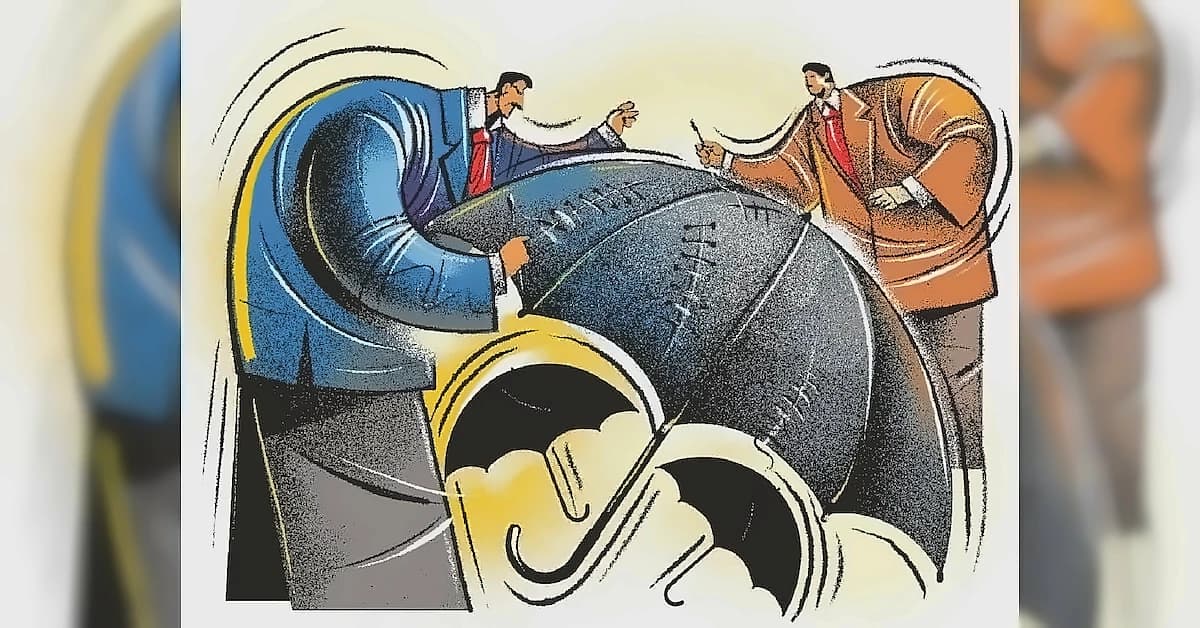
State-run general insurers must submit board-approved plans to the government detailing how they will scale back or exit unprofitable business segments, according to reports from The Economic Times. The government aims to evaluate the performance of these companies based on a time-bound roadmap for organic solvency. Policies regarding better pricing, oversight, and structured reinsurance for risky insurance areas are being emphasized to move away from perpetual reliance on accounting adjustments or emergency capital infusions.
Severe monsoon damage and aggressive price discounting in fire insurance pushed key players into underwriting losses, offsetting gains from strong investment returns. Flood claims, falling fire insurance rates and a Supreme Court ruling on motor accident compensation hurt India's listed multiline general insurers in the September quarter, even as standalone health insurers turned in underwriting profits. Several parts of the country witnessed floods and cyclonic activity during the year, including recent cyclones Arnab and Murasu. The general insurance industry had estimated claims of nearly ₹5,000 crore, largely in the property segment, arising from floods in Gujarat.
New India Assurance reported a standalone net loss of ₹1,267 crore in Q2 FY27, as reported by Mint, against a profit of ₹63 crore a year earlier. The insurer's combined ratio rose to 156.2% from 139.8%, meaning it spent about ₹156 for every ₹100 of premium. ICICI Lombard General Insurance, the country's largest private general insurer, reported a 15% rise in profit to ₹946 crore, though its combined ratio worsened to 107% from 105.1%, partly because of catastrophe losses of ₹118 crore. General Insurance Corporation of India (GIC Re) saw profit fall 14% to ₹2,456 crore as its combined ratio climbed to 110.2% from 108.5%.
Fire premiums fell about 24% in the quarter, according to Emkay Global Financial Services, which attributed the decline to "increased discounting and pricing aggression, led by higher reinsurance capacity in the market." Fire insurance accounted for 7.1% of total multiline premiums in the first half of FY27 (April-September 2026), down from 10.5% a year earlier, as intense market competition drove the sharp decline in share. Kotak Institutional Equities said the fall eased in September, when fire premiums dropped about 15% compared with 25-30% in the previous two months.
In June, the Supreme Court ruled that a homemaker's unpaid domestic work has economic value and must be counted when deciding compensation for road accident victims under the Motor Vehicles Act. Instead of equating her income with a daily-wage labourer's, the court valued it at ₹30,000 a month and added "loss of domestic care" as a separate head of compensation. New India set aside an additional ₹715 crore for motor third-party claims based on an initial assessment of possible losses, stating that "the lack of premium revision in the motor TP segment continues to hurt the company and the industry." Third-party motor premiums grew only 9% in September, probably because of "lower focus on most players in this segment, following the recent court ruling."
Standalone health insurers delivered strong earnings growth during the quarter, with Star Health and Allied Insurance's profit more than tripling to ₹265 crore under Indian accounting standards, and its combined insurance service ratio improving to 98% from 100.9%. Niva Bupa Health Insurance's profit more than doubled to ₹136 crore, with the ratio improving to 98.8% from 103.1%. Retail health premiums across the industry rose about 31% in the quarter, according to Kotak, linked to improved affordability after the goods and services tax (GST) exemption on individual health policies.
The solvency ratio of three public sector general insurers - Oriental Insurance Company Ltd, United India Insurance Company Ltd., and National Insurance Company Ltd. - has remained below the prescribed norms, according to The Economic Times. As per the Insurance Regulatory and Development Authority of India (IRDAI), all insurance companies need to maintain a surplus of 1.5 times their liability. New India's solvency ratio fell to 1.61 times from 1.80 times at the end of June, just above the regulatory minimum of 1.5 times, while GIC Re's solvency stood at 4.18 times and ICICI Lombard's rose to 2.74 times from 2.68 times. Investment gains cushioned the sector impact, with New India booking about ₹1,800 crore in capital gains by selling part of its stake in the NSE Ltd, and ICICI Lombard's investment income rising to ₹1,554 crore from ₹1,249 crore a year earlier.