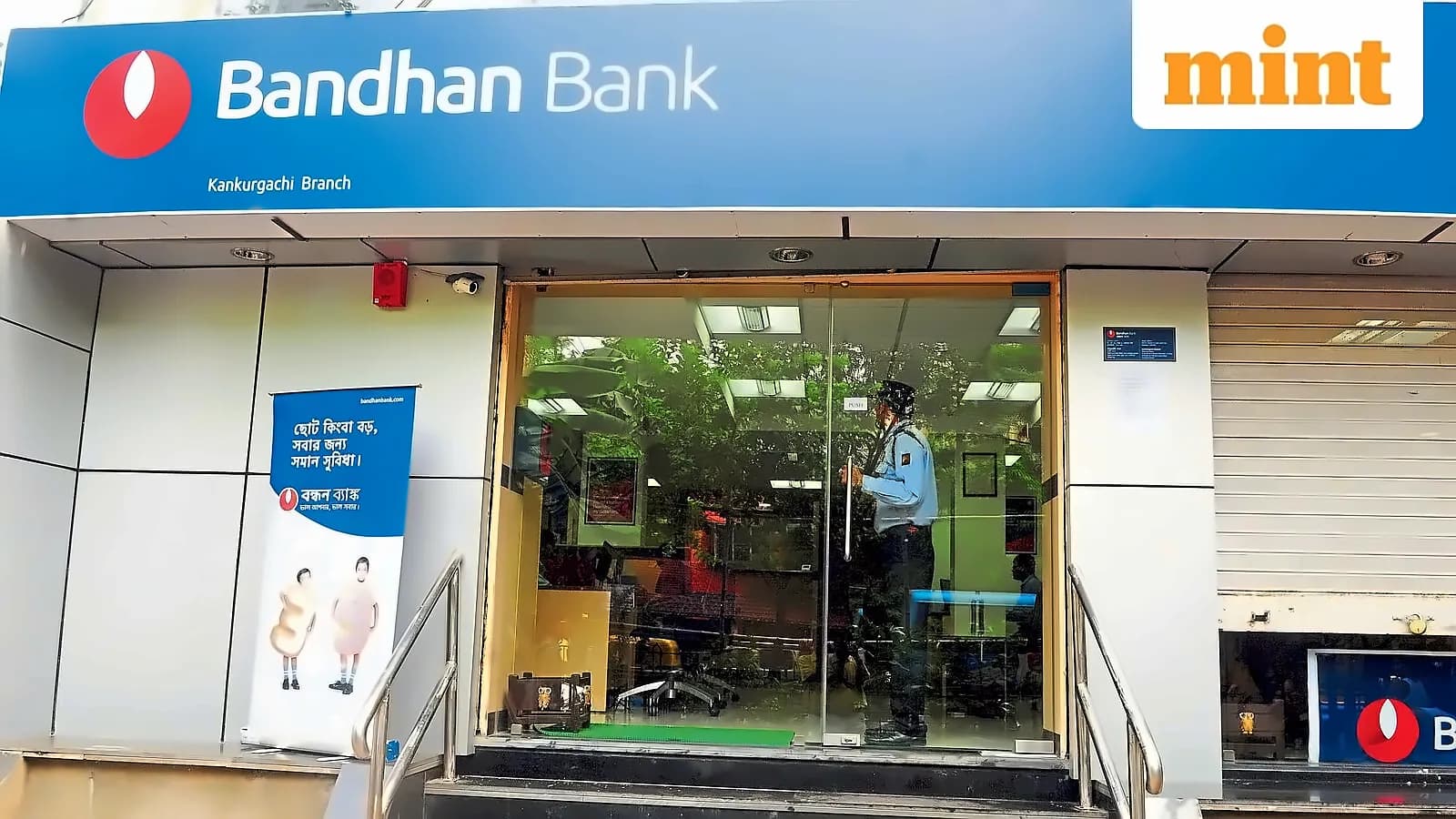
Life Insurance Corporation of India sits at a crossroads. The idea of evolving into a full-fledged financial conglomerate—combining insurance, banking, and housing finance—sounds logical on paper. But the regulatory reality is more complicated. IRDAI has historically capped an insurer's holding in any single investee company, typically at 15%. When LIC acquired a controlling stake in IDBI Bank in 2018, it was a one-time exemption, not a template for future expansion. That exemption came with a clear expectation: LIC would gradually lower its stake toward the mandated limit.
Today, LIC holds 49.24% of IDBI Bank, and the government holds 45.48%. The proposed sale to Fairfax Financial Holdings would see LIC offload 30.24%, retaining 19% initially, which must then be diluted to 15% within two years. This structure effectively moves LIC from bank promoter to financial investor. It preserves a bancassurance partnership—IDBI remains LIC's top partner for selling insurance through bank branches—but it closes the door on LIC acting as a bank promoter itself. Investor Presentation
For LIC to revisit banking opportunities, three regulatory changes would likely be needed. First, IRDAI would need to provide a standing framework allowing insurers to promote banks, rather than one-off exemptions. Second, the RBI would need to accept an insurer as a bank promoter under its licensing and ownership rules. Third, the government might need to amend the LIC Act or Insurance Act if a holding-company structure is envisioned. None of these are currently in motion.
The distinction between LIC and LIC Housing Finance matters here. LIC is regulated by IRDAI, while LIC Housing Finance is a housing finance company regulated by the RBI. If LIC wanted to enter banking, the housing finance subsidiary could theoretically be a cleaner path because it avoids IRDAI's investment limits. However, this would still require RBI approval, and LIC has not publicly outlined such a plan.
Margin Expansion: Drivers and Sustainability
LIC's margins have improved sharply. The net value of new business (VNB) margin rose from 16.8% in FY24 to 21.2% in FY26 and 22.3% in H1 FY27. This expansion wasn't magic—it came from deliberate shifts in product mix, assumptions, and expenses. Annual Report +2
The biggest driver was business mix. Individual non-par savings grew about 59%, and protection grew 43.6%. Non-par products carry much higher margins—around 49.3% compared to 19.4% for participating products. Assumptions also helped, particularly the reference rate, which contributed positively. Persistency assumptions were realigned to recent experience, though this added some drag. Expenses were a headwind, partly due to the loss of input tax credit under GST changes. Transcript +2
Management is targeting a mid-20s margin by year-end. But how sustainable is this? Part of the gain came from a favorable yield curve, which management itself warned may not recur. Sensitivity data shows that a 100-basis-point drop in reference rates could cut the margin by 4.4 percentage points. Persistency is another risk—a 10% rise in discontinuance reduces the margin by 1.2pp. Transcript +2
The shift toward non-par products also changes LIC's risk profile. Participating policies share investment and longevity risks with policyholders through bonuses. Non-par guarantees are fixed, shifting more risk onto LIC's balance sheet. Annuities, which grew to 23.49% of individual new business premium in H1 FY27, add longevity and reinvestment risk. Management is cautious about dividend payouts as it prepares for a risk-based capital regime. Investor Presentation +1
IDBI Stake Sale: Capital Efficiency and Value Unlock
The IDBI Bank stake sale is a major capital event. The deal, valued at about ₹52,878 crore, involves selling a combined 60.72% stake to Fairfax. LIC's share of the proceeds would be roughly ₹26,300 crore, assuming pro rata payment. This is a small fraction of LIC's policyholder investments, which stood at ₹53.68 lakh crore in March 2026, but it represents a significant unlock from a concentrated, illiquid holding. Annual Report
The stake sits in policyholders' funds, so the proceeds will benefit policyholders and potentially shareholders through better returns. The cash can be redeployed at LIC's portfolio yield, which was 8.92% in FY26. However, the filings do not disclose a specific redeployment plan. Transcript +1
This transaction aligns with a broader trend: simplification rather than expansion. LIC is moving from bank promoter to minority investor. The retained 15-19% stake preserves the bancassurance channel, which remains important even though bank-sourced premium was only ₹483 crore in Q1 FY27. The deal also helps the government meet its disinvestment targets, but for LIC, it's primarily about capital efficiency and reducing concentration risk. Transcript
Distribution: Agents, Digital, and the Competitive Moat
LIC's distribution strength is its physical reach. It covers 92% of districts, compared to 82% for the rest of the sector. Its network includes 14.52 lakh exclusive agents, 3,636 branch and satellite offices, and 88 bancassurance partnerships. This is a formidable moat, especially for products that require trust and face-to-face interaction. Investor Presentation
But the moat has cracks. Agent count fell 2.73% to 14.46 lakh, and LIC's share of industry agents dropped to 43.69% from 47.11%. Management says it is weeding out non-serious agents and focusing on quality and productivity. The agency channel still accounts for 93.07% of new business premium, so its health is critical. Transcript +1
Digital tools are being deployed to strengthen this network. The Ananda app completed 436,925 policies in Q1 FY27, up 25.56% year-on-year, and active agents on the app grew 16.29%. The MyLIC and Super Sales Saathi apps, launched in April 2026, aim to reduce paperwork and speed up service. A new Datalake platform is operational to support AI and machine learning use cases. Transcript +2
Bancassurance and alternate channels are growing but remain small. In H1 FY27, they collected ₹2,458 crore of individual new business premium, up 21.44%. Management says bancassurance focuses mainly on annuities and ULIPs, while agents drive protection and policy counts. This complementary role reduces direct competition between channels. Investor Presentation +1
Regulatory Headwinds: Commission and Expense Caps
IRDAI's proposed commission and expense-of-management norms, released in September 2026 as a consultation paper, could reshape distribution economics. The proposals include reducing the company-level expense limit for life insurers to 15% of gross direct premium within two years and 12.5% within five years. Commission caps are also on the table—average term insurance commission, currently around 51% of premium, could fall to about 30%.
For LIC, the impact would be uneven. Its overall expense ratio was 11.91% in FY26, which looks below the proposed 12.5% terminal limit, though the measures aren't directly comparable. The bigger issue is agent commissions. With 93% of new business premium coming from agents, any cap on agent commissions hits LIC harder than insurers with more diversified distribution. Banks, which earn fee income from bancassurance, could see their income shrink—Macquarie estimates bancassurance fees at about 12.5% of pre-tax profit for Axis Bank and 7.3% for HDFC Bank. Annual Report +1
LIC has not publicly detailed its response to these proposals. The consultation period ended on October 25, 2026. The outcome will influence agent retention, acquisition costs, and the economics of the agency channel that remains LIC's backbone.
Market Leadership: Legacy, Gaps, and the Road Ahead
LIC's 70-year legacy is a powerful asset. It maintains leadership with a 56.66% overall market share in FY26 and 60.10% in Q1 FY27. Group business is particularly strong, with a market share around 70%. But individual business share is lower, at about 37-39%. Annual Report +1
Gaps remain. Protection and health are weak spots—protection was only 0.39% of individual new business premium in H1 FY27, and health was 0.00%. Management acknowledged this weakness and expects improvement over several quarters. New product launches in October 2026, including Health Shield and New Cancer Cover, aim to address this gap. Investor Presentation +2
LIC's investment strategy differentiates it from private insurers. Its very large participating book allows it to pool risk with policyholders through bonuses. Bonus allocation rose to ₹59,726 crore in FY26. Its equity exposure is significantly higher than competitors', which boosts returns but increases sensitivity under the upcoming risk-based capital regime. Annual Report +2
The transition to a more non-par-heavy portfolio brings LIC closer to the private insurer model, with its own set of risks and rewards. The challenge for management is to sustain margin improvements, strengthen protection and health offerings, and modernize distribution—all while navigating a shifting regulatory landscape. The IDBI stake sale marks a step away from the conglomerate dream, but it may be the right move for a company focused on capital efficiency and core insurance strengths.