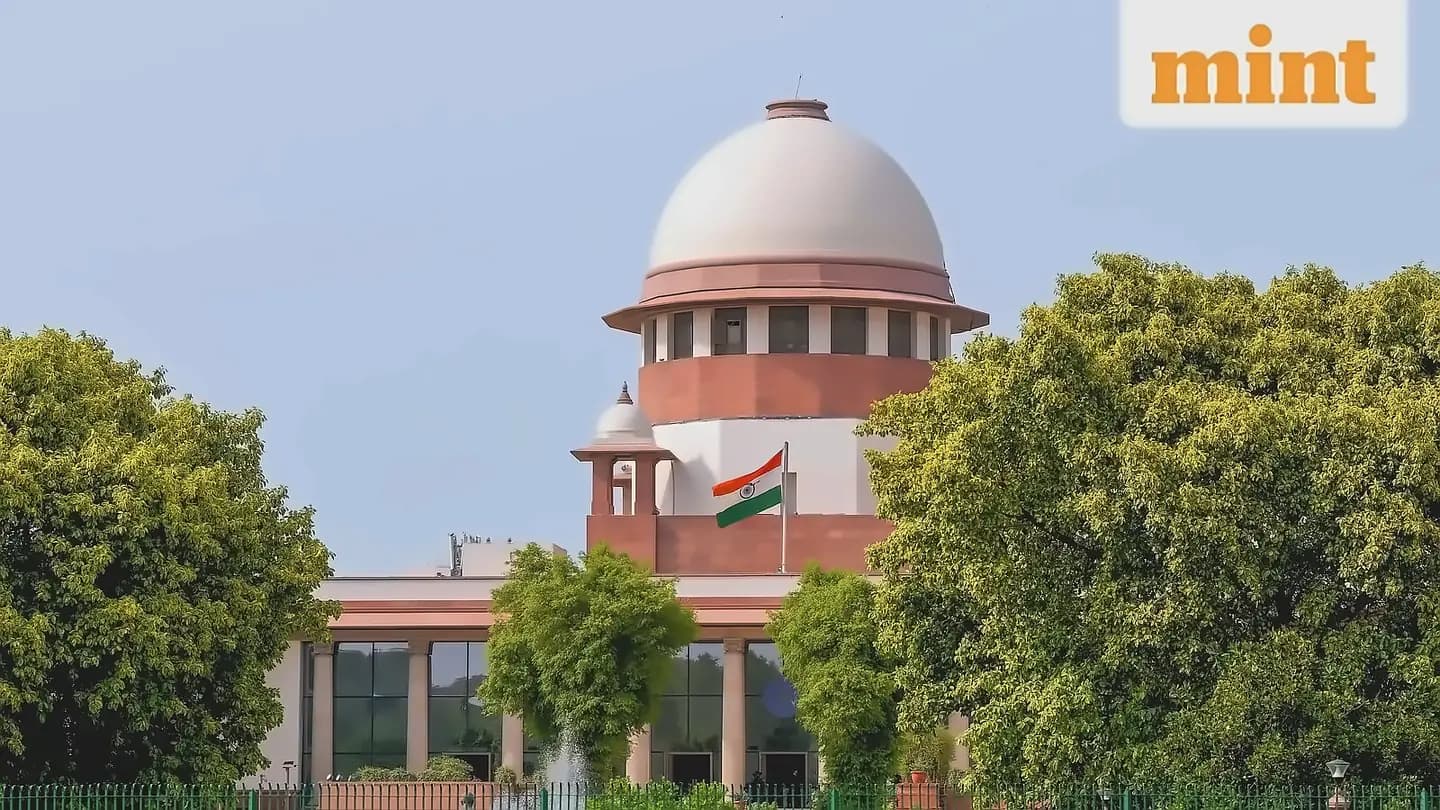
The Supreme Court has delivered a landmark ruling establishing that holidays cannot extend the 45-day limitation period for filing appeals under the Insolvency and Bankruptcy Code (IBC). According to the latest Supreme Court judgment, May 10, 2025, was not a second Saturday and therefore could not be treated as a valid reason to extend the appeal filing deadline. This ruling provides crucial clarity on the interpretation of Section 61(2) of the IBC, which establishes a 30-day limit for filing appeals with an additional 15 days available for condonation of delay. The 30-day period ran out on April 25, 2025, and the 45-day limit on May 10, 2025, making any filing after these dates time-barred. A bench of Justice Sanjay Kumar and Justice Sanjeev Sachdeva held that the National Company Law Appellate Tribunal (NCLAT) could not have entertained the appeals filed beyond the maximum 45-day period prescribed under Section 61(2) of the IBC. The court noted that Section 4 of the Limitation Act cannot be used to extend the additional condonable period under a special statute, and since the appeals were e-filed on a Sunday that was itself a holiday, they could just as well have been e-filed on May 10, 2025.
The insolvency resolution process against Manjeera Retail Holdings was initiated by the National Company Law Tribunal (NCLT), Hyderabad, on July 18, 2023 in CP (IB) No. 296/7/HDB/2022. As reported by Business Standard, Lulu emerged as the successful resolution applicant after its plan received 100 per cent approval from the Committee of Creditors. The NCLT approved the plan on March 26, 2025. The three purchasers filed appeals before the NCLAT on May 11, 2025, challenging the approval, arguing that their payments for the commercial units had been wrongly treated as customer advances instead of claims of financial creditors. The NCLT's approval of Lulu's resolution plan now stands with this Supreme Court ruling.
According to Business Standard, the purchasers had filed their appeals on the 46th day, which exceeded the 30-day limit provided under Section 61(2) of the Insolvency and Bankruptcy Code (IBC), with an additional 15 days available for condonation of delay. The tribunal condoned the delay by invoking Section 4 of the Limitation Act, 1963, and entertained their appeals. The court noted that May 10, 2025, was not a second Saturday and that the NCLAT had treated this as sufficient reason to extend the limitation period to the 46th day, which it found unsustainable. The Supreme Court held that Section 4 of the Limitation Act cannot be used to extend the additional condonable period under a special statute, and since the appeals were e-filed on a Sunday that was itself a holiday, they could just as well have been e-filed on May 10, 2025. Under Section 61(2) of the IBC, an appeal against an NCLT order must be filed within 30 days, with a maximum additional 15 days available for condonation of delay.
As reported by Business Standard, Lulu told the court that it had invested ₹271.52 crore towards implementing the resolution plan. The Supreme Court said the NCLAT had incorrectly interpreted its May 7, 2025, ruling in Tata Steel Limited while deciding the matter. The court clarified that a judicial declaration of law applies from the date the law is laid down and governs the interpretation of the relevant statutory provision, with an earlier order inconsistent with that legal position unable to be protected unless it has attained finality. The court held that although the NCLAT has no power of review under the IBC, it can recall its orders by exercising inherent jurisdiction under Rule 11 of the NCLAT Rules, 2016. The NCLAT's recall applications were dismissed on February 10, 2026, and the Supreme Court stayed the NCLAT proceedings on March 16, 2026.
According to Business Standard, the Supreme Court accordingly set aside the NCLAT's orders dated October 10, 2025, and February 10, 2026, and dismissed the purchasers' appeals against the approval of Lulu's resolution plan as time-barred. The bench allowed the recall applications, set aside the October 10, 2025 condonation order, and dismissed Company Appeal (AT)(CH)(Ins) Nos. 388 and 389 of 2025 on the ground of limitation. The court relied on its earlier ruling in Tata Steel Ltd. v. Raj Kumar Banerjee, as well as its ruling in Greater Noida Industrial Development Authority versus Prabhjit Singh Soni. The Bench observed that the NCLAT should have exercised its inherent jurisdiction after being apprised of the settled legal position, establishing a crucial precedent for IBC appeal timelines. The ruling reinforces that the 45-day ceiling in Section 61(2) of the IBC is absolute, and that tribunals cannot use the general holiday rule in Section 4 of the Limitation Act to add even a single day to it. The court further observed that submission of a precedent giving a ruling different from the order sought to be recalled, subsequent to the passing of the said order, cannot be a reason to recall such order as it would not fall within the ambit of exercising inherent powers to rectify an error apparent on the face of the record.