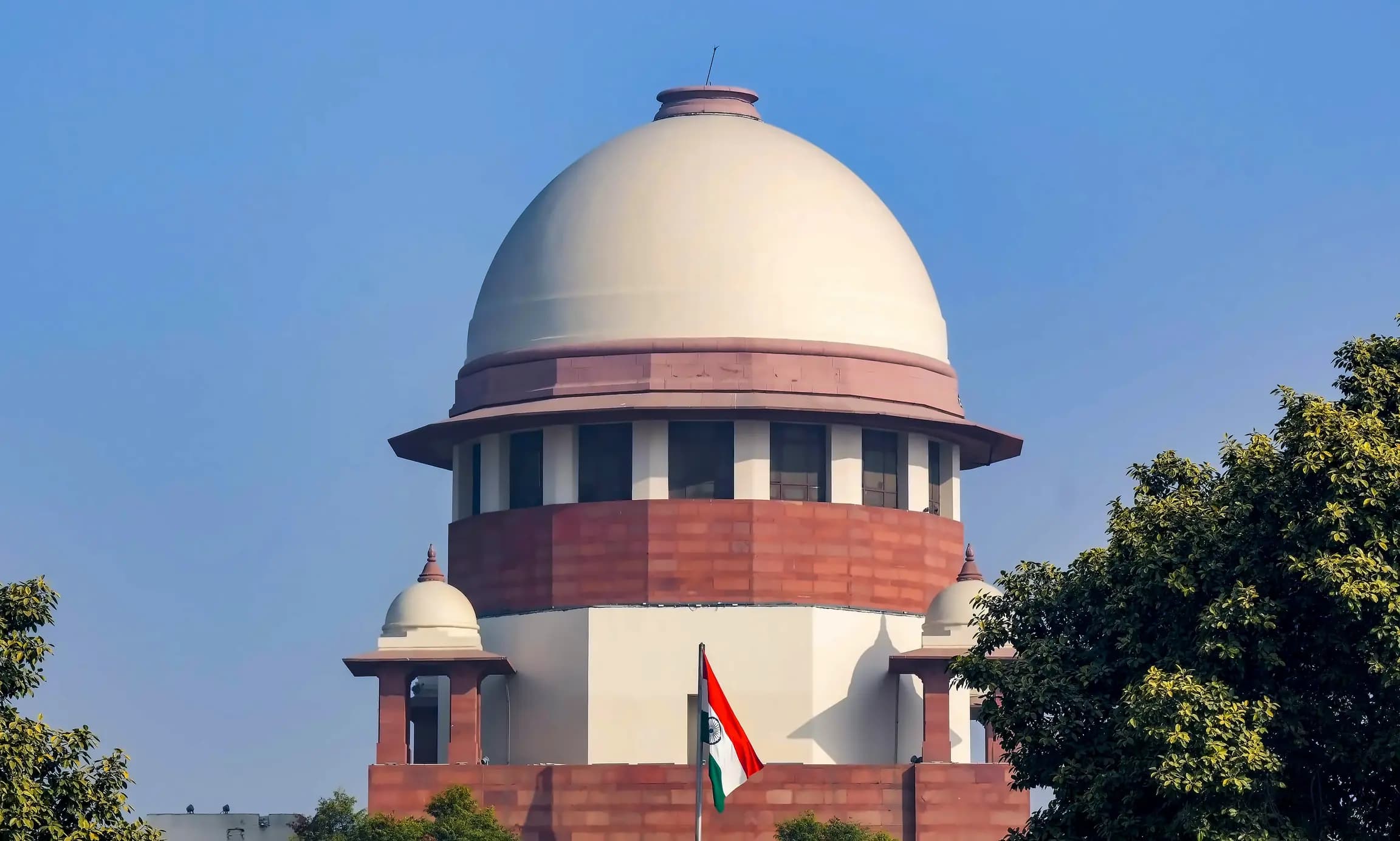
The Supreme Court has ruled that a Committee of Creditors (CoC) cannot withdraw its approval given to a resolution plan after the same has been placed before the National Company Law Tribunal (NCLT) for approval, even if the debt-laden company's financial position has improved considerably. A bench of Justices JB Pardiwala and K Vinod Chandran, while disposing of the appeal filed by Bank of India and other CoC members, said the resolution plan remains binding between CoC and the successful resolution applicant (SRA). The bench noted that a resolution plan is not an ordinary contract, but approved through the statutory framework of the IBC, including the voting mechanism under Section 30(4), under which even dissenting creditors are bound. This precedent could significantly impact future corporate insolvency cases and creditor strategies across India.
In the case of Bank of India vs SM Kamal Pasha, the CoC had unanimously decided to withdraw the resolution plan as TD Toll Road's financial position had substantially improved during the years when the resolution professional was in management. The lenders argued that permitting the plan to proceed would give the SRA a windfall as it would have to bring in significantly less fresh funding than contemplated when the resolution plan was submitted. TD Toll Road's financials deteriorated during the covid-19 pandemic, with a ₹172.55 crore resolution plan subsequently approved while the company had a cash balance of about ₹30 crore. The CoC, comprising six lenders including Bank of India, Canara Bank, Union Bank of India, UCO Bank and Punjab National Bank, unanimously sought to withdraw the plan and invite fresh bids, arguing that the company's improved financial position could yield better recoveries. During the prolonged proceedings, the company's cash balance increased to about ₹165 crore, prompting creditors to reconsider the approved arrangement.
The ruling provides greater certainty to resolution applicants, who commit capital and furnish bank guarantees while awaiting approval of their plans, said Anoop Rawat, partner and national practice head for insolvency and restructuring at Shardul Amarchand Mangaldas & Co. According to Mint, Rawat noted that "bidders commit capital, provide bank guarantees and wait through long approval periods. They need to know that the price agreed will not be reopened because the business later recovers." Yash Dhruva, a partner at MDP Legal Advocates and Solicitors, explained that "the CoC cannot invoke its commercial wisdom afresh to undo that decision," adding that commercial wisdom protects the CoC's decision from judicial second-guessing but does not give it an indefinite right to reconsider its own approved decision. The Supreme Court's latest ruling further clarified that improved profitability alone cannot justify refusal of approval where the plan satisfies section 30(2) of the Insolvency and Bankruptcy Code, 2016.
The ruling comes amid persistent delays in insolvency proceedings, with ongoing corporate insolvency resolution processes averaging 713 days as of March 2025, with around 78% exceeding the 270-day threshold. As reported by Mint, a report by the Insolvency and Bankruptcy Board of India (IBBI) marking a decade of the IBC highlighted nearly 30,600 cases pending before the NCLT as of March 2025. The Supreme Court bench directed the tribunal to consider all pleas together - application for approval of the resolution plan and holding company's application seeking implementation of a one-time settlement and an end to the corporate insolvency resolution process. Mukesh Chand, senior counsel at Economic Laws Practice, noted that "the ruling would certainly put an end to the reopening of resolution plans, as it places the CoC and other stakeholders on an equal footing with the resolution applicant regarding the binding nature of the plan."