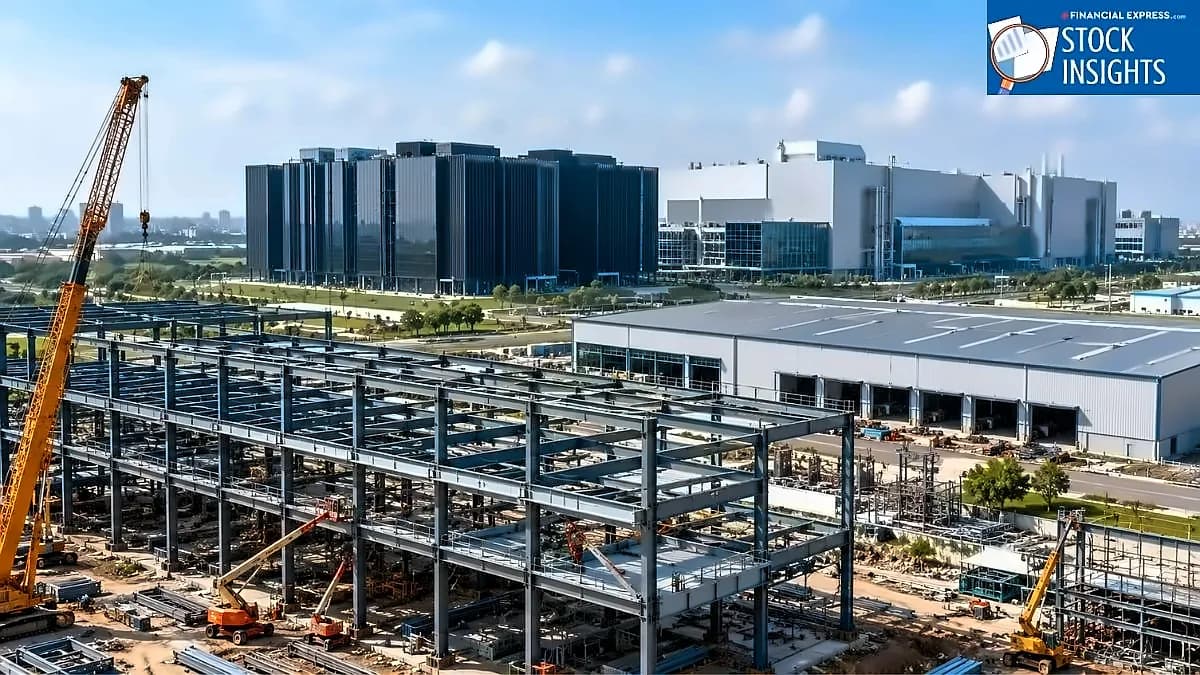
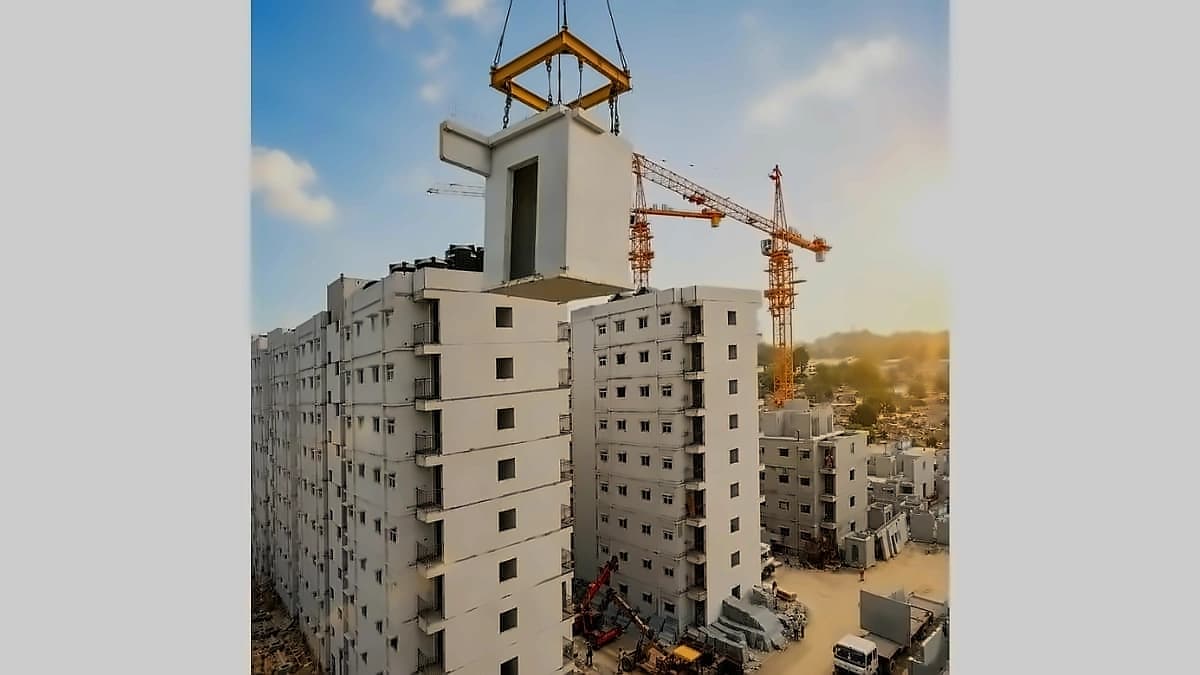
India's pre-engineered building (PEB) market is positioned for significant expansion, with CRISIL estimating growth from ₹13,000 crore in FY19 to ₹21,000 crore in FY25. According to reports from The Financial Express, the market is expected to accelerate to 9.5-10.5% CAGR through FY30, reaching ₹33,000-34,500 crore. This growth is driven by rapid expansion in data centres, semiconductors, and clean energy sectors, with PEBs currently accounting for only 3-5% of India's overall construction market. The Indian construction industry is entering a phase where speed is becoming as important as scale, creating a larger role for pre-engineered buildings as warehouses, factories, and data centres can no longer afford years of construction when demand is moving faster.
India's data centre capacity is experiencing substantial growth, with capacity expected to rise from 900-950 megawatts (MW) in FY24 to 2,000-2,300 MW by FY27. As reported by The Financial Express, semiconductor facilities and renewable energy manufacturing are joining this demand pool, where faster construction can provide competitive advantages. This expansion is creating significant opportunities for PEB players to move beyond traditional industrial sheds into high-value infrastructure projects. The addition of data centres, semiconductor plants and renewable energy facilities is widening the addressable market for PEB players, with both companies responding by expanding capacity and targeting newer, higher-value segments.
Interarch Building Solutions operates five fully integrated manufacturing plants with a total production capacity of 221,000 Metric Tons after commissioning Phase-1 of its Gujarat plant. According to The Financial Express, clean energy and data centres represent 35% of its ₹1,864 crore order book as of mid-2026. The company recently secured a ₹165 crore order from a major energy company in Vadodara and has built solar PV manufacturing plants in Dholera and Jaipur, along with data centre buildings in Navi Mumbai and Noida for RailTel Corporation. To eliminate bottlenecks, Interarch has initiated trial production at its new heavy steel structures plant in Andhra Pradesh, which is scheduled to begin commercial production by September 2026. The plant can now produce structural steel elements weighing up to 20 tons, enabling them to deliver hybrid systems entirely in-house.
EPACK Prefab Technologies currently operates with an annual capacity of 147,122 MT across four manufacturing units, with capacity utilization reaching 75.2% in Q1FY27. As reported by The Financial Express, the company is executing a ₹160 crore capex program to scale PEB capacity past 220,000 MTPA. This includes adding a second structural steel fabrication line with 23,600 MT annual capacity expected operational from Q3FY27, along with a new Gujarat plant with 50,000 MT capacity starting production in April 2027. The company is also commissioning a continuous sandwich panel line with 800,000 SQM capacity, expected to generate ₹125-140 crore in product sales once fully operational in Q3FY27. All these incremental capacities will bring the total PEB capacity to over 220,000 MTPA, with the company's peak revenue potential estimated to climb to ₹2,700-2,900 crore.
Both companies demonstrated strong Q1FY27 performance with EPACK recording 23.9% revenue growth to ₹365.8 crore and Interarch achieving 20.7% growth to ₹459.6 crore. According to The Financial Express, EPACK's EBITDA margin stood at 9.4% compared to Interarch's 8.6% margin, while EPACK's net profit grew 13.8% to ₹18.2 crore versus Interarch's ₹28.2 crore net profit. For FY27, EPACK targets ₹1,900-1,950 crore revenue with 10.5% EBITDA margins, while Interarch aims for ₹2,150-2,200 crore revenue with 9.5-10% EBITDA margins. Interarch is focusing on new-age high-growth industries like electric vehicles, lithium batteries, semiconductors, data centers, and renewable energy, with these segments representing around 35% of its order book. The company aims to achieve revenue of ₹2,150-2,200 crore for FY27 and ₹2,700 crore in FY28, targeting an average execution run rate of ₹600 crore per quarter.