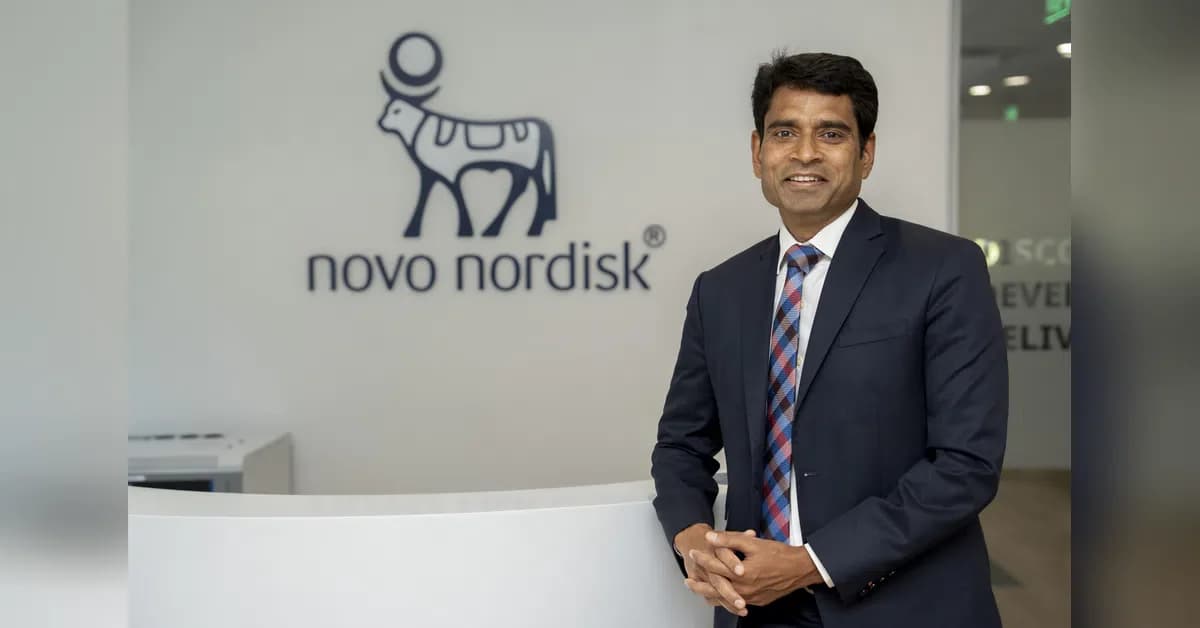
According to latest reports, Novo Nordisk's innovative medicines business has crossed the $1 billion milestone, marking a significant achievement in the company's specialty pipeline expansion. The milestone comes as the company continues to expand its specialty pipeline and bet on the Organon acquisition to strengthen its global presence. This development demonstrates the company's successful diversification strategy beyond its traditional diabetes and obesity segments.
According to reports from Business Standard, semaglutide's patent expiry has generated enormous discussion in India, with nearly 50 new market entrants now competing in the obesity drug space. Vikrant Shrotriya, Country Head at Novo Nordisk, emphasized that patent expiry is a normal progression for successful molecules like semaglutide, which has delivered strong patient benefits and commercial success. The company maintains that its complete system approach with pen, needle, and formulation ownership provides a competitive advantage over generic manufacturers using semi-synthetic manufacturing processes.
As reported by Business Standard, Novo Nordisk has already been very responsive on pricing with reductions during previous launches and further price adjustments. Shrotriya noted that the company commands a small premium as the originator that introduced semaglutide in India, but this premium is negligible considering consistency and quality standards. The executive acknowledged that fragmentation becomes inevitable with nearly 50 players in the market, each marketing the product differently, though pricing pressure is not the key issue according to the company's assessment.
According to Business Standard reports, India is nowhere near the US obesity therapy adoption levels, where approximately 12% of the adult population has accessed these medicines and the country accounts for nearly half the global market. Shrotriya observed that while obesity therapies are extensively discussed in India, only one person out of ten actually ends up taking them, with access levels and commercial consumption remaining far below US benchmarks. However, India's population of 1.5 billion with nearly 251 million people living with obesity could potentially make it one of the world's biggest GLP-1 markets in terms of volume, though market value may not enter the top global league.
As reported by Business Standard, Novo Nordisk is developing next-generation obesity therapies including CagriSema, a once-weekly injectable combination of semaglutide, GLP-1 receptor agonist, and cagrilintide amylin analogue. The company is also advancing amycretin, an experimental treatment for weight loss and Type 2 diabetes, and Wegovy HD, an injectable semaglutide 7.2 milligram therapy that delivered more than 20% mean weight loss. Additionally, Phase-III trials for zenagamtide have been initiated across obesity-related indications including Type 2 diabetes, sleep apnoea, and knee osteoarthritis. The company is expanding into cardiovascular disease therapies and other next-generation metabolic treatments, with recent approval for Awiqli (insulin icodec), the world's first once-weekly basal insulin for Type 2 diabetes.