According to data from the Society of Indian Automobile Manufacturers (SIAM), Maharashtra recorded the highest passenger vehicle sales with 1,47,440 units in Q1 FY27, followed by Uttar Pradesh with 1,35,329 units. Gujarat secured third position with 98,785 units, while Karnataka and Tamil Nadu completed the top five with 98,315 units and 96,327 units respectively. In the overall passenger vehicle segment, 12.74 lakh units were sold across the country during April-June, with the western zone leading sales at 3.9 lakh units. As per The Times of India, India's vehicle market showed a clear regional divide in the first quarter of FY27, with Maharashtra emerging as the country's biggest market for passenger and commercial vehicles.
In the commercial vehicle category, 2.65 lakh units were sold nationally during the quarter, with the western zone again dominating at 91,000 units. Maharashtra topped the commercial vehicle segment with 36,433 units, followed by Tamil Nadu with 24,743 units, Karnataka with 21,830 units, Gujarat with 21,778 units, and Uttar Pradesh with 21,161 units. The western zone's leadership in both passenger and commercial vehicle segments demonstrates the region's strong automotive market performance.
The two-wheeler segment showed 56.29 lakh units sold in Q1 FY27, with the western zone leading at 16.61 lakh units. Uttar Pradesh emerged as the top performer in this category with 8,82,047 units, significantly ahead of Maharashtra's 5,61,738 units. Tamil Nadu followed with 4,80,653 units, Karnataka with 3,74,221 units, and Bihar with 3,69,302 units. This distribution reflects the diverse regional demand patterns across India's two-wheeler market.
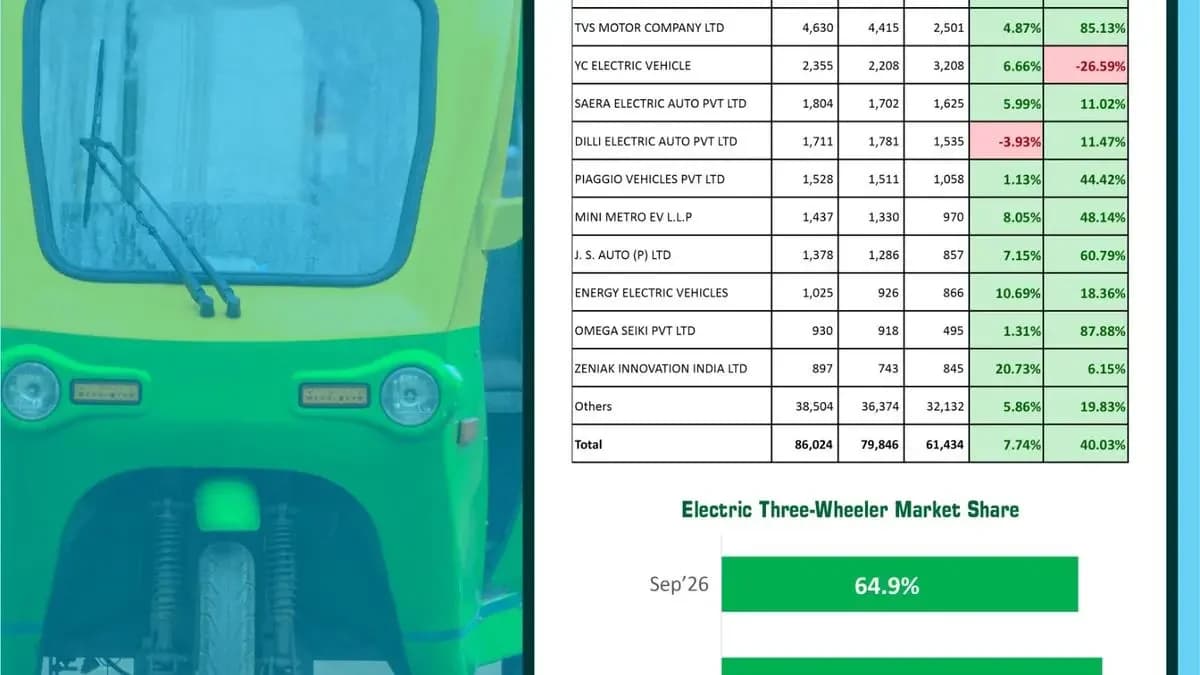
In the three-wheeler segment, 2.14 lakh units were sold during April-June FY27, with the southern zone leading at 71,000 units. Uttar Pradesh recorded the highest three-wheeler sales with 25,669 units, followed by Gujarat with 20,534 units, Karnataka with 19,192 units, Bihar with 15,653 units, and Assam with 15,223 units. This regional distribution pattern across different vehicle categories highlights the varied automotive market dynamics across India's diverse states.
Union Minister Nitin Gadkari announced that India's automobile industry has grown from ₹14 trillion to ₹22 trillion since he took charge as transport minister. Speaking at a CII-ITC Centre of Excellence summit, Gadkari highlighted that India's electric vehicle market is expected to reach ₹20 trillion by 2030, with the potential to create 50 million jobs. Currently, 57 lakh electric vehicles are registered in India with 7% market penetration. The minister noted that India's two largest two-wheeler manufacturers, Bajaj Auto and Hero MotoCorp, export more than 50% of their vehicles produced, while there is demand for one lakh electric buses annually but manufacturing capacity is limited to 50,000-60,000 EV buses.