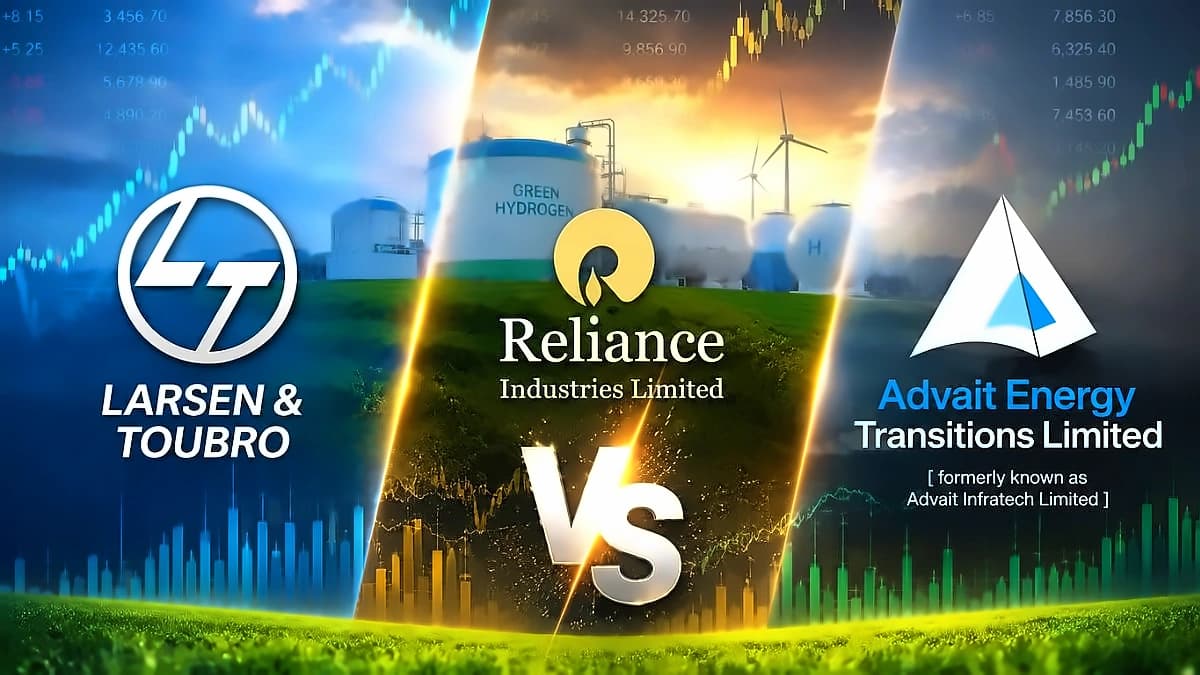
Three major companies have been awarded 300 MW each of annual electrolyser manufacturing capacity under India's Strategic Interventions for Green Hydrogen Transition (SIGHT) programme. According to reports from The Financial Express, L&T Electrolysers and Reliance Electrolyser Manufacturing received their allocations directly, while Advait Energy Transitions secured 100 MW under Tranche-I and another 200 MW under Tranche-II. As of December 2025, 15 companies had been awarded a combined 3,000 MW of annual electrolyser manufacturing capacity with aggregate incentives of ₹4,440 crore under the SIGHT programme. The identical capacity figure brings these three companies into the same conversation despite their distinctly different business models and operational scales.
According to The Financial Express, L&T is leveraging its existing engineering and manufacturing capabilities to build a comprehensive green hydrogen business. The company has electrolyser manufacturing at its Hazira complex as part of its business portfolio and is pursuing opportunities across green hydrogen, green ammonia and green methanol projects. Unlike Advait, L&T is not entering as a standalone equipment manufacturer, instead utilizing its existing engineering, procurement and construction capabilities for larger hydrogen and derivative projects. The green-energy business is currently in an investment and scale-up phase, though quarterly disclosures do not provide separate figures for electrolyser production, revenue or orders. This approach allows L&T to integrate electrolyser manufacturing into its existing large-scale engineering and project development capabilities.
As reported by The Financial Express, Reliance Industries is taking a much broader approach to green hydrogen, integrating electrolyser manufacturing into a comprehensive new-energy programme. The company has disclosed a ₹24,900 crore green ammonia contract with Samsung C&T and is working towards a green fuel complex with a planned capacity of 3 million metric tonnes per annum. Its broader programme includes significant solar and battery manufacturing ambitions, positioning electrolyser manufacturing as just one component of a larger industrial ecosystem designed to connect renewable power generation with energy storage and green fuel production. This integrated approach allows Reliance to build several parts of the value chain around future green energy production and use.
According to The Financial Express, Advait Energy Transitions is building from a considerably smaller base with a 30 MW alkaline electrolyser assembly facility that was commissioned in March 2026. The company is planning an integrated manufacturing complex at Gangad, Gujarat, spanning more than 4 lakh sq. ft with 300 MW of electrolyser manufacturing capacity. During Q1 FY27, Advait successfully conducted live testing of a 5 MW electrolyser test batch that was demonstrated to more than 13 green hydrogen players in India. The company estimates a potential electrolyser supply opportunity of 150–200 MW based on active enquiries from green ammonia players, though this represents enquiry-driven opportunities rather than confirmed orders. The facility is expected to become operational in Q4 FY27, including BESS manufacturing, PEM fuel-cell manufacturing and specialised conductor production.
As reported by The Financial Express, the three companies are pursuing distinctly different business models despite matching the 300 MW capacity metric. L&T integrates electrolyser manufacturing into its existing engineering and project development capabilities, Reliance positions it within a broader renewable energy ecosystem, while Advait focuses on electrolyser manufacturing alongside hydrogen equipment and project execution. The real difference lies in how central electrolysers are to each company's broader strategic plans, with execution capabilities being the key factor determining their long-term success in the green hydrogen market. While the SIGHT capacity allocation brings them into the same conversation, the companies' disclosures show they are pursuing distinctly different businesses with different execution timelines and operational scales.