Cummins India Ltd has launched its QSK60 powered G34 and G37 genset solutions at the 9th edition of bauma CONEXPO India 2026, further expanding its power solutions portfolio for demanding segments. According to Business Standard, these next-generation solutions reinforce Cummins' commitment to delivering dependable, high-performance power for mission-critical applications including data centres. The company also showcased its CPCB IV+ compliant 125 kVA generator set, demonstrating its focus on delivering cleaner, high-performance products tailored to India's evolving infrastructure and regulatory landscape.
Cummins India Ltd has emerged as the dominant player in India's data centre generator market, with its share of revenue from data centres expanding dramatically to 14% in FY26 from less than 2% seven years ago. According to Mint research, data centres contributed ₹1,665 crore in FY26 to Cummins India's domestic power generation revenue of ₹4,758 crore, representing a significant portion of the company's overall performance. As reported by Mint, Cummins accounted for 55% of all generators sold to data centres as of June, with the company's total sales for FY26 standing at ₹11,950 crore. The growth trajectory has been exceptional, with data centres growing at over 54% annually for the company in the past seven years, significantly outpacing the original projection of 10-12% CAGR made in October 2019.
The data centre boom presents substantial revenue opportunities across the generator set industry. According to brokerage PL Capital, generators accounted for almost 9% of total data centre capital expenditure, with data centres spending ₹65 crore per megawatt and an estimated 2.2 gigawatt (GW) in additional capacity expected by FY30. PL Capital projected a net revenue opportunity of ₹1.35 trillion by 2030 based on these projections. Kirloskar Oil Engines Ltd is positioning itself as a key beneficiary, with CEO Rahul Sahai stating that data centres are important revenue drivers and the company is targeting $2 billion (₹19,000 crore) in operating revenue by 2030, up from ₹7,701 crore in FY26. The company supplied products to 25 data centres last year ranging from 750 kVA to 4,000-5,000 kVA capacity.
Sterling Green Power Solutions Pvt Ltd, the energy subsidiary of Sterling & Wilson, is reportedly planning a ₹1,500 crore public listing while fielding data centre orders of above ₹3,000 crore. According to credit rating company Crisil, the company's total new orders from clients rose from ₹1,100 crore in FY25 to ₹2,900 crore in FY26, climbing to ₹3,700 crore by 30 June. Crisil also reported that almost ₹3,100 crore of current orders are from data centres, though the company has not disclosed specific revenue figures from this segment. Kirloskar Oil Engines is targeting rapid growth in the data centre space, with Sahai noting that the company expects to grow rapidly in this segment due to supply and service entrenchment in India.
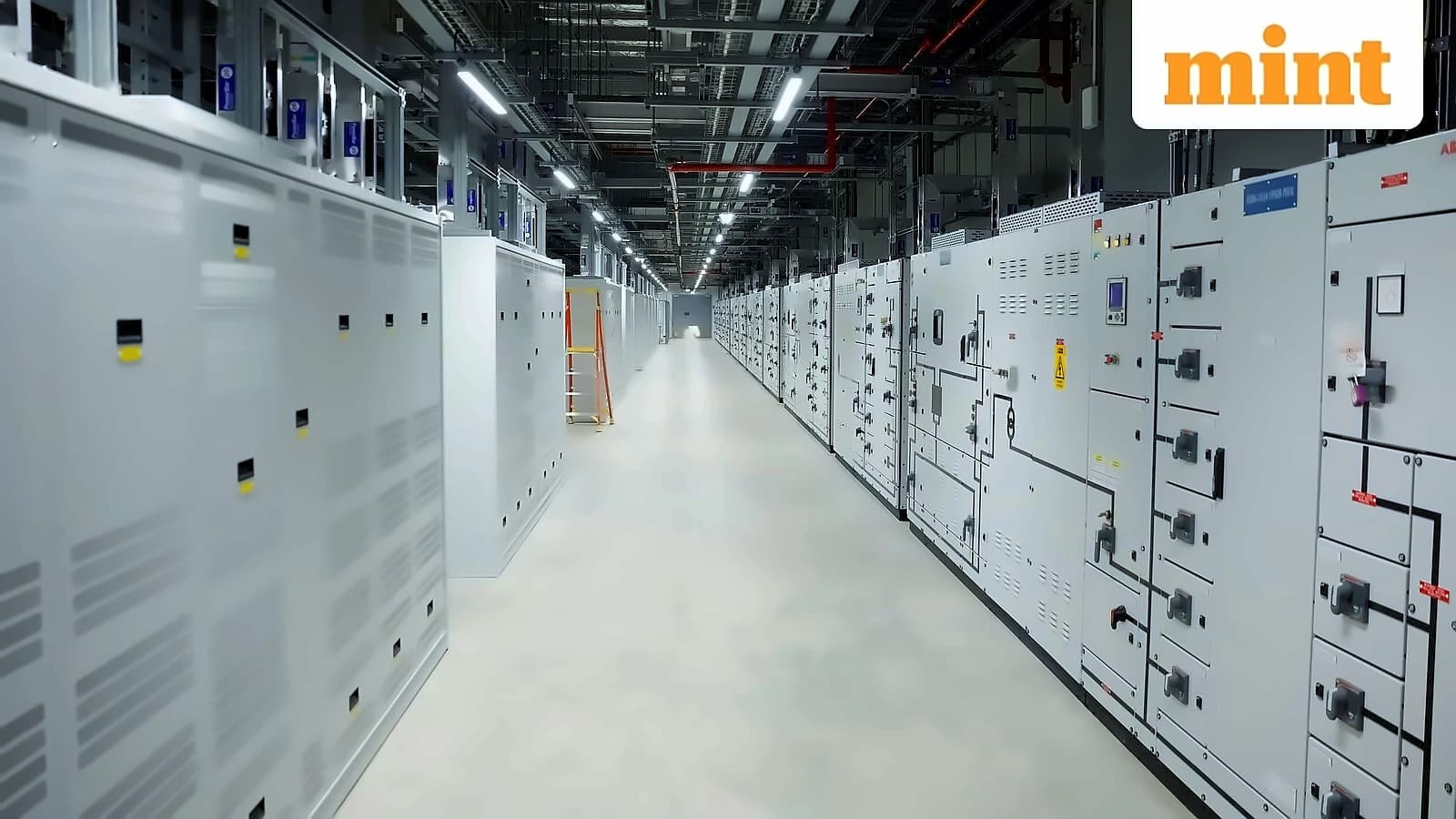
The data centre sector is witnessing significant infrastructure investments, with Yotta Data Services deploying 40,000 graphics processing units (GPUs) at an investment of $1.8 billion by June. According to The Economic Times, combined with the proposed $12 billion order for the premium enterprise artificial intelligence hardware, Yotta would become Nvidia's largest customer in India. Yotta is setting up a 80 MW building in Mumbai and plans to build a 120 MW facility in Greater Noida to accommodate part of this expansion, with more than 85% of the demand for its current and planned capacity expected to come from overseas customers. The company expects its installed base to reach about 38,000 GPUs by the end of October and plans to deploy another 96,000 GPUs between May and August next year.
Large data centre operators are building dedicated power networks and closed-loop cooling systems to limit dependence on local urban power and water supplies. Yotta Data Services CEO Sunil Gupta stated that many concerns about infrastructure strain are unfounded in India, as the company avoids local distribution networks at its campuses. The Mumbai facility is located in Panvel, while the Delhi-region campus is in an industrial area of Greater Noida. As Gupta explained, the company has its own power distribution license and has built substations at its campuses with dedicated transmission lines running 15-20 kilometres to connect directly to the high-voltage grid. On water consumption, Gupta noted that modern Indian data centres use air cooled chillers that operate in closed-loop systems, with water circulating in sealed pipes rather than continuously bringing in fresh water for evaporation. The company also expects small modular nuclear reactors (SMRs) to eventually offer another source of dedicated electricity, though Gupta acknowledged the technology is not yet economically viable in India.
Electric generators are mandatory infrastructure in all data centres, providing redundancy to operations through rapid switching capabilities. According to PL Capital, generators are mandatory in all data centres as infrastructure that adds redundancy to operations, with diesel-powered generators being popular for their proven reliability and rapid switching ability. The scale of generator requirements is substantial, with a 30-60 MW data centre requiring 8-15 generators before accounting for redundancy, and scaling to a 1 GW data centre requiring up to 290 generators. As reported by Mint, with India expecting data centres to add 26.3 GW of demand by FY32, the infrastructure requirements will continue to drive generator set demand. The continuous operation of data centres makes generator sets imperative for maintaining IT infrastructure, cooling systems, and lighting during outages. Gupta also rejected concerns about constant noise during normal operations, noting that while noise can become a concern during power outages when dozens of diesel generators start simultaneously, such generators are otherwise used mainly for periodic testing.