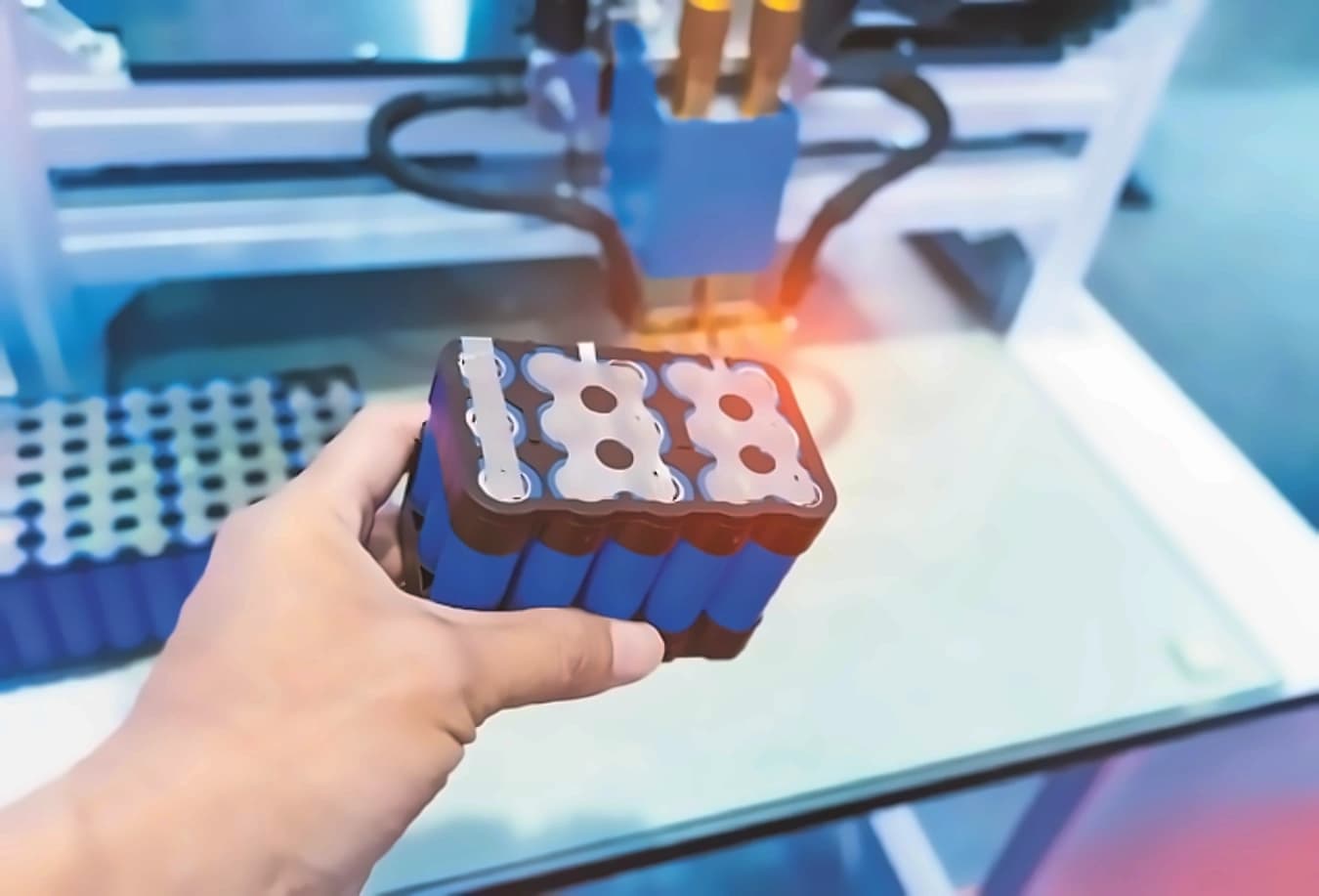
Gujarat-based renewable energy company KP Group is planning a 10 gigawatt-hour (GWh) battery cell manufacturing capacity with an investment of over ₹5,000 crore. According to reports from Business Standard, Affan Faruk Patel, whole-time director of KPI Green Energy, a subsidiary of KP Group, stated that the first phase is expected to be operational by March 2028. The company is entering battery cell manufacturing as battery energy storage systems (BESS) become increasingly important in the renewable energy sector.
KP Group is planning to enter the battery energy storage systems development business in Europe with a 5 GWh project pipeline in Botswana. As reported by Business Standard, Patel indicated that the company plans to pursue a similar model in Europe after 2030. The company is also targeting expansion of its international footprint in African countries including Botswana, Zambia and Tanzania, and Gulf Cooperation Council (GCC) countries including Saudi Arabia and the United Arab Emirates. These plans relate to battery storage development rather than cell manufacturing, where the company develops projects, invests capital expenditure and sells the power.
KP Group operates as both an independent power producer (IPP) and an engineering, procurement and construction (EPC) player. According to Business Standard, the company's IPP portfolio is approximately 3.2 GW and it aims to reach 10 GW by 2032. The renewable energy EPC business stands at 6.2 GW and is also targeted to be ramped up to 10 GW during the same period. The company has received cumulative orders of approximately 1.5 GWh from Gujarat Urja Vikas Nigam Limited (GUVNL) for BESS development. The company also continues to scale both manufacturing and project execution capabilities, supported by its solar facilities in Bengaluru and its 4.3 GW integrated cell and module plant in Tirunelveli, Tamil Nadu.
On green hydrogen, Patel confirmed that KP Group has received orders in this segment and has a pilot project at its own factory. As reported by Business Standard, the company has received an order from NTPC for green hydrogen. However, Patel noted that the larger opportunity is likely to develop after 2030. The company is still assessing how to make large-scale capital investments comparable to those in solar and wind energy sectors.
For battery cell manufacturing, KP Group plans to apply under relevant government schemes to make the project financially viable. According to Business Standard, the company is working with three consultants because incentives are important for achieving the required internal rate of return (IRR). The company also has manufacturing facilities producing galvanised and fabricated products used in sectors including renewable energy, railways, roads, highways and marine infrastructure.