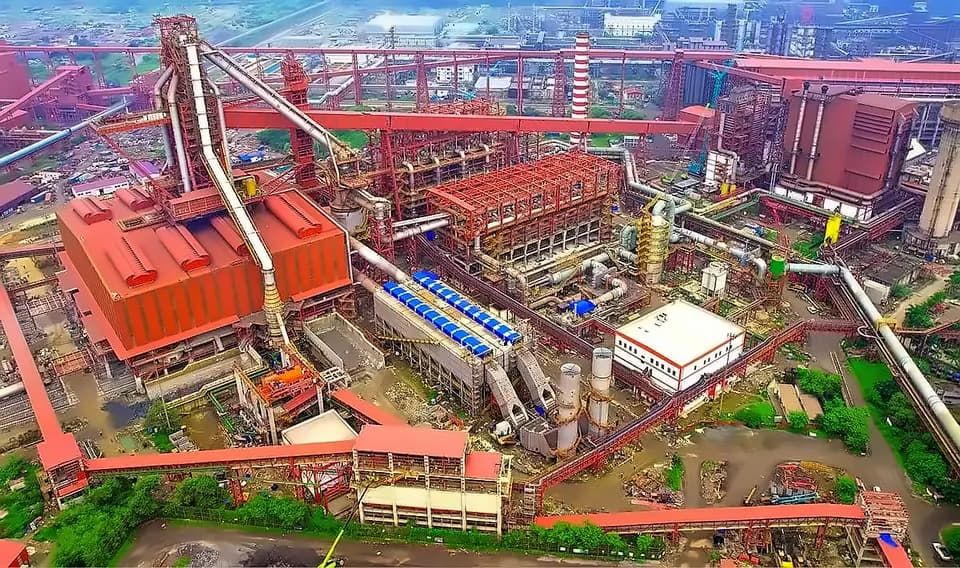
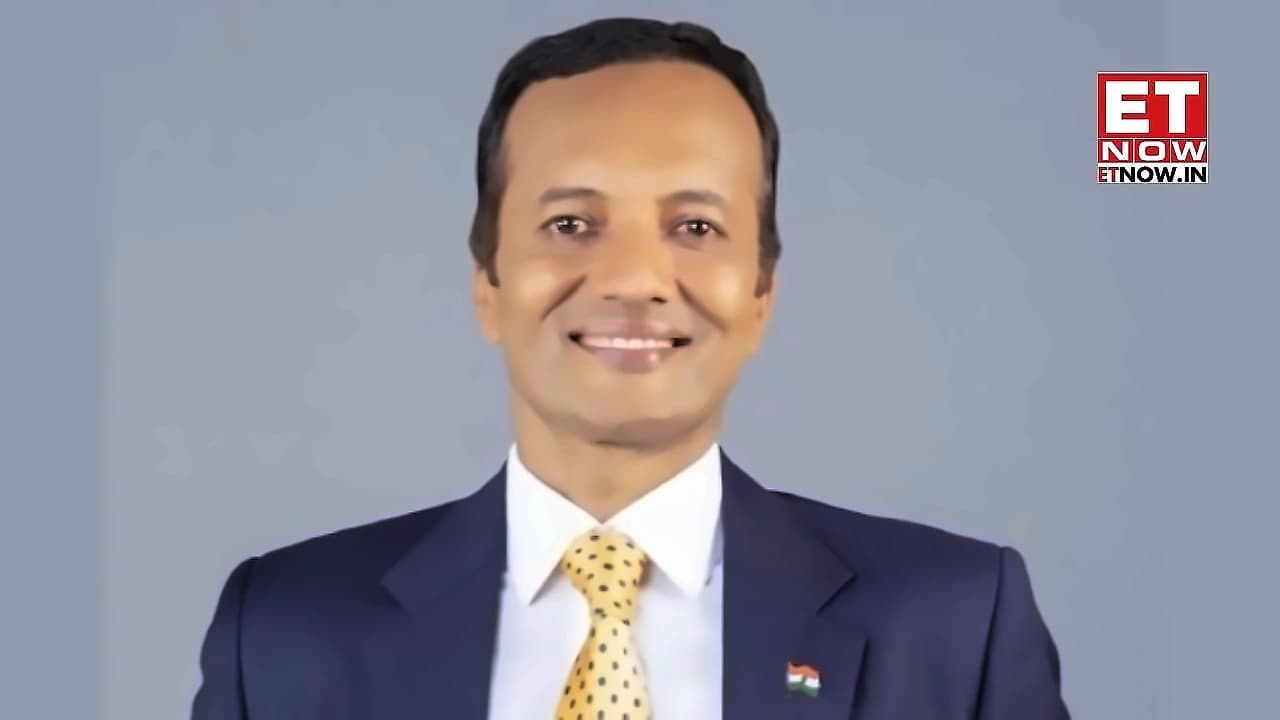
India's two largest steelmakers are pursuing fundamentally different routes to their next phase of growth, reflecting contrasting priorities in an increasingly competitive market. JSW Steel, India's largest steelmaker, led by CEO and joint managing director Jayant Acharya, aims to double its steelmaking capacity to 80 million tonnes per annum (mtpa) by 2031 through brownfield and greenfield expansions and joint ventures. This would make it one of the world's largest steel producers outside of China. Meanwhile, Tata Steel, the country's second-largest steelmaker, led by CEO and managing director T.V. Narendran, is prioritizing expanding its portfolio of downstream products such as precision tubes, speciality steel wires, coated sheets and tinplates, believing growth need not be driven by relentless capacity addition.
JSW Steel has forged at least two joint ventures with foreign partners: Japan's JFE Steel Corp. and South Korea's Posco, which will help the Indian steel major add 16 million tonnes (mt) capacity. The company has also raised its standalone capacity target to 62 mtpa by FY32 from its earlier goal of 50 mtpa by 2031. By comparison, Tata Steel has a capacity target of 40 mt from a domestic capacity of 27.4 mt, with initially guidance to reach this target by 2030, though the company is now not in a hurry to increase capacity. The company is unlikely to see a significant increase in steel volumes before 2031, when the 4.8 mtpa expansion at its Neelachal Ispat Nigam Ltd unit is to be commissioned.
JSW Steel has outperformed both Tata Steel and the benchmark Sensex this year, with its shares gaining 12.28% from the beginning of the year versus Tata Steel's 6.22% rise and the Sensex's 7.60% loss. According to reports from Mint, analysts attribute JSW Steel's aggressive expansion to the financial strength it gained from its stake sale of Bhushan Power & Steel, announced last December, netting it nearly ₹24,500 crore. Tata Steel, to be sure, has the option to expand capacity to 65 mt—Narendran said earlier that it is in talks with the Maharashtra government for around 3,000 acres land in Gadchiroli that could support a 15-million-tonnes expansion.
Not all analysts are convinced by Tata Steel's downstream-focused strategy. Sumangal Nevatia, director at brokerage Kotak Institutional Equities, stated that "Steel remains a scale business. Companies first need to build upstream capacity and then add downstream capabilities." He pointed out that expansion at both ends of the value chain can be pursued with a strong balance sheet like JSW Steel and Jindal Steel are doing. However, analysts at Jefferies were sceptical of the Tata Steel strategy, with analysts Sagar Sahu and Nitij Mangal writing that "Tata's focus has shifted from primary steel expansion to downstream, although we are unconvinced that the latter requires de-prioritizing the former."
The contrast between JSW Steel and Tata Steel is often overstated, according to Kotak's Nevatia. "JSW is undoubtedly pursuing a much more aggressive upstream expansion strategy, but that doesn't mean it is ignoring value-added products. ...after the Bhushan Power & Steel stake sale, the company has the flexibility to invest simultaneously in upstream capacity and downstream, value-added businesses. It is a comprehensive growth strategy rather than an either-or approach." Equirus analysts Siddharth Gadekar and Shivansh Singh also favour JSW's strategy, stating the company "offers the strongest medium-term volume growth visibility within our coverage universe," supported by its expansion pipeline, growing value-added products portfolio and continued cost optimization.