The Petroleum and Natural Gas Ministry has established maximum LPG production targets for 21 refinery and upstream companies, with combined production potential set at 63,810 tonnes per day. According to the order issued on August 13, this represents more than double the domestic LPG output in the fiscal year ended March 31, 2026, and approximately 70% of the country's daily consumption. The production limits will activate whenever supply constraints arise, creating a standing framework for domestic LPG production. As reported by The Hindu BusinessLine, this marks the first time the government has fixed maximum cooking gas LPG production targets for individual public- and private-sector refineries and upstream companies, seeking to build a domestic supply buffer after the US-Israeli war against Iran disrupted essential fuel supplies. The lion's share of the planned output has been set from Reliance Industries Ltd's older refinery, which would have to produce up to 18,000 tonnes per day of LPG, according to the order. The framework comes close on the heels of the disruption in supplies to India after closure of the Strait of Hormuz (SoH) following the latest conflict in West Asia, which began on February 28, 2026.
Reliance Industries Ltd's older refinery has been assigned the largest production quota of 18,000 tonnes per day, as reported by the government order. In the private sector, Reliance's 33 million tonnes per year domestic-tariff area (DTA) refinery at Jamnagar has been ordered to produce this amount, while the company's 35.2 million tonnes per year only-for-exports refinery at the same site has received no target allocation. BPCL's Kochi refinery has been asked to produce 4,800 tonnes per day, while Mangalore Refinery & Petrochemicals has been allocated 4,600 tonnes per day. Nayara Energy's 20 million tonnes per year Vadinar refinery has been asked to produce 4,480 tonnes per day, and HPCL Mittal Energy has been mandated to produce 3,600 tonnes per day. According to The Hindu BusinessLine, together, the three companies account for 27.28 KTPD of the total potential. Cumulatively, all the PSU oil refining companies including Indian Oil Corporation, BPCL and Hindustan Petroleum Corporation are to produce a maximum of 31,470 TPD of LPG, while the private sector in total has been mandated to produce a maximum of 25,880 TPD of LPG, and upstream companies a maximum of 6,460 TPD.
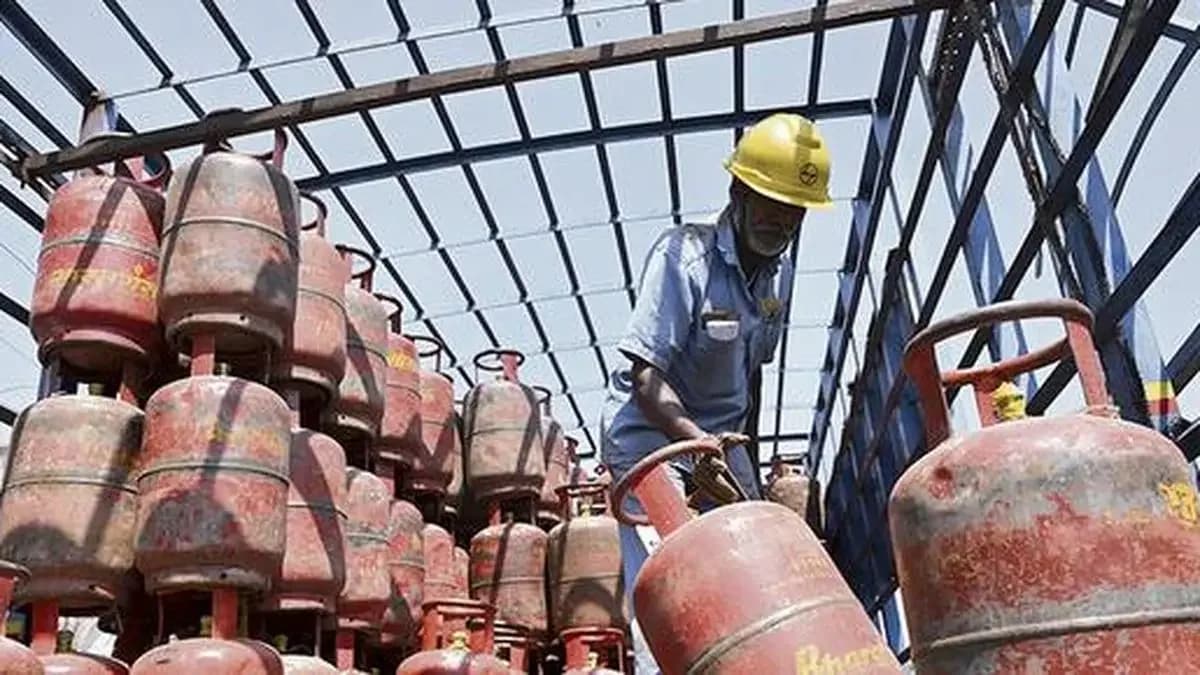
India consumed 33.2 million tonnes of LPG in the 2025-26 fiscal year, with 13.1 million tonnes produced locally and the remaining 21.3 million tonnes imported. According to The Hindu BusinessLine, imports therefore accounted for more than 64% of total LPG consumption, with domestic production standing at approximately 35,900 tonnes per day and imports equivalent to about 58,400 tonnes per day. The disruption was particularly significant because the Strait of Hormuz, through which India received 90% of its imports from countries such as Saudi Arabia, was effectively shut after the Iran war began. During the West Asia crisis, LPG supplies were among the areas most affected because India relied on West Asia for about 90% of its cooking gas imports before the conflict, with Qatar, Saudi Arabia, the UAE and Kuwait being the main suppliers. As reported by The Hindu BusinessLine, during the conflict, the US emerged as India's largest LPG supplier, while deadlocked US, Iran peace talks and continued attacks on ships are keeping flows through Hormuz well below normal. Refiners have already raised their production to 55,000 tonnes per day of LPG from the pre-war level of 36,000 tonnes in a bid to fill the gap caused by the closure of the Strait of Hormuz.
The new order mandates that companies must maintain adequate infrastructure for LPG storage, evacuation and transportation, as reported by the ministry. Companies are required to implement technically and economically feasible measures including naphtha-to-LPG conversion and upgrading fluid catalytic cracking units. The order states that all public sector, joint venture and private sector oil refining companies, and upstream oil companies shall develop, augment and maintain adequate infrastructure for storage, evacuation and transport of LPG either by itself or through other entities viz railways or road tankers adequate for the specified quantities. The mandate also requires the refiners to implement technically and economically viable measures to maximise LPG output beyond their existing minimum producible quantities. The technologies include naphtha-to-LPG conversion and upgrades to gasoline-based fluid catalytic cracking units into petro-fluid catalytic cracking units, with intimation to Centre for High Technology or any other authorised agency whenever such an upgrade is undertaken. According to The Hindu BusinessLine, the order amends the Petroleum Products (Maintenance of Production, Storage and Supply) Order, 1999, and introduces operational directions specifically for LPG production and supply. The mandate also requires the refiners to implement technically and economically viable measures to maximise LPG output beyond their existing minimum producible quantities.
The production schedule will be reviewed every six months, allowing the government to account for additional capacity from new refineries and upstream fields, as well as technology and infrastructure upgrades. According to The Hindu BusinessLine, the Centre will update the production schedule on January 1st and July 1st of every year, including updates from new refineries and upstream companies and additional LPG quantities from existing refineries due to changes to associated infrastructure and production technology, evacuation, supply, transport or distribution of LPG. As reported by The Hindu BusinessLine, the framework also gives the central government the power to intervene when it considers additional LPG production necessary in the public interest, allowing the government, either directly or through the Centre for High Technology or another authorised agency, to direct oil refining companies, oil marketing companies and upstream oil companies to increase LPG production for specified quantities and periods. State-run explorers Oil and Natural Gas Corp. and Oil India Ltd., along with the national gas pipeline utility Gail India Ltd., have also been asked to contribute about a tenth of the nationwide target. According to The Hindu BusinessLine, "Centre for High Technology or any other authorised agency shall monitor the implementation of the directions issued under this clause. Any contravention of directions issued under this clause shall be punishable under the provisions of the Essential Commodities Act, 1955."