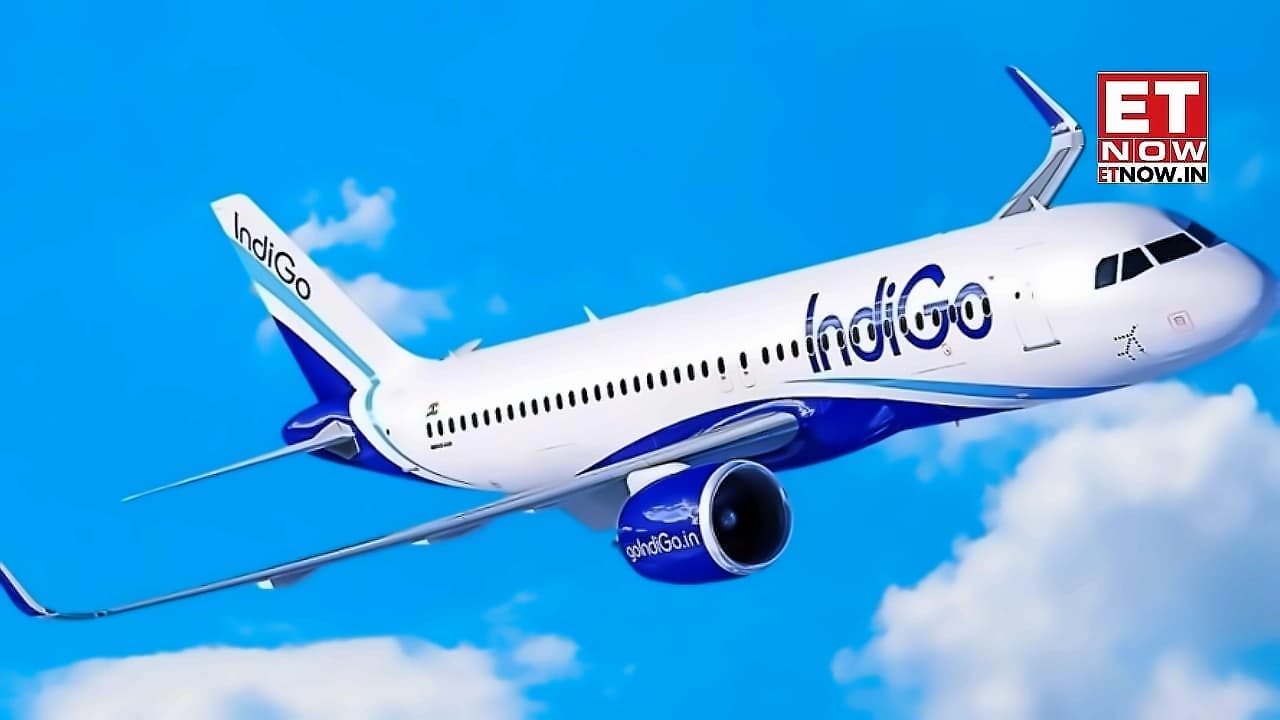
IndiGo shares surged over 4% on Friday, October 30, touching an intraday high of ₹4,877, with the stock settling at ₹4,862.90, up ₹177.10 or 3.79%. The stock was trading with over 7.18 lakh shares changing hands worth ₹345 crore, against a previous close of ₹4,675. The rally comes despite the stock being 15% below its 52-week high of ₹5,970 hit in November 2025. Year-to-date, IndiGo has fallen 5.07% but has outperformed the Nifty 50's 12.32% decline over the same period. According to The Financial Express, brokerages have maintained their positive outlook on the stock as they expect it to navigate near-term headwinds and continue to grow. Global investment bank Jefferies, domestic brokerages Motilal Oswal and Nuvama retained their 'Buy' calls on the stock, and project upside of up to 25%. However, Jefferies maintained its Buy rating but cut its target price to ₹5,650 from ₹5,840, warning that earnings remain sensitive to fuel prices and cutting FY27 and FY28-FY29 earnings per share estimates by 9% and 2% respectively.
As reported by CNBC TV18, IndiGo's EBITDAR increased to ₹2,460 crore from ₹1,114.3 crore in the corresponding quarter last year, with EBITDAR margin expanding to 10.5% from 6%. However, EBITDA rose 229% to ₹1,908 crore from ₹579 crore a year earlier, with EBITDA margin expanding significantly to 8.2% from 3.1%. The airline's foreign exchange loss narrowed to ₹1,333 crore from ₹2,892 crore in the year-ago quarter. Prabhudas Lilladher noted that operational performance was broadly in line with estimates with FX adjusted EBITDAR margin of 15.7%, slightly above their estimate of 15.6%. However, fuel CASK increased 68.9% YoY to ₹2.44 due to sharp increase in ATF price, while CASK (ex-fuel & ex-forex) rose 13.7% YoY to ₹3.65 amid adverse FX movement and annual contractual escalations. Nomura expects margins to improve sequentially in Q3 despite higher fuel prices, adding that the airline could recover 80-90% of cost increases through pricing.
According to CNBC TV18, IndiGo reported revenue growth of 25.9% year-on-year to ₹23,364 crore from ₹18,555.3 crore. The airline demonstrated strong pricing power with passenger yield increasing 34% year-on-year to ₹6.3 per kilometre from ₹4.69, reflecting higher average ticket realisations. Passenger ticket revenue increased 29% to ₹20,652 crore, while ancillary revenue rose 15.9% to ₹2,481 crore. However, the airline carried fewer passengers during the quarter with passenger traffic declining 5% to 2.75 crore from 2.88 crore in the corresponding period last year. Capacity, measured in available seat kilometres, declined 1% to 40.8 billion, reflecting the airline's decision to moderate capacity amid higher operating costs. The passenger load factor slipped to 80.3% from 82.5% a year earlier, indicating a decline in the proportion of available seats occupied. Revenue per available seat kilometre (RASK) increased 26.4% to ₹5.76 from ₹4.55, supported by stronger ticket pricing. As per Mint, the airline added 25 aircraft over 12 months, taking its fleet to 442 even as its passenger load factor fell to 80.3%. According to Business Standard, average airfare reached an all-time high of ₹7,500, up 36% YoY, but Elara Capital noted that losses came despite record pricing, questioning the sustainability of elevated fares once capacity growth resumes.
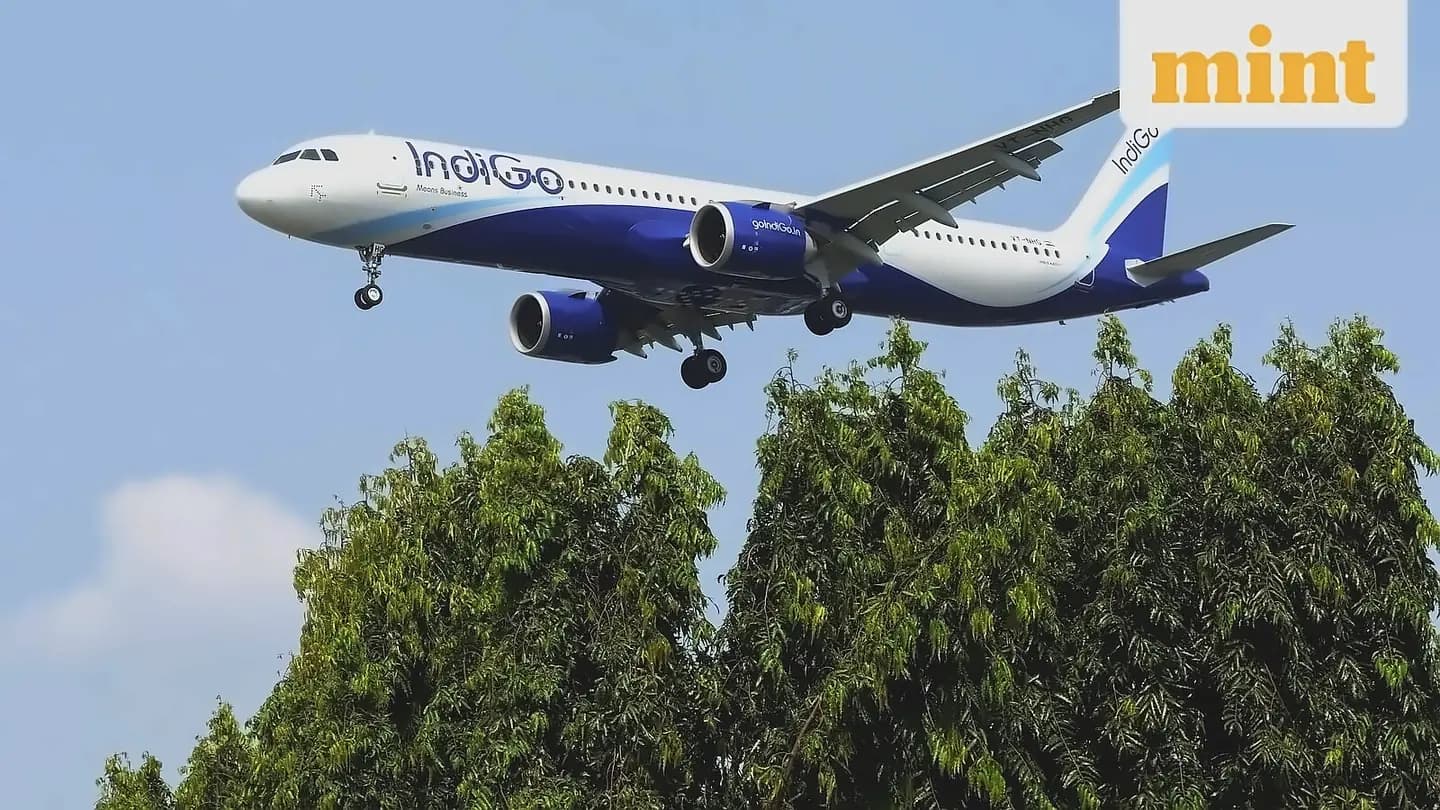
According to CNBC TV18, IndiGo's cost per available seat kilometre (CASK) surged 68.9% YoY to ₹2.44, while CASK excluding fuel and foreign exchange rose 14.6% YoY to ₹3.45. The airline's revenue passenger kilometres (RPK) declined 3.7% to 32.8 billion compared to 34 billion in the same quarter last year. ATF (Air turbine fuel) expenses for the quarter jumped 67% YoY to ₹9,967 crore from ₹5,961 crore in the year-ago period. The company's capacity reduced marginally to 40.8 billion available seat kilometres (ASKs), and passengers dropped by 4.7% to 2.75 crore for the reporting quarter. IndiGo continued its strategic focus on pricing over capacity, guiding for low-single-digit ASK growth in the third quarter and for FY27. The airline's management eased concerns over near-term yields and ex-fuel and forex costs, with PRASK estimated to grow over 25% in Q2, and FY28 capacity growth remaining in the mid-teens. According to Jefferies, the company continued to prioritise pricing over capacity, with strong yields partly offsetting elevated fuel or other costs. The company's ex-fuel unit cost was guided to grow in the high-single- to low-double-digit range, with a strong focus on ancillary, cargo, and stretch operations.
According to CNBC TV18, IndiGo continued expanding its fleet during the September quarter, adding a net 10 passenger aircraft to reach 442 aircraft as of September 30. The fleet composition includes 26 Airbus A320ceos, 174 A320neos, 186 A321neos, four A321XLRs, 44 ATRs, three A321 freighters and five Boeing 787 aircraft under damp-lease arrangements. The airline operated a peak of 2,020 daily flights during the quarter, covering 97 domestic destinations and 36 international destinations. IndiGo reported an on-time performance of 91.3% across 10 major airports, while its flight cancellation rate stood at 0.35%. The airline also recorded the highest passenger load factor at 81.1%, followed by Akasa Air at 88.1% and Air India Group at 79.9%. IndiGo operated a peak of 2,020 daily flights during the quarter, covering 97 domestic destinations and 36 international destinations. However, the airline announced it would exit damp-leased widebody operations from November 2026, signaling a strategic shift in its international operations. According to Nuvama, the cost per available seat kilometer (CASK) rose 19% YoY for the September quarter, driven by increased fuel CASK as aviation turbine fuel prices soared on West Asia related geopolitical tensions, with Q3 fuel CASK expected to surge ~25% QoQ given recent geopolitical tensions in West Asia.
Brokerages are now looking beyond the seasonally weak September quarter, with expectations of a sharp recovery in passenger revenue per available seat kilometre (PRASK) in Q3 FY27. Nomura maintained its Buy rating with a revised target of ₹6,200, raising its FY27 and FY28 EBITDA estimates by 11% and 3% respectively, citing the airline's pricing power amid robust demand and cost inflation. HSBC retained its Buy rating with a target of ₹5,545, noting that Q2 EBITDA was 25% above its estimates, driven by stronger yields and lower fuel costs. Jefferies maintained its Buy rating with a target of ₹5,650, describing the Q2 performance as soft but broadly in line with expectations, with strong yield growth of 34% year-on-year partly offsetting higher fuel and other costs. However, Jefferies cautioned that earnings remain sensitive to fuel prices and cut its FY27 and FY28-FY29 earnings per share estimates by 9% and 2% respectively. Motilal Oswal maintained its 'Buy' rating with a target price of ₹6,000, implying an upside of 25% from the current price, remaining confident in IndiGo's growth strategy despite continued near-term headwinds. Equirus Securities maintains a Long rating with a target price of ₹5,560, based on 8x one-year-forward EV/EBITDAR, noting that earnings are expected to improve as fuel-cost pressures ease and capacity deployment normalises. The brokerage expects 11% ASKM CAGR over FY26-FY29E with FX adjusted EBITDAR margin of 19.1%/25.0%/27.1% in FY27E/FY28E/FY29E respectively, maintaining their HOLD stance as they await signs of yield stickiness to emerge.