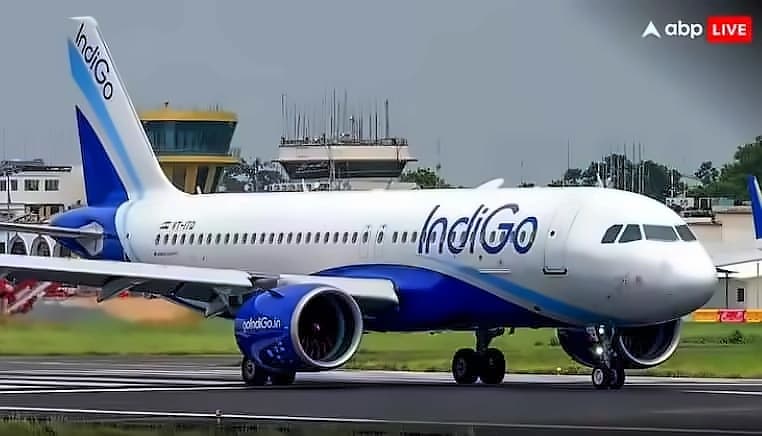
IndiGo CEO Willie Walsh announced the airline will undertake a comprehensive review of its longstanding fuel hedging policy as rising jet fuel prices and planned long-haul expansion reshape the company's risk outlook. Speaking at a press conference, Walsh told reporters that the airline had discussed the issue of fuel hedging with its board and would undertake a "comprehensive review" before taking a decision. The airline has historically stayed away from fuel hedging, with former CEO Ronojoy Dutta terming it a "dumb idea" during an earnings call in June 2020, citing concerns about competing against "very smart people from Goldman Sachs." However, Walsh noted that "hedging is about managing risk. It's not about taking a bet on what the fuel price will be" and emphasized that the airline's planned long-haul expansion offered an opportunity to review its policy, as several international competitors hedge substantial portions of their fuel requirements. "At the moment, we are not hedging and do not plan to do so until we have completed our comprehensive review," Walsh stated, adding that the carrier was studying hedging policies across European, Asian and US airlines.
IndiGo's airport fees and charges increased nearly 10% year-on-year and 2% sequentially to ₹1,660 crore in Q2FY27, according to the airline's investor presentation, representing the second-highest year-on-year increase in charges for the country's largest carrier in the past four quarters. Walsh warned that airport landing, parking and passenger user development fees (UDF) are among the costs factored into airfares, with Indian airfares rising over 30% year-on-year in Q2FY27 primarily because of higher jet fuel prices. The Airports Economic Regulatory Authority of India (AERA) regulates aeronautical charges at major airports through periodic reviews, with Delhi airport having approved higher landing and parking charges for the five-year period beginning April 2024. Walsh emphasized that "We're always looking for better value from the airport, so we'll continue to look for them to be much more competitive when it comes to pricing, given that they are effective monopolies."
IndiGo reported a net loss of ₹1,879 crore in Q2, representing a 27% decline from the loss of ₹2,582.1 crore in the same period last year. According to the latest financial results, total income rose 24% year-on-year to ₹24,311.9 crore during the July-September quarter. The airline's fuel expenses surged dramatically to ₹9,966.8 crore, an increase of 67.2% from ₹5,961.8 crore in the corresponding period last year, with fuel cost per unit of capacity increasing 69%. However, Equirus Securities noted that IndiGo delivered a better-than-expected performance, with Ebitda at ₹1,910 crore against its estimate of ₹630 crore. The brokerage highlighted that a 34% increase in yields to ₹6.30 helped offset some of the pressure from higher fuel costs, while fuel accounted for more than 40% of IndiGo's costs, compared with about 32% for the global airline industry. As per Upstox News Desk, the airline's revenue from operations increased 25.9% year-on-year to ₹23,364 crore in the July-September quarter, though revenue declined 5% sequentially from ₹24,584 crore in the June quarter.

Walsh described the current fuel environment as "unprecedented," stating "I've been in the industry for 47 years. I've seen high oil prices and high jet fuel prices, but we've never seen anything like this. Jet fuel prices are at record levels and continue to be volatile." The airline's counter gained 2.01% to touch the day's high at ₹4,979 during intraday trade, outperforming the Nifty 50 which was trading 1.25% higher at 23,340.50. Market sentiment was further supported by Brent and WTI crude futures falling over 2% each to $111.2 and $101.2 per barrel respectively, amid signs of de-escalation in West Asia tensions. The positive momentum was also driven by the government's notification of Bharatiya Vayuyan Niyam, 2026, replacing the nearly nine-decade-old Aircraft Rules, 1937, which will come into effect from January 1, 2027.
IndiGo expects to start receiving its wide-body A350 aircraft from the second quarter of 2028, marking a significant milestone in the airline's fleet modernization strategy. Walsh emphasized that "the airline has all the ingredients to succeed in the long haul market" and confirmed that long-haul plans remain intact, but expansion would be through its own planes, the wide body A350s." The first 10 A350-900 aircraft are expected to have 16 flatbeds in business class, along with premium economy and economy cabins, with the airline considering increasing the number of flatbeds in subsequent A350-900 aircraft to reflect stronger demand for premium travel. The planned shift of international departures from Mumbai's existing airport to Navi Mumbai could create additional capacity for the airline to expand its international network. IndiGo remains non-committal about New Delhi's proposed aviation turbine fuel (ATF) price stabilization fund, with Walsh noting that "the decision that was taken (to opt out of the fund) at that time was right because of its implications for cash flows."