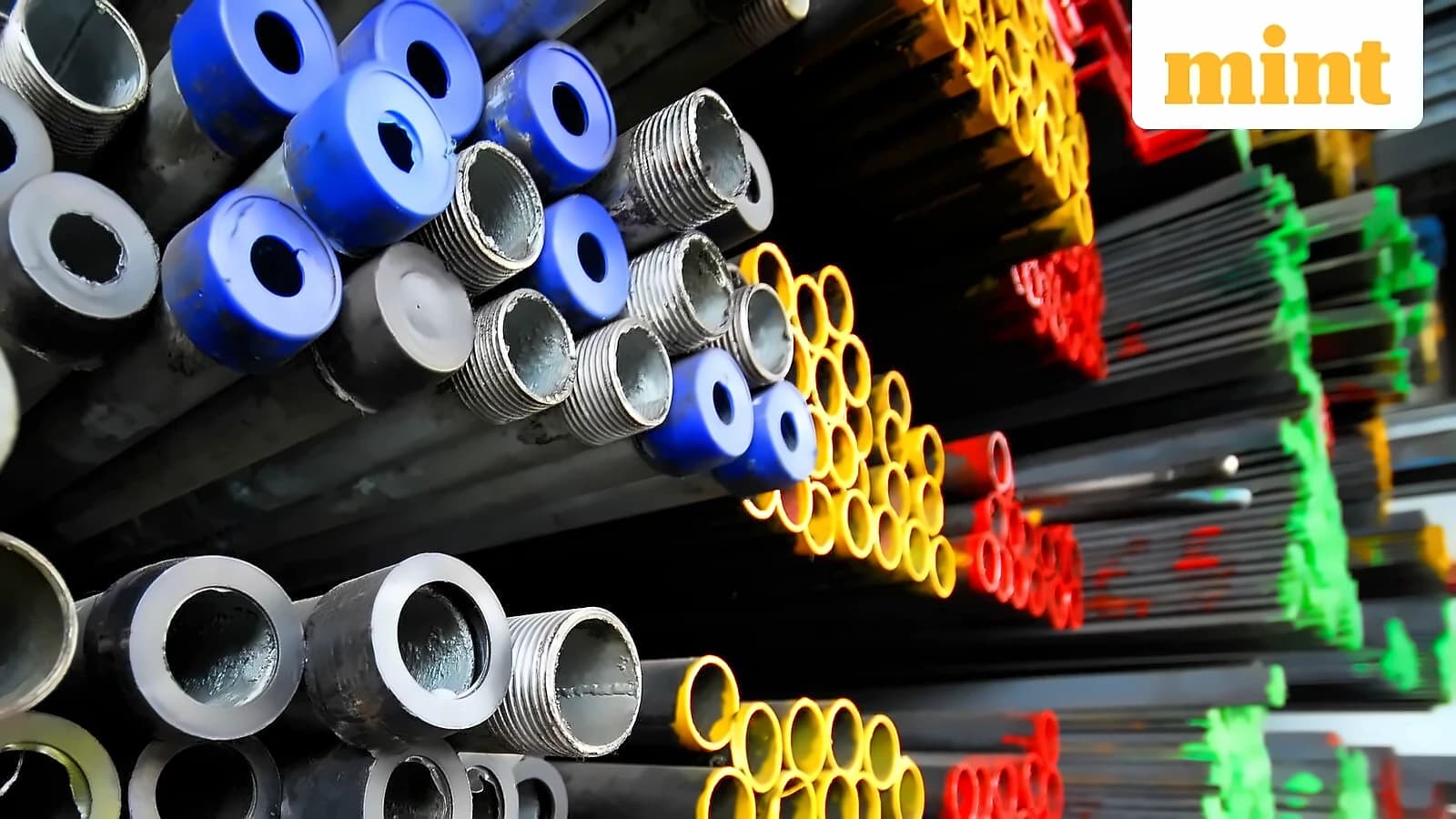
Indian steel pipe manufacturers are capitalizing on geopolitical tensions in West Asia to expand their presence in the region. According to reports from The Economic Times, Welspun Corp, Jindal Saw, Man Industries and Ratnamani Metals are ramping up operations to tap global demand for steel pipes and tubes used in oil and gas transportation, water infrastructure and city gas distribution. The companies are positioning themselves to benefit from countries' shift toward safer overland energy routes to bypass vulnerable maritime routes such as the Strait of Hormuz.
The strategic expansion has translated into impressive stock performance for these companies. As reported by The Economic Times, Welspun Corp has gained 133% in the year so far, while Jindal Saw has surged 59% and Man Industries has gained 52% in the same period. However, Ratnamani Metals and Tubes has declined 1.3% over the period, primarily due to weak earnings performance. Welspun's strong performance was supported by ₹1,046 crore profit after tax for Q1FY27, representing 2.9x year-on-year growth, and ₹4,081 crore revenue from operations with 19% growth.
Companies are implementing comprehensive expansion strategies across the region. According to The Economic Times, Jindal Saw is setting up a seamless pipe plant in Abu Dhabi with an annual capacity of 300,000 tonnes to cater to the oil and gas sector in the UAE and wider MENA region. In Saudi Arabia, the company has formed a joint venture with a local partner to set up a 600,000-tonne project for water, oil and gas infrastructure. Welspun Corp maintains a global order book of ₹24,750 crore and already has presence in Saudi Arabia, while Man Industries acquired National Pipe Co (NPC) in Saudi Arabia in May to strengthen its pipeline business.
Industry experts view the opportunity as structural rather than purely geopolitical. As reported by The Economic Times, Vinit Bolinjkar, head of research at Ventura Securities, noted that the Middle East is investing heavily in oil and gas, water and energy infrastructure, while global markets are focusing on energy security and diversified supply routes. Amarjeet Maurya, deputy vice-president fundamental research at Kotak Securities, highlighted that Welspun appears best positioned due to its global scale, diversified manufacturing footprint and strong order book. However, experts caution about risks including geopolitical uncertainties, project delays, and lower energy infrastructure spending.