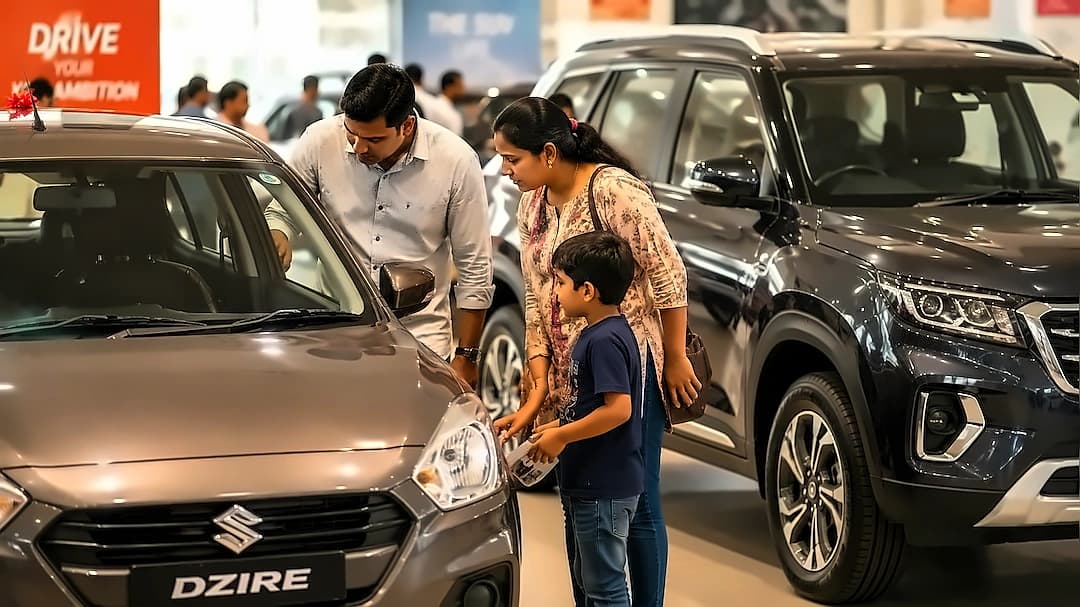
Indian automakers are quietly returning to their affordability-focused roots after years of chasing SUVs and higher-priced vehicles. According to reports from NDTV Profit, the industry had assumed that small cars had permanently lost relevance as SUVs became the default choice across income groups. However, recent signals from the country's largest automakers suggest this may not be the case, with Maruti Suzuki reporting that nearly 1.3 lakh of its 1.9 lakh pending customer orders at the end of FY26 came from smaller vehicles in the 18% GST bracket.
The market recovery is evident in recent sales figures, as reported by NDTV Profit. Maruti Suzuki's compact-car sales rose to 808,102 units in FY26 from 770,737 units a year earlier, while combined mini and compact vehicle sales increased to 920,393 units from 896,507 units. Simultaneously, utility vehicle sales also climbed to 760,987 units from 720,186 units, suggesting that India's SUV boom has not slowed but rather that smaller and more affordable vehicles are recovering alongside SUVs as affordability returns to buying decisions.
The shift is becoming visible across the industry, with different carmakers adapting their strategies accordingly. According to NDTV Profit, Hyundai Motor India said SUVs remained the largest contributor to its volumes during the quarter, while compact and mid-sized SUVs continued driving growth. The company plans upcoming launches including a new electric compact SUV and another internal combustion engine SUV in the mid-sized category, both positioned in high-demand segments. Tata Motors highlighted the rapid growth of smaller SUVs such as the Punch, which became the fastest SUV in India to cross 600,000 vehicles on the road in four years, while electric and compressed natural gas vehicles now account for more than 40% of its portfolio.
While some carmakers are returning to affordability-focused segments, others are continuing their premium positioning strategies. As reported by NDTV Profit, Mahindra & Mahindra continues moving deeper into premium SUVs and electric vehicles, with EV penetration crossing 10% during the final two months of FY26 as strong products helped lift market share and profitability. This divergence is beginning to reshape the market, with Maruti Suzuki signalling renewed confidence in affordability-led demand, Hyundai expanding across multiple SUV price bands, Tata Motors focusing on smaller SUVs and alternative fuel vehicles, and Mahindra targeting premium SUV buyers.