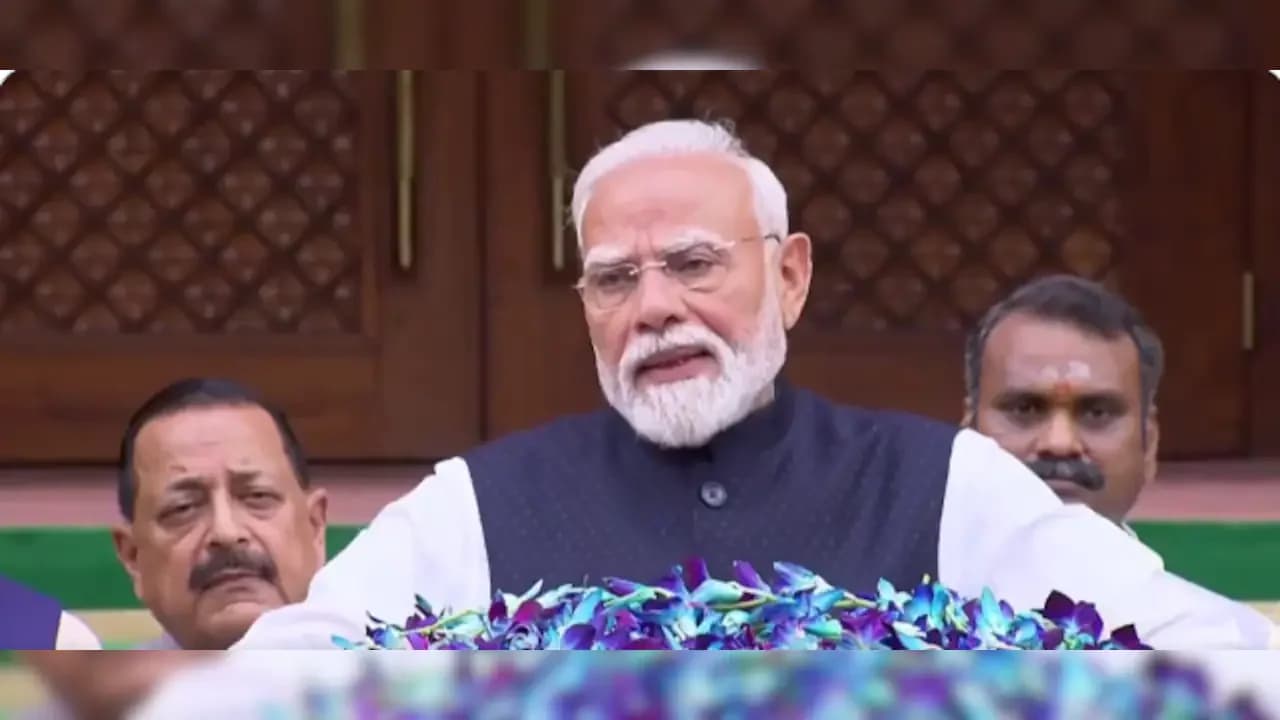
Prime Minister Narendra Modi has issued a comprehensive appeal for energy conservation and responsible consumption, directly linking these measures to India's energy security amid global uncertainties. Speaking in Vadodara, Gujarat at the inauguration of the Patidar community's Sardardham, Modi warned that 'the conflict in West Asia is among the biggest crises of this decade' after the coronavirus pandemic. The Prime Minister urged Indians to 'reduce petrol and diesel consumption, unnecessary foreign travel, and gold purchases' to bolster energy security and conserve foreign exchange reserves. Modi emphasized that 'In this time of global crisis, we have to make a resolution keeping duty paramount and fulfil it with complete dedication' and called for 'a big resolution to use petrol and diesel sparingly'. He specifically addressed the growing trend of 'the growing culture of weddings abroad, travelling abroad, and vacationing abroad' among the middle class, stating that 'during this time of crisis, we should postpone travelling abroad for at least a year'. Modi also requested citizens to avoid non-essential gold purchases temporarily and support locally manufactured products instead. As per The Times of India, Modi stated that 'Patriotism is not only about the willingness to sacrifice one's life on the border. In these times, it is about living responsibly and fulfilling our duties to the nation in our daily lives'.

The Nascent Information Technology Employees Senate (NITES), a registered union of IT and ITES employees across India, has written to the Union Labour ministry seeking a mandatory directive to work from home. According to Mint, the union seeks an order from the Union government directing companies to implement mandatory work from home for an appropriate period in the larger national interest. NITES President Harpreet Singh Saluja told Mint that a mandatory work from home directive will prove to be a responsible policy recommendation and in the larger interest of the nation, given the global headwinds. The union emphasizes that 'reducing daily commuting by lakhs of IT employees can significantly contribute towards fuel conservation, reduction in traffic congestion, environmental protection, and employee well-being, while ensuring uninterrupted digital operations and economic activity'. Prime Minister Narendra Modi has now reinforced this appeal, stating 'We must prioritise work from home, online conferences, and virtual meetings again' as part of India's response to global energy security concerns.
For the second time in as many days, Prime Minister Narendra Modi has urged citizens to revert to 'Covid-era' habits such as work-from-home, virtual meetings, car pooling and reduced fuel consumption. Speaking in Vadodara, Gujarat, Modi called on both government and private institutions to increase remote working policies to save fuel. He stated 'Until the situation returns to normal, all of us must together take small but meaningful pledges' and appealed to every citizen to 'reduce the use of petrol and diesel wherever possible'. Modi emphasized the importance of 'using the metro, electric buses, and public transport more frequently' and 'promoting carpooling' for those who own cars. He specifically requested that 'those who own EVs should help others as well' and urged 'schools to focus more on online classes for some time'. This follows his similar appeal at a public meeting in Hyderabad the previous day, where he had urged collective participation to help the country face global disruptions. As per The Times of India, Modi's appeal at the public event in Hyderabad on Sunday was described as the 'most drastic' so far by analysts.
Major Indian conglomerates have begun reassessing workplace policies following Prime Minister Narendra Modi's call for austerity measures to curb fuel consumption. According to reports from The Times of India, large companies including the Tata Group and Reliance Industries are exploring greater flexibility for employees amid ongoing concerns over fuel and supply disruptions. Reliance Industries, controlled by billionaire Mukesh Ambani, currently requires employees to work from office without a hybrid option, with a spokesperson stating the company is 'assessing the situation'. The appeal comes as countries across the region roll out similar fuel-saving steps, with Pakistan already announcing a four-day work week for government offices and directing sectors to shift 50% of their workforce to work-from-home models. Modi's comprehensive appeal now extends beyond work arrangements to include 'use metros and public transport wherever possible and adopt carpooling when private vehicles are necessary'.
The Prime Minister's appeal has had immediate market implications, with the benchmark Sensex index falling more than 1,000 points in early trade on Monday amid fears of prolonged economic disruption. As per The Times of India, analysts say Modi's comments were one of the reasons for the sharp market decline. The economic impact has been particularly severe on the Indian rupee, which has hit record lows in recent weeks, increasing the cost of imports and adding pressure on inflation. The prolonged conflict and disruption to oil supplies have begun to strain the broader economy, with hundreds of thousands of jobs at risk in factories that make glass and plastic products and tiles. Dwindling fertiliser supplies have raised concerns about lower farm produce and higher food prices. India has so far avoided raising petrol and diesel prices at the pump despite mounting pressure on state-run fuel retailers, but the prolonged conflict has begun to strain the economy. Analysts say Modi's remarks indicate the government may soon issue some directives to curb energy use, with a price revision of petroleum products also potentially on the horizon.