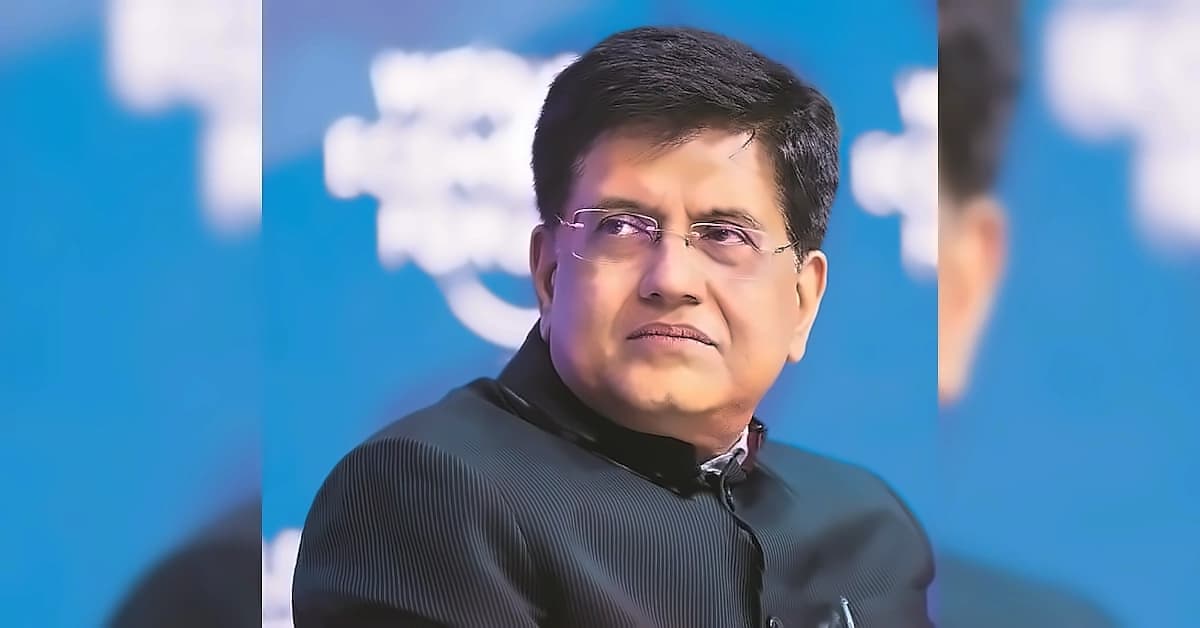
Commerce and Industry Minister Piyush Goyal has issued a stern warning to automobile companies against claiming indigenisation through nominal value addition of only 10-15%, speaking at the 66th Society of Indian Automobile Manufacturers (SIAM) annual convention. According to Business Standard, Goyal pointed to instances where companies set up another entity in India, import goods and carry out nominal value addition, after which the entire product is counted as indigenised. 'There are companies who tell us we are indigenising,' Goyal said, emphasizing that such practices cannot be considered sustainable economics in the long run. The government is now monitoring company-wise import and export data to assess the actual level of indigenisation and plans to use import-export statistics along with companies' IEC (Import Export Code) numbers to map their supply ecosystems and identify the extent of local value addition. 'So you may come and tell me that I have indigenised, or I am now highly localised, but I only need to connect the dots,' Goyal stated, adding that the government could examine a company's supply ecosystem and go 'two levels down' to determine its actual level of indigenisation.
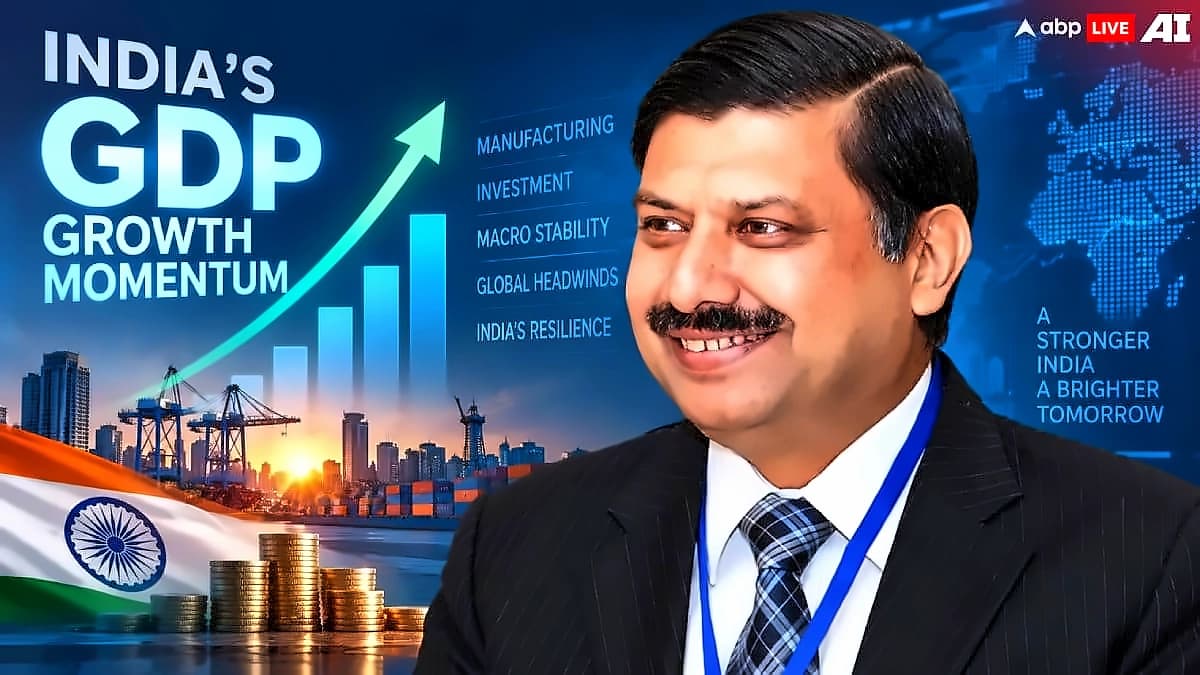
Commerce and Industry Minister Piyush Goyal described India as an 'oasis in the desert' amid global economic turmoil, highlighting the country's 7.8% growth in the April-June quarter. Speaking at the 66th annual session of the Automotive Component Manufacturers Association of India (ACMA), Goyal emphasized that '7.8% growth is a reality' and defended India's economic performance while taking a swipe at critics. The latest GDP data come at a time when India is dealing with several external pressures, including higher energy costs, geopolitical tensions and disruption to global trade. According to Reuters, the economy's resilience has been supported by private-sector capital investment rising 11.9% year-on-year and gross fixed capital formation increasing to 34.3% from 31.4% a year earlier. Goyal stated that 'now it is time that we go to the world. We start manufacturing across the world. We start making our footprint in developed countries'. He also emphasized that 'we are a listening government. We want you to be talking' and called for continued dialogue between industry and Government, stating 'we need your ideas. We need your inputs. We need your demands'.
Goyal urged Indian auto-component manufacturers to shift from an export-led approach to establishing a global manufacturing footprint while emphasizing quality excellence. Speaking at the 66th annual session of the Automotive Component Manufacturers Association of India (ACMA), Goyal emphasized the need for Indian manufacturers to 'start manufacturing across the world' and make their footprint in developed countries. According to reports from Business Standard, Goyal addressed the gathering in the presence of Sergio Gor, US Ambassador to India, and Harjinder Kang, UK's Trade Commissioner for South Asia. The minister also called for 'at least doubling the number of women on the shop floors of the auto-component industry' and emphasized safety consciousness, stating that 'advanced cameras are very useful for safety'. Goyal emphasized that 'gone are the days where one had to look from a position of fear or a defensive position' and urged companies to work with partners to become more competitive and capture global markets. 'In times of floods or unfortunate events, the electronic auto-locks in the cars can actually be very dangerous...SIAM is also here. Should be addressing these challenges. You make one industry conscious of safety and don't leave it to the government to come and interfere in your businesses,' Goyal said, calling for the industry to take safety to the next level.
Goyal urged both ACMA and SIAM members to make vehicle scrappage a profitable proposition for new vehicle buyers through shared efforts between government and private sector. According to The Times of India, Goyal stated that the industry needs to 'make scrappage of old vehicles a profitable and a valuable proposition for new vehicle buyers, and it can only be a shared effort, both of government and the private sector'. He emphasized that 'We have tried on our side to give some value and incentives, I think industry needs to come forward also and give a fair value when you scrap a vehicle so that we can see a greater market for your new age vehicles'. The minister also called for greater technology adoption in the auto sector, including Artificial Intelligence (AI) for better quality control, better assessment of customer needs, possibly customised vehicles which are now taking more and more traction in the US and Europe. Goyal urged the sector to step up investment in technology, including artificial intelligence for quality control and customer assessment, while strengthening vehicle safety and supporting vehicle scrappage. He also highlighted that 'the cars are being bought and are not merely being stocked' and noted that some electric vehicles now have a six-month waiting period.
Goyal highlighted the strong performance of the auto component industry, noting that ACMA is growing at a scorching double-digit rate and the auto sector is growing at a high double-digit rate. According to the latest data, five million passenger cars are expected to be sold this year, with cars being purchased rather than merely stocked. The minister pointed out that India's international trade was nearly USD 50 billion, evenly divided between imports and exports, emphasizing that 'business prospers when it looks globally and imports can also play an important role in the economic progress of a country'. Goyal highlighted India's growing market access through nine trade agreements finalised in the last four to five years, covering 38 developed countries collectively representing a GDP of USD 60 trillion. He noted that these agreements covered prosperous countries with high GDPs and high per capita GDPs, offering less competition and greater complementarity with Indian industry. The minister also acknowledged ACMA's role in India's Free Trade Agreement negotiations, saying that the organisation had consistently sought zero-duty access for the Indian auto component sector while also seeking reciprocal opening of the Indian market.
US Ambassador Sergio Gor emphasized the importance of US-India cooperation in the global automotive industry and highlighted the two countries' 'working closely together to build a trade relationship that is fair, reciprocal and mutually beneficial'. Gor stated that 'US-India cooperation is the engine under the hood of the global automotive industry' and called for creating an environment where American suppliers and technology can freely access the Indian market. According to Business Standard, Gor noted that this cooperation benefits both workers and companies on both sides, with the aim of allowing Indian firms to compete fairly in the US market. Gor highlighted cooperation across pharmaceuticals, military sales and exercises, IT, data centres and space, and described the Pax Silica Declaration as a landmark step towards a pro-innovation regulatory framework, noting that India was among the first countries invited to join. Gor also noted that Union Minister for Commerce and Industry Shri Piyush Goyal will travel to the United States at the end of the month as the United States hosts the G20 talks. According to The Times of India, Goyal highlighted that 'India and the US are working together as partners in critical mineral partnership and India is also a member of US-led strategic alliance 'Pax Silica' that aims to build a resilient supply chain for critical minerals and AI'. This partnership reflects the growing cooperation between the two nations in critical technology sectors.