Hyundai Motor Company has officially appointed Bodhi Thakur as its new Global Head of Corporate and Internal Communications, effective immediately. The South Korean automotive giant announced this high-profile appointment today, tasking Thakur with steering the company's global messaging strategies and internal culture initiatives. In his new capacity, Thakur will lead a multinational team responsible for unifying Hyundai's corporate identity, with industry analysts noting that his immediate challenge will involve streamlining internal communication channels across regional offices and managing external media relations during a period of massive industry transformation.
Hyundai Motor has raised its 2030 operating margin target to 9% or higher, up from the previous 8%-9% range, even amid intensifying global competition. The company maintains its 2030 global sales target of 5.55 million units with a 60% share of electrified vehicles (xEV). According to reports from Business Standard, this year's operating margin target will remain at 6.3%-7.3%, with total operating profit expected to increase by 11%. The cost of sales ratio will be reduced by 3 percentage points versus the original plan by 2030, achieved through 1.5 percentage points through end-to-end vehicle cost innovation, 1 percentage point through lower material costs, and 0.5 percentage point through localization-driven savings.
Hyundai Motor Co. CEO José Muñoz unveiled the company's most ambitious product strategy at the CEO Investor Day in Seoul on Wednesday, announcing more than 100 new model launches and refreshes as part of what the automaker describes as the biggest product push in its history. According to reports from Business Standard, this comprehensive overhaul will see South Korea's biggest automaker enter 18 new segments, including midsize pickup trucks, light commercial vehicles, and body-on-frame vehicles. The strategy is specifically designed to challenge Toyota Motor Corp. in the competitive US hybrid market while defending against low-cost Chinese rivals globally. Muñoz emphasized that "Hyundai Motor's fundamentals are stronger than ever," adding that the company will launch more models, offer customers more powertrain choices, and aggressively enter new segments and new markets.
The product rollout will be strategically distributed across key markets, with 58 of the 100 new and updated models allocated to the US - Hyundai's biggest market. As reported by Business Standard, 41 models will be introduced in Europe, 26 in India, and 22 in China, with some regional overlaps. This distribution reflects Hyundai's focus on diversifying its powertrain offerings while balancing electric vehicles with an expanded range of hybrids and extended-range electric vehicles amid softening global demand for pure EVs. Hyundai plans to add nearly 1.3 million units of global capacity by 2030, including 500,000 units in North America, 320,000 in India, and 200,000 in Korea. The luxury Genesis brand will introduce its first hybrid with the GV80 SUV and its first extended-range EV early next year, targeting more than 640 miles of range.
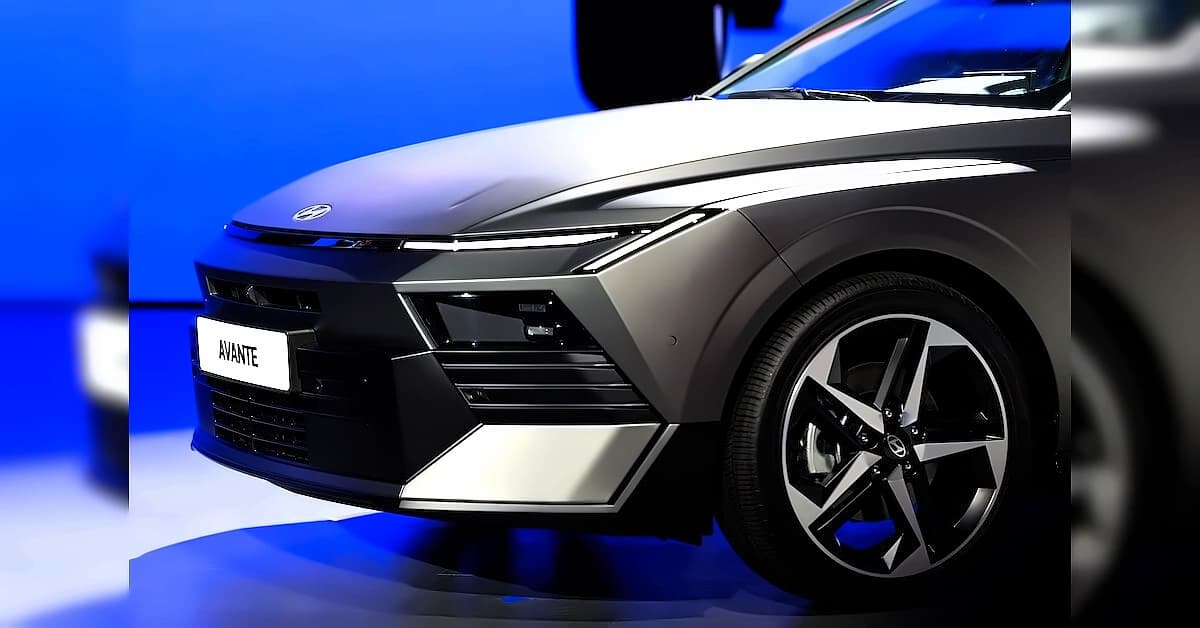
Seven models will arrive within the next eight months, including an all-new Tucson midsize sport utility vehicle and Tucson hybrid, an all-new Ioniq 3 compact EV, and the first-ever Santa Fe extended-range EV which targets more than 600 miles (966 kilometers) of total range. According to Business Standard, the Santa Fe will be built at the company's Alabama plant and runs on a new battery that charges 40% faster than previous cells. In the first half of this year (January to June), hybrid (HEV) sales rose 18% to 363,000 units from the previous year, while revenue hit an all-time high of 95.2 trillion won. By 2030, North America will roll out 10 new HEV models led by the Genesis GV80 Hybrid, achieving a 50% HEV sales share, with the Santa Fe EREV going on sale in the U.S. market starting in the first half of next year.
Hyundai Motor has outlined an aggressive autonomous driving roadmap, with the Autonomous Driving AI "Atria AI" to be deployed in Gwangju Metropolitan City by year-end to secure data for advancing models. In 2028, through a strategic collaboration with Nvidia, level 2 plus Autonomous Driving technology will be applied to the first SDV mass-production model, allowing hands-off driving in specific environments such as highways. The Saemangeum AI data center, a 100 MW-class facility capable of housing more than 50,000 graphics processing units, will be brought online from 2029 when autonomous driving data begins to surge. The company plans to expand its robotaxi business, with robotaxis based on the Ioniq 5 produced at the Meta Plant in Georgia to be supplied to Waymo in the fourth quarter. Hyundai opened the Robot Meta Plant Application Center (RMAC) in the U.S. in June and plans to expand the site to 10 times its current size by year-end.
The comprehensive strategy addresses multiple market challenges, including the need to offer a broader range of hybrids in the US to protect market share amid high fuel prices. In Europe, EV sales will be expanded to 420,000 units by 2030, nearly four times last year's European EV sales of 116,000 units. In India, the share of sport utility vehicles will be increased to 80% by 2030, supported by new, locally focused SUVs, with more than 90% parts localization to be achieved by 2030 to strengthen cost competitiveness. The company's Genesis brand aims to boost annual sales to 350,000 vehicles by 2030, while plans to increase local parts sourcing to 80% from 60% will help reduce the impact of President Trump's auto tariffs. Hyundai also plans to secure competitiveness in batteries, having recently developed an in-house battery cell with more than double the power performance of conventional high-nickel batteries while cutting charging time by 40%.