Shares of HFCL Ltd declined nearly 5% to touch an intraday low of ₹222.55 on Tuesday, September 15, following the board's approval of additional capacity expansion worth ₹820 crore. According to latest market data, the stock was trading at ₹223.9 on the National Stock Exchange, down 4.19% as of 11:50 AM. The decline reflects investor reaction to the significant capital expenditure commitment, though the company's strong recent performance context suggests market confidence in its expansion strategy. Over the past six months, HFCL shares have skyrocketed 214%, while from the beginning of the year, they have zoomed 224%, indicating strong investor sentiment despite the recent pullback.
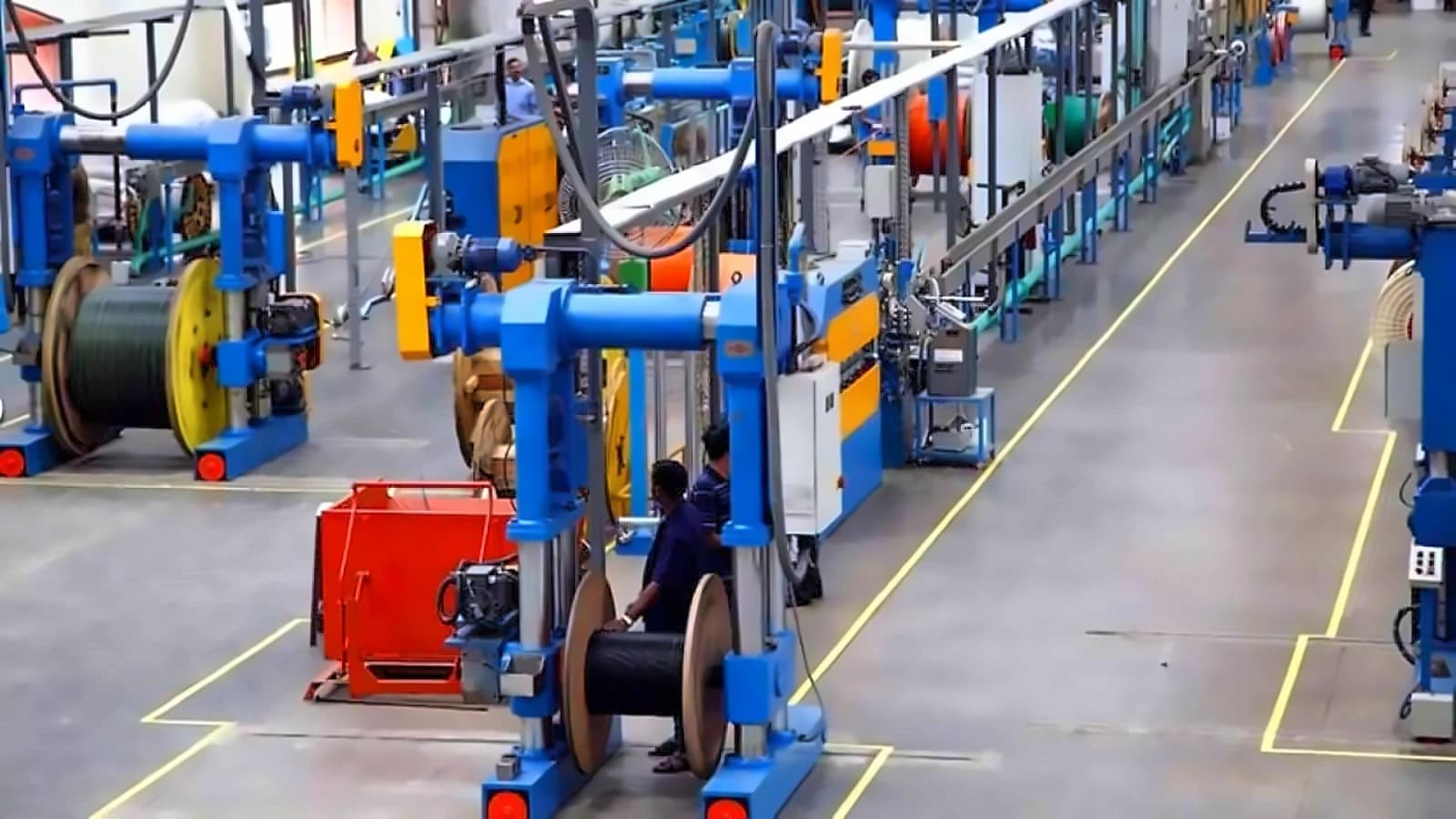
Telecom gear maker HFCL Ltd has approved an additional ₹820 crore capital expenditure to expand its optical fibre (OF), optical fibre cable (OFC) and preform manufacturing capacities, taking the total planned capex for these capacity expansion projects to around ₹1,800 crore. According to the latest stock exchange filing, the additional investment will add 4.60 million fibre kilometres (Mn fkm) per annum of optical fibre capacity, 5.64 Mn fkm per annum of optical fibre cable capacity and 300 metric tonnes (MT) per annum of preform capacity. Upon completion of the current and proposed expansions, HFCL's manufacturing capacity will rise to 43.10 Mn fkm per annum for optical fibre, 62 Mn fkm per annum for optical fibre cable and 600 MT per annum for preform. The Board of Directors approved the expansion on September 14, 2026, reinforcing the company's position in the optical communications sector and commitment to meeting the growing global demand for optical communication infrastructure.
The ₹820 crore additional investment comprises ₹670 crore for preform and ₹150 crore for optical fibre and optical fibre cable capacity expansion. As reported in the latest stock exchange filing, the optical fibre and optical fibre cable capacity expansion projects are expected to be completed by July 2028, while the preform manufacturing facility is expected to be established by October 2028. The preform manufacturing facility will be implemented through HFCL's wholly owned subsidiary, HFCL Technologies Private Ltd. The investment will be funded through an appropriate mix of internal accruals, proceeds from the preferential issue of warrants already issued to the promoter and promoter group entity, borrowings from financial institutions and banks, and other suitable financing arrangements. The additional capex is separate from the aggregate ₹980 crore already approved for similar projects, bringing the total planned capital expenditure for these capacity enhancement initiatives to approximately ₹1,800 crore.
HFCL delivered exceptional financial results for Q1 FY27, recording its highest-ever quarterly consolidated profit of ₹245.64 crore for the April-June quarter. This represents a dramatic turnaround from a loss of ₹29.3 crore in the same period last year. The company's revenue more than doubled to ₹1,914.98 crore in Q1 FY27 from ₹871 crore recorded in the June 2025 quarter. The strong performance was primarily driven by demand from hyperscale data centres, export growth and enhancement in production generating economies of scale. Building on this momentum, HFCL has doubled its revenue growth guidance for FY27 to 40% from the previously projected 20%. As of September 15, 2026, HFCL has a total market capitalisation of ₹34,231.92 crore, according to NSE data.
HFCL's existing optical fibre capacity is 28 Mn fkm per annum, with an ongoing expansion taking it to 38.50 Mn fkm. For optical fibre cable, existing capacity stands at 39 Mn fkm per annum, while ongoing expansion is taking this to 56.36 Mn fkm. The company currently has an ongoing preform capacity of around 300 MT per annum. The expanded platform will cover the manufacturing value chain from preform to optical fibre, optical fibre cable and connectivity solutions. According to the latest stock exchange filing, the company's OFC and connectivity solutions order book stands at approximately ₹19,000 crore, along with a pipeline of additional business opportunities and the long-term demand outlook for optical communication infrastructure.