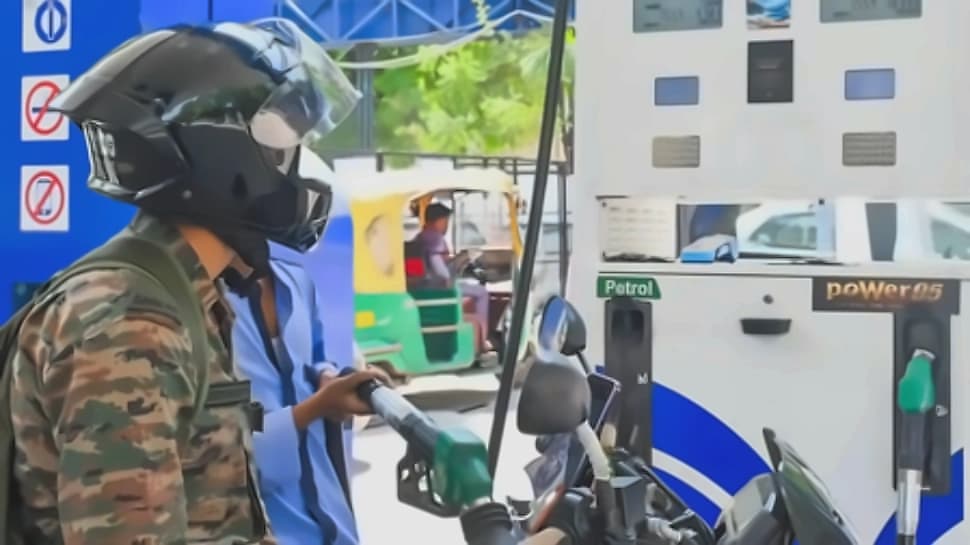
Following the ₹3 per litre fuel price increase, the government has released updated petrol and diesel rates for Saturday, May 16. According to the latest data from NDTV India, petrol is available at ₹97.77 per litre in Delhi and diesel at ₹94.77 per litre. In Mumbai, petrol costs ₹103.50 per litre and diesel ₹106.68 per litre. The government has also implemented new tax policies, imposing a ₹3 tax on petrol exports to regulate domestic supply while reducing diesel export duty from ₹23 to ₹16.5 and jet fuel (ATF) duty from ₹33 to ₹16. Oil marketing companies including Indian Oil, HP, and Bharat Petroleum have updated their rates based on global crude oil rates, dollar-rupee exchange rates, and local taxes.
The recent ₹3 per litre fuel price increase may provide temporary relief to oil marketing companies, but SBI Research warns that a further ₹2 rupee depreciation could effectively erase these gains. According to SBI's latest Ecowrap report, even with the current fuel hike, OMCs face substantial vulnerability to currency fluctuations. Under SBI's assumptions, an average FY27 exchange rate of ₹94 per US dollar and an Indian crude basket price of $106 per barrel would place the current landed crude cost at around ₹9,964 per barrel. The report estimates that the ₹3 fuel hike provides an estimated benefit of approximately ₹477 per barrel for OMCs, but this benefit could be neutralized by rupee weakness. SBI Research notes that the threshold level of rupee depreciation beyond which the gains accruing to OMCs from the recent ₹3 per litre fuel price increase are effectively neutralized by the rising cost of crude oil imports. The report emphasizes that the Rupee has already approached a critical depreciation threshold, beyond which further currency weakness could substantially erode the intended benefits of domestic fuel price revisions.
The recent retail fuel price increase of ₹3 per litre will provide up to ₹52,700 crore worth of relief to oil marketing companies in their under-recoveries, according to a report from SBI Research. As reported by Zee News, this relief comes as OMCs face mounting losses due to unchanged retail prices amid rising Brent crude prices. The relief amount represents approximately 15 per cent of the expected total loss of OMCs in FY27, as detailed in the SBI Research report. However, experts warn that rupee depreciation in FY27 could effectively erode the intended benefits of the recent domestic fuel price hike. The report notes that OMCs' under recoveries on sales of petrol and diesel are soaring because of unchanged retail prices, with companies currently incurring losses to the tune of ₹1,000 crore per day, which amounts to around ₹3.6 lakh crore a year. Kunal Sodhani, Head-Treasury at Shinhan Bank India, described the ₹3 per litre hike as "more of a temporary painkiller than a permanent cure" for OMCs, emphasizing that the recent increase merely cushions part of the losses rather than fully restoring marketing margins.
The government has estimated that oil marketing companies are losing approximately ₹1,000 crore per day due to under-recoveries on petrol and diesel. As reported by Zee News, these daily losses would translate to roughly ₹3.6 lakh crore annually, highlighting the substantial financial burden on OMCs. The situation has arisen because retail prices were maintained unchanged while Brent crude prices continued to rise, creating a significant gap between input costs and revenue from fuel sales. SBI Research estimates that if excise duty is further rationalized to zero to help OMCs reduce their losses, it would entail a revenue loss of ₹1.9 lakh crore or 0.5% of GDP for the Government, with states also losing ₹80,000 crore. The report adds that there is a need for a comprehensive policy on balance of payments to manage external sector risks.
The report highlights that SBI found a correlation of 0.53 between crude price fluctuations and rupee volatility, indicating that global oil shocks are increasingly transmitting into India's domestic currency environment. According to the SBI Research report, this pricing strategy has resulted in the substantial under-recoveries that OMCs are currently experiencing. The report notes that global crude oil markets remain under pressure amid disruptions in the Strait of Hormuz due to the ongoing West Asia conflict, with shipments through the Strait of Hormuz having declined sharply in recent months, impacting both crude oil and LNG flows. As per the latest IEA report, crude will continue to remain under pressure owing to the depleting inventories. The report emphasizes that there is a need for a comprehensive policy on balance of payments to manage external sector risks, with the currency having reached a critical depreciation threshold. Kunal Sodhani from Shinhan Bank India noted that if crude prices remain elevated and rupee stays weak, markets may eventually require an additional cumulative fuel price increase of around ₹10-12 per litre over time for OMCs to meaningfully normalise profitability.
The fuel price hike is expected to have an immediate impact of around 15-20 basis points on Consumer Price Index (CPI) inflation during May-June 2026, according to SBI Research. The report has revised its FY27 inflation forecast to 4.7 per cent due to the fuel price increase. The report warns that even an additional depreciation of ₹2 in the Rupee raises the effective crude oil price, pushing the landed import cost, which fully offsets the gains from the current fuel price hike. This underscores the critical importance of currency stability for the effectiveness of domestic fuel price revisions. Concerns around weak fuel marketing margins are already reflecting in company commentary, with HPCL warning during its post-results analyst call that the June quarter could remain extremely challenging and see losses due to elevated crude prices and volatile fuel markets. Analysts believe the trajectory of crude oil prices and the rupee will remain the key drivers for OMC stocks going ahead, with any further weakness in the currency likely to intensify concerns around earnings visibility despite the recent fuel price hike.