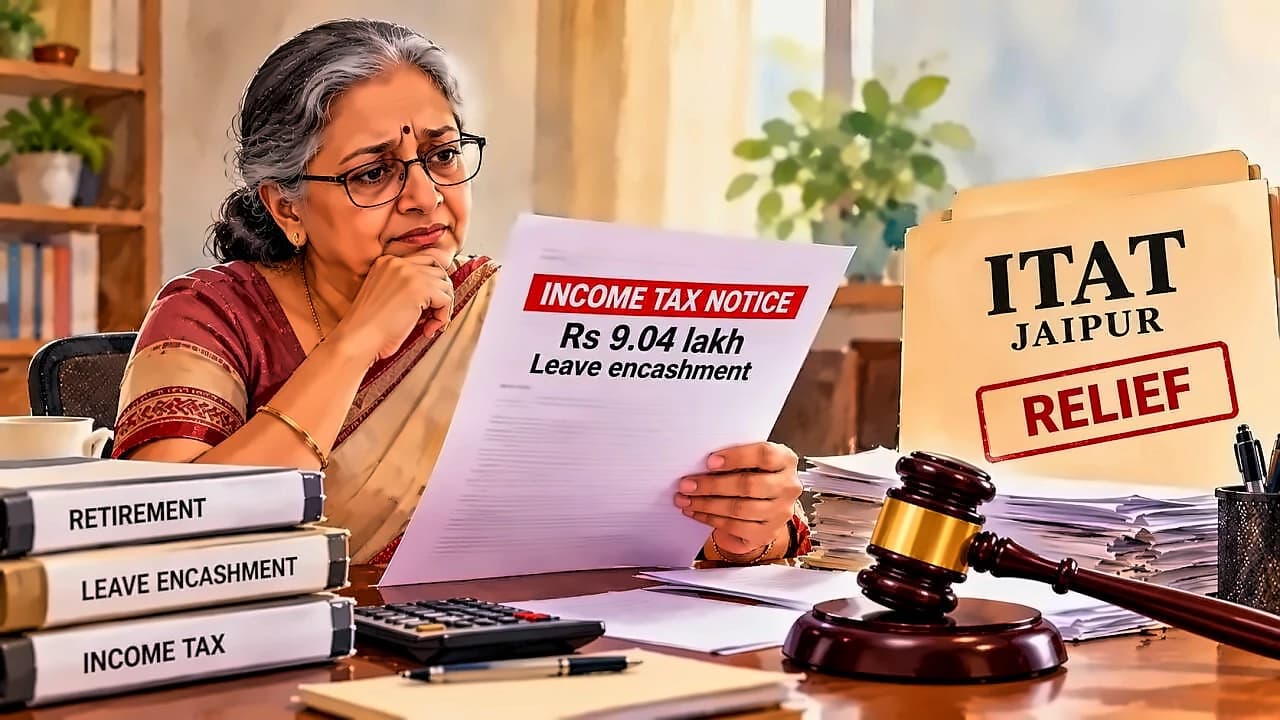
A retired woman from Life Insurance Corporation of India (LIC) received ₹9.04 lakh as leave encashment upon retirement on June 30, 2020, after more than 30 years of service. According to The Times of India, she claimed tax exemption on the entire amount while filing her income tax return, unaware that LIC employees fall under the non-government employee category. The Income Tax Department restricted her exemption to ₹3 lakh and sought to tax the balance of ₹6.04 lakh, leading to an income tax notice being issued. As reported by Economic Times, the woman's previous tax consultant failed to inform her about this tax notice, resulting in a 1,277-day delay before she approached the tribunal.
The woman approached the Income Tax Appellate Tribunal (ITAT) Jaipur only after a 1,277-day delay, engaging a new chartered accountant to pursue the matter. As reported by The Times of India, she explained that she had entrusted the matter to a tax consultant who did not file the appeal before the tribunal or inform her that the Commissioner of Income Tax (Appeals) had dismissed her case. The ITAT Jaipur accepted her request to condone the delay, citing that an individual should not be held responsible for mistakes or negligence committed by their tax consultant. According to Economic Times, the tribunal stated that it is a settled principle of law that a mistake or negligence on the part of a tax consultant engaged by an individual cannot be attributed to them and they should not be made to suffer for the tax consultant's mistake.
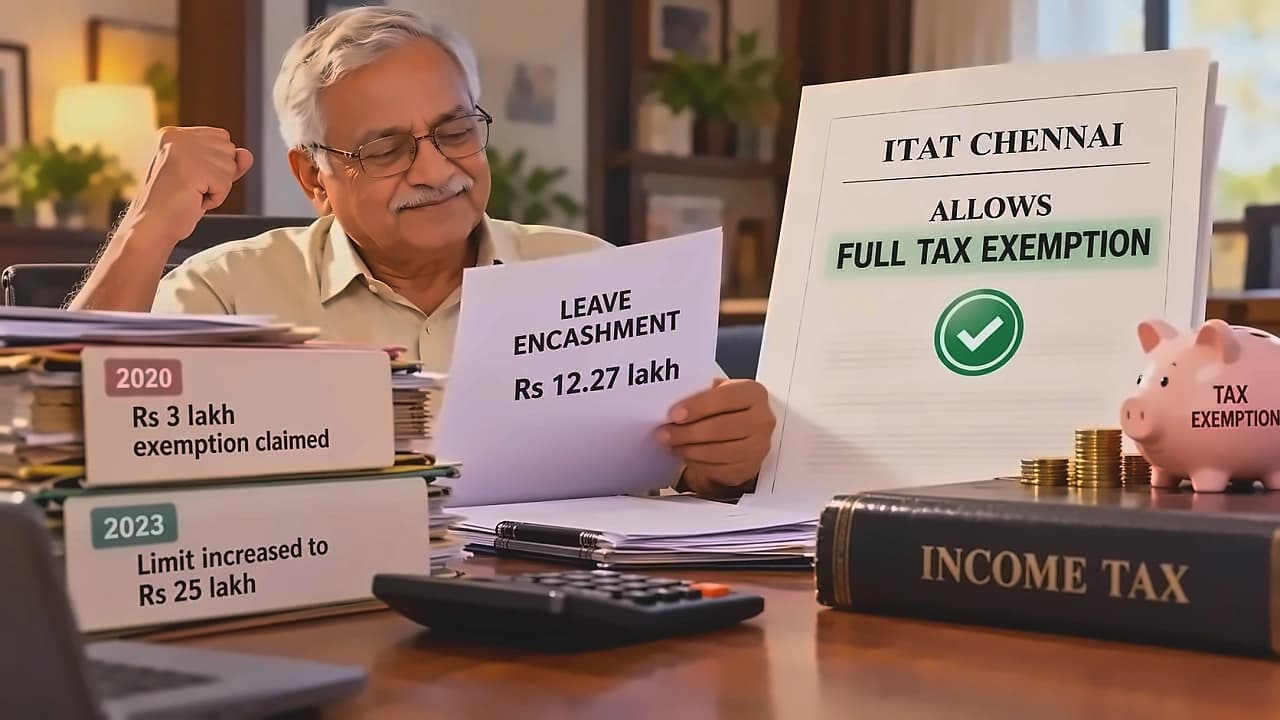
The tribunal considered the revised exemption limits, noting that the exemption limit for leave encashment received by non-government employees was raised to ₹25 lakh in Budget 2023. According to The Times of India, the woman's representative cited CBDT Notification No. 31/2023, dated May 24, 2023, which raised the exemption limit for eligible employees to ₹25 lakh. The tribunal referred to earlier ITAT decisions that had applied the revised limit and noted that a coordinate bench had already ruled in favour of allowing leave encashment exemption within the ₹25 lakh ceiling. As reported by Economic Times, the ITAT Jaipur stated that the CIT(A) has erred in confirming the disallowance made by the AO/CPC, hence directing the AO to allow the claim of the assessee.
On September 28, 2026, the ITAT Jaipur held that the woman was eligible for exemption on the ₹9,04,669 she had received. As reported by The Times of India, the tribunal stated that any leave encashment received beyond the eligible exemption limit is taxable under the head 'salaries' in the year of payment, with excess amounts taxed at normal income-tax slab rates. According to Economic Times, the tribunal ruled that Mrs Moongia's ₹9.04 lakh leave encashment which she received after putting in more than 30 years in LIC is exempted u/s 10(10AA) of the Income Tax Act. Chartered Accountant Suresh Surana noted that leave encashment paid to central and state government employees is completely exempt from income tax, while private sector employees are eligible for exemption only up to the specified limits under income-tax law. For private-sector employees, the exemption amount is restricted to the lowest of the following amounts: 10 months' average salary, actual leave encashment received, and ₹25 lakh ceiling (applied on an aggregate basis across all employers).