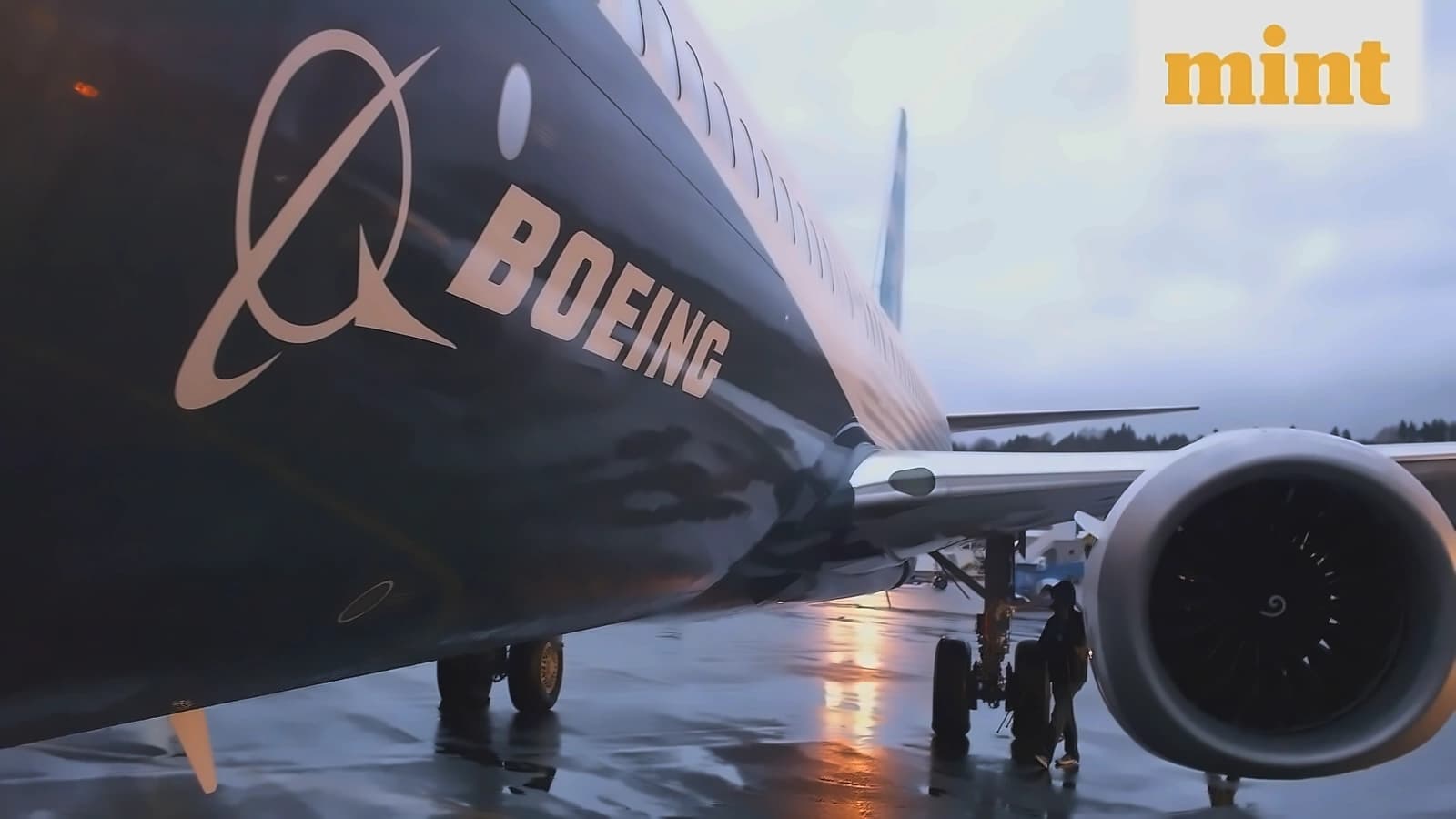
The US Federal Aviation Administration (FAA) has instructed airlines operating 471 Boeing 737 Max jets to carry out inspections of a structural component for possible cracks that could compromise the aircraft's structural strength. According to the latest reports, the issue involves cracks found on some planes in a structural reinforcement around the forward service door on the right side of the airplane, next to the front galley. The airworthiness directive requires operators to inspect the fuselage paneling for potential defects, with the directive taking effect on September 10, 2026. The directive applies to in-service versions of the newer-generation Max aircraft, including the 737 Max 8, Max 9, and 8200 variants. As per Reuters, citing advisory and intelligence firm IBA, nearly 2,300 737 MAX jets are in service worldwide, including 823 in the United States. The FAA issued the Airworthiness Directive on August 7 covering certain Boeing 737-8, 737-9 and 737-8200 aircraft after reports of cracks in a bearing strap at the forward upper corner of the forward galley door cutout.
Indian carriers Akasa Air and Air India Express have confirmed their Boeing 737 fleets are unaffected by the FAA directive requiring inspections for possible fuselage cracks. An Akasa Air spokesperson stated that the airline operates one of the world's youngest fleets, comprising entirely new Boeing 737 MAX aircraft, with no impact on the safety or current operations of their fleet. The directive mandates a scheduled inspection prior to the completion of 30,000 flight cycles (take-offs and landings), but at Akasa Air's current average utilisation, this threshold is expected to be reached approximately 13-plus years after an aircraft is inducted into service. The airline operates 40 Boeing 737 MAX planes and has a longest lease of 12 years, making the directive have no practical impact. Air India Express also confirmed that the FAA airworthiness directive does not affect their 80 Boeing 737 aircraft. In India, Akasa Air, Air India Express and SpiceJet together have more than 140 Boeing 737 planes.
The FAA's directive follows an airworthiness proposal first reported in November last year after reports of cracks in the bear strap and stub frame near the forward galley door cutout of certain Boeing 737 Max aircraft. As reported by Bloomberg, the directive requires operators to inspect existing repairs, check the fuselage skin, bear strap, and stub frame for cracks, conduct repeat inspections where necessary, and carry out corrective actions if any issues are found. The FAA stated that the measures are aimed at addressing a potential unsafe condition that could affect the aircraft's structural integrity, noting that cracks could lead to the structural integrity of part of the plane being 'adversely' compromised. Airlines must inspect the affected area and repair any cracks before returning a plane to service. According to the FAA, the cracks were found near the forward service door near the galley and could weaken the plane if left undetected. The FAA noted that the cracks that were found in older planes had developed in what is known as the bear strap, which reinforces areas around doorways and emergency exits. Over time, the stress of takeoffs and landings can lead to cracking near door corners.
The inspection requirements carry significant financial implications for airlines. According to the FAA, the estimated costs of inspection for general repairs are $40,035, while detailed inspections for cracks are up to $160,140 per inspection cycle. The FAA did not order that the jets be grounded, saying the required inspections should identify problems before they become a safety risk. This represents a substantial operational cost for airlines operating the affected aircraft. The directive comes as part of broader FAA safety initiatives, following a separate order in late July that required inspections of passenger seats on hundreds of Boeing 737 MAX aircraft due to incorrect installation concerns.
Aircraft manufacturer Boeing said it has been working with airline customers for the last six years after the issue was identified, with the FAA-mandated checks stemming from similar inspections for older-generation 737NG jets in 2021. According to a company spokesperson, Boeing supports both directives and continues to support its airline customers, stating that the FAA Airworthiness Directive published today mandates the inspections, as it did for the 737 Next Generation. The US planemaker has completed an engineering review and is developing changes aimed at preventing similar cracking issues in the future. Boeing noted that this issue has not been observed on the 737 MAX fleet, but the company extended the inspections to 737 MAX airplanes as the model shares a similar design and build process. As per CBS News, Boeing first notified operators of its 737 Next Generation planes of the issue in 2019, when it provided them with 'detailed instructions for conducting the recommended inspections'. Boeing is also conducting analysis to determine the root cause of the cracks and prevent them in future aircraft.