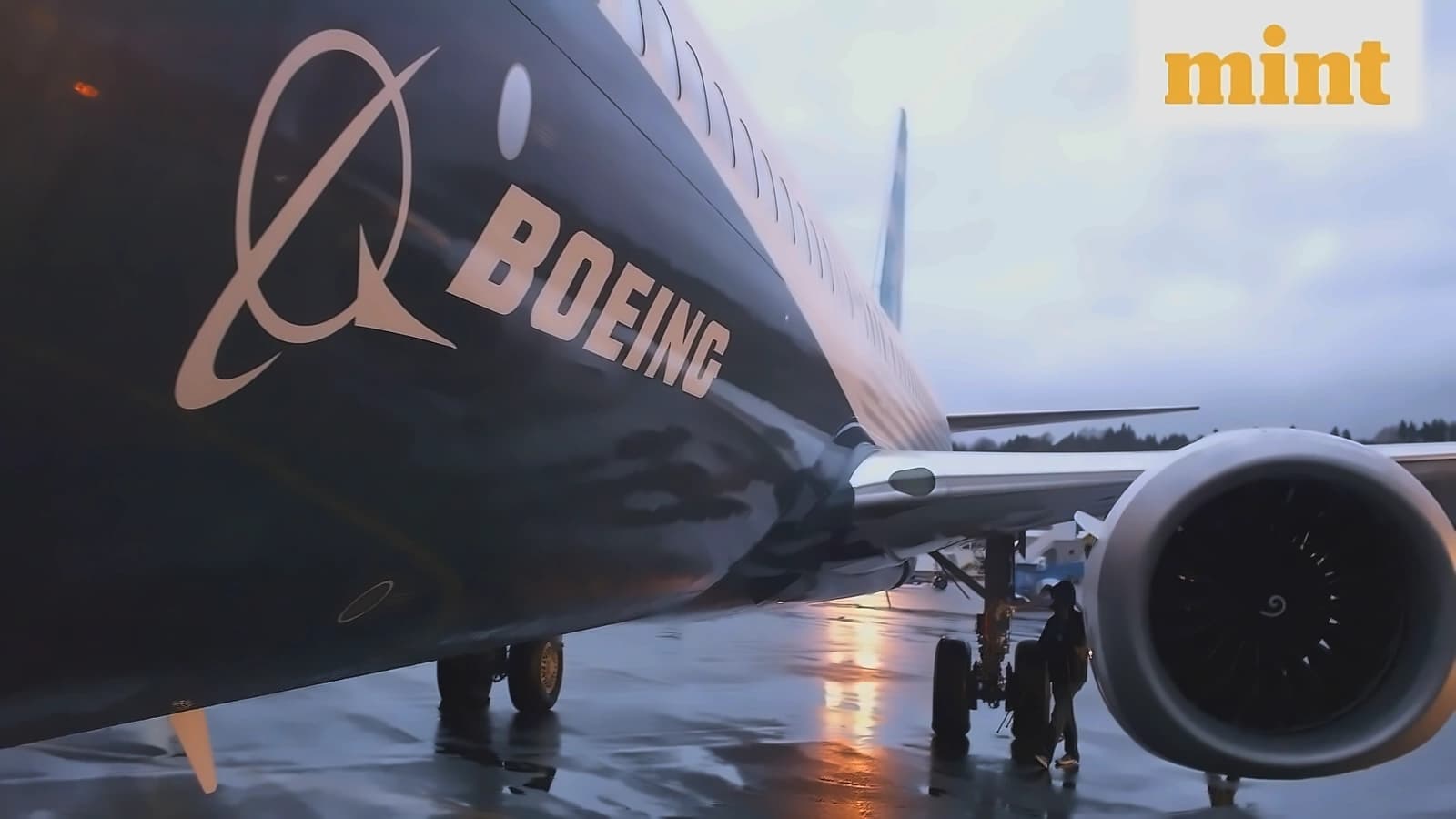
The Federal Aviation Administration (FAA) Corrective Action Review Board determined on Friday that a software glitch affecting certain Boeing 737 Max flight computers does not pose a safety risk. This development provides significant relief for Boeing's certification efforts and addresses concerns that had previously delayed the 737 Max 10 certification. The FAA's conclusion removes a major regulatory hurdle essential for Boeing's financial recovery, with the FAA stating that the glitch is 'not a safety concern' because pilots retain full control of the aircraft and the information displayed to the flight crew is clear and unambiguous. Following this announcement, Boeing shares rose 1.6% to $195.40 as of 2:47 p.m. New York time.
Akasa Air Cofounder and CEO Vinay Dube has allayed safety concerns regarding a Boeing 737 Max software glitch during landing. According to reports from Business Standard, Dube stated that following their assessment and discussions with Boeing, there is no impact whatsoever on operational continuity, new aircraft delivery schedules, and induction timelines. The airline maintains that 'our fleet remains absolutely safe' despite the reported software issue. This assessment gains additional credibility as US Transportation Secretary Sean Duffy confirmed on Wednesday that there was currently no safety concern and no need to ground the 737 MAX fleet.
The concerns emerged when The Wall Street Journal reported that Boeing informed buyers in August about a software glitch in its 737 MAX jets, while maintaining it posed no safety risk. As reported by Business Standard, Dube explained that this is not a universal software issue but just that in a very specific manoeuvre, the automated flight-guiding system cannot be used. He noted that 'in such a case, the pilot has to fly the plane manually' and emphasized that 'if you ask me how often we have encountered this specific situation in our four and a half years of flying, the answer is zero'. The issue can arise during a go-around, when a pilot decides to abandon a landing and climb again, causing the autopilot to shift to a simpler level of automation for pitch control and significantly increasing pilot workload compared with the aircraft's standard mode.

According to Business Standard, Akasa Air operates a fleet of 43 Boeing 737 Max planes that fly across the country and abroad. The airline has already received 43 planes out of a total order of 226 aircraft, with the remaining fleet scheduled for phased delivery by 2032. Dube confirmed that there is no problem with registration of the Boeing 737 MAX and that the airline is readying to get deliveries of some planes very soon. The airline has already added five of these planes to its fleet during the current financial year.
As reported by Business Standard, some global carriers have told Boeing that they would not like to take delivery of the new Boeing 737 MAX jets until the issue is resolved. However, major airlines like Southwest, United, American, and Alaska have separately confirmed they do not operate aircraft with the affected software version, alleviating immediate concerns. The FAA will issue a special airworthiness information bulletin to US carriers and foreign regulators to ensure they're aware of Boeing's bulletin explaining crew response procedures. Akasa Air holds the largest order for the Boeing 737 MAX in India and is looking for another order in the next few years to ensure continued expansion, with the Max 10 being years behind schedule and important to Boeing's efforts to generate cash and strengthen its balance sheet.