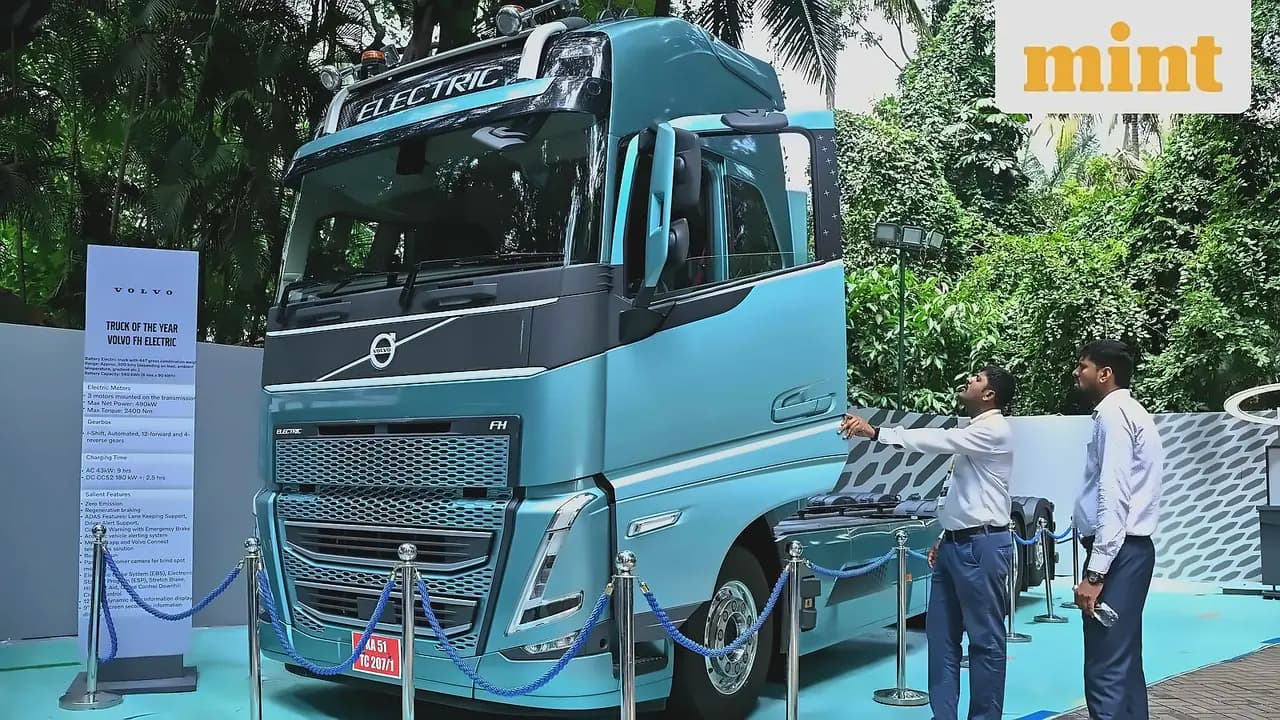
On 29 April, the Centre issued guidelines requiring electric truck makers to localize components such as battery management systems and vehicle control units to qualify for incentives under the PM E-Drive scheme. According to reports from Mint, e-truck makers must use domestically produced components from September 2026. The government had previously eased rules during the 2025 rare-earth magnet shortage by extending deadlines for importing related subassemblies without forfeiting incentives. The Ministry of Heavy Industries has now issued a notification on Wednesday amending the phased manufacturing programme (PMP) for electric trucks in the N2 and N3 categories, mandating the use of locally produced vehicle control units, battery management systems, and DC-DC converters starting September 1, 2026.
Trucks account for a small 3% share of India's total vehicles but contribute about a third of the country's road sector greenhouse gas emissions, making the shift towards electric trucking important. As reported by Mint, the challenge is the green premium that consumers have to pay for electric vehicles. While the price gap between petrol and electric two-wheelers has almost reached parity in India, according to a December 2025 report by consultancy firm KPMG, the gap in segments such as buses and trucks remains significant. The price of an electric truck may be 2-2.5 times that of its diesel counterpart, according to an August 2025 report by the government's think tank NITI Aayog.
The Centre started incentivizing e-trucks under the ₹10,900-crore PM E-Drive scheme with a ₹500 crore allocation for about 5,600 trucks. According to Mint, under the Phased Manufacturing Programme (PMP), the ministry of heavy industries has listed components which can be imported until a certain date. The ministry amended the PMP for e-trucks on 29 April, its third such amendment for zero-emission trucks, mandating the use of locally produced vehicle control units, battery management systems, and DC-DC convertors starting September 2026. The latest notification specifically covers the N2 and N3 categories of trucks, signalling a comprehensive approach to electric vehicle localization across different vehicle segments.
E-bus and e-truck makers such as Tata Motors, Ashok Leyland, Montra Electric, and EKA Mobility were in talks to seek further relaxations in the localization rules under the PM E-Drive scheme, as reported by Mint in December 2025. However, Zoeb Karampurwala, chief product officer of EKA Mobility, told Mint that the amendment was made after discussions with the industry, at a time when most e-truck manufacturers have already been preparing for increased localization requirements. Unlike e-buses, e-trucks often require gearboxes, which now also need to be localized alongside motors and controllers, with certain challenges persisting due to reliance on imported rare-earth magnets.
EV sales in India reached 2.45 million units in 2025-26, up 25% from the year-ago period, according to data from the Federation of Automobile Dealers Association (FADA). For India's automotive spare parts makers, the country's domestic EV sales growth at a 30% annualized rate (CAGR) is an important opportunity, according to a September 2025 McKinsey & Co. report. Amit Bhatt, India managing director of International Council for Clean Transportation (ICCT), told Mint that this amendment sends a clear signal that India is moving beyond assembly towards deeper localization, with the transition window allowing BMS imports until August 2026 being pragmatic.