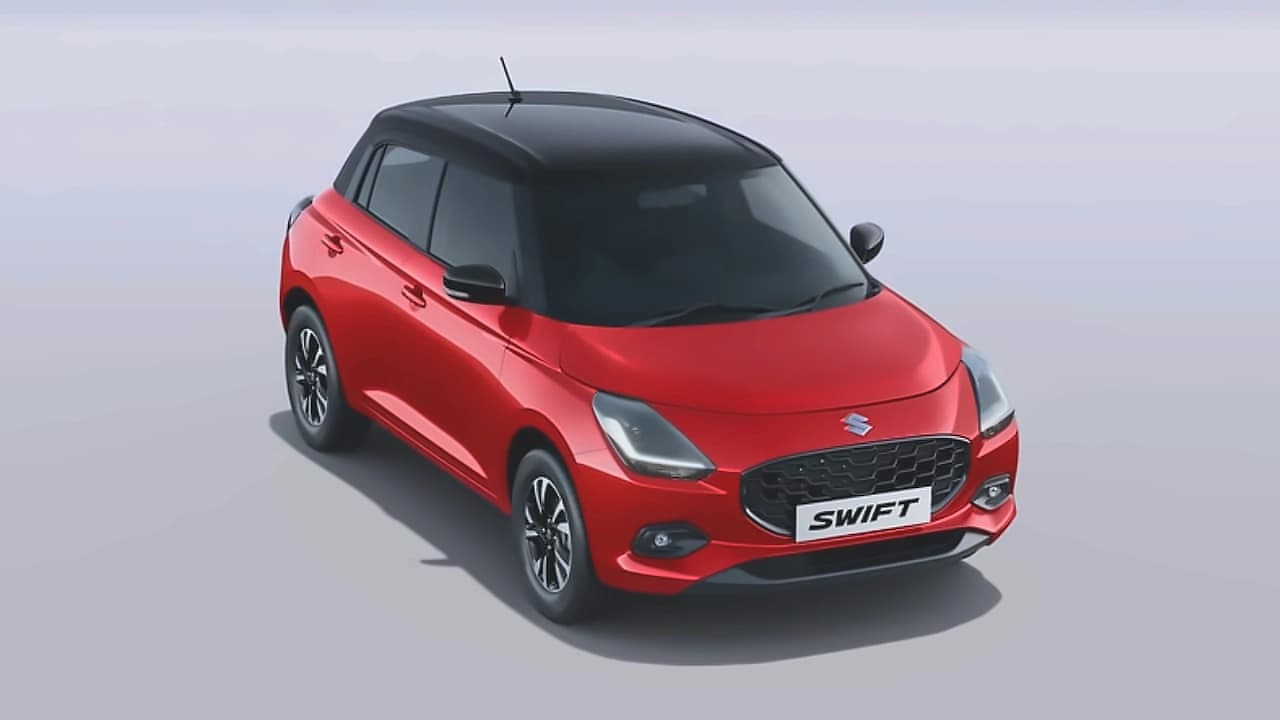
The Ministry of Power has finalized the third phase of Corporate Average Fuel Economy (CAFE-III) norms for passenger vehicles, with the framework notified on September 29, 2025 and set to come into effect from April 1, 2027. The norms will remain applicable until March 31, 2032, applying to new passenger vehicles manufactured or imported for sale in India. The final rules represent a significant departure from earlier proposals, doing away with a proposed special concession for small petrol cars and implementing a fleet-wide calculation system that treats manufacturers' entire vehicle portfolios rather than individual models. Under this system, a manufacturer's permitted fuel consumption is determined by the weighted average unladen weight of the vehicles it sells, with the heavier the average fleet, the higher the permitted fuel consumption. The reference weight has been increased from 1,082 kg under existing norms to 1,229 kg under new CAFE norms, representing an increase of around 13.6 per cent, reflecting the evolving characteristics of the passenger vehicle fleet. Instead of retaining a separate concession for small cars, the final framework flattens the weight-based target curve, giving lighter vehicle fleets relatively more headroom while making the targets more demanding for heavier fleets.
The reference weight has been increased from 1,170 kg under earlier proposals to 1,229 kg in the final framework, representing a flatter annual multiplier that provides more balanced targets across vehicle categories. The government has set an annual formula for calculating each manufacturer's target using specific parameters: 'W' represents the weighted average unladen mass of eligible vehicles, 'a' determines how much the fuel-consumption target changes for every kilogram above or below the reference weight, and 'c' is the baseline fuel-consumption target expressed in litres per 100 kilometres. For FY28, the formula uses an 'a' value of 0.00158 and 'c' value of 3.9960 litres per 100 km, while these figures progressively tighten to 0.00131 and 3.3273 litres per 100 km respectively by FY32. The September 2025 draft had proposed a 3 gram per kilometre deduction in declared CO2 emissions for petrol cars weighing up to 909 kg, with engine capacity of up to 1,200 cc and length of less than four metres, but this separate carve-out has been dropped in the final rules, ending a long contentious debate between automakers over the treatment of small versus large cars.
The revised weight formula potentially benefits manufacturers with lighter fleets significantly, with a 909-kg average fleet receiving about 9% more allowance in FY28 and nearly 17% more in FY32 compared to the September draft formula. At the reference fleet weight of 1,229 kg, the target falls from about 94.8 g of CO₂/km in FY28 to 78.9 g/km in FY32. This represents a nearly 17% tightening of industry-wide fuel-efficiency targets through FY32, with the Gazette setting progressively tighter coefficients for each year. The final framework removes the draft's separate small-car concession but provides enhanced benefits to lighter vehicles, while at 1,800 kg, the final standard is about 1.8% tighter in FY28 and 4.6% tighter in FY32 compared to earlier proposals. The new norms seek over 16 per cent improvement in fuel efficiency over five years, with the fleet-average fuel-consumption benchmark progressively tightening from 3.996 litres/100 km in 2027-28 to 3.3273 litres/100 km in 2031-32, representing an improvement of around 16.7 per cent over the period.
Maruti Suzuki India, the country's largest small-car maker, has welcomed the CAFE-III notification despite the removal of the proposed 3 g/km benefit for petrol cars weighing up to 909 kg. According to Moneycontrol, Rahul Bharti, Senior Executive Officer, Corporate Affairs at Maruti Suzuki, emphasized that the new framework recognises multiple powertrain technologies and fuels while encouraging research and development. The company highlighted that it is one of the front-runners in absolute efficiency performance in CAFE phases I and II and will continue its leadership in CAFE-III. A senior automobile industry executive noted that while the specific relaxation for cars under 909 kg was removed, the way CAFE-III treats emissions requirements depending on overall fleet weights could appeal to all carmakers, as lighter fleets receive lower permitted fuel-consumption figures while heavier fleets get higher ones. The auto industry was divided between two groups -- one pitching for some special consideration for small cars, and the other seeking benefits for EVs and bigger cars. A section of carmakers, including Tata Motors, had earlier opposed any leniency for small cars based on weight and affordability, whereas bigger players like Maruti Suzuki India had argued that the idea behind the new norms was to make big cars improve fuel efficiency and reduce emissions.
The final CAFE-III framework provides the biggest compliance benefit to battery-electric vehicles (BEV) and range-extended electric vehicles (REEV), which receive a volume derogation factor of 3, meaning one such vehicle contributes three times its actual sales volume when calculating fleet performance. This compares to 2.5 for plug-in hybrids and strong hybrids running on flex fuel, 1.6 for strong hybrids, and 1.1 for flex-fuel vehicles. The treatment of small cars had emerged as one of the biggest points of contention during the drafting process, with Maruti Suzuki pushing for additional regulatory relief for lightweight cars, arguing that smaller vehicles have limited scope for further efficiency improvements. However, the final rules do not provide separate benefits to cars below the 909-kg threshold, instead treating all vehicles through the weight-based fleet formula. The norms provide manufacturers with multiple compliance pathways, including credits for electric vehicles, hybrids, flex-fuel vehicles, alternative fuels and approved fuel-saving technologies. The list of recognised fuel-conservation technologies has been significantly expanded from four to twelve technologies, providing manufacturers with greater flexibility to adopt and receive recognition for approved fuel-saving technologies. The framework recognises the contribution of renewable and low-carbon fuels, including ethanol-blended petrol, biofuels and CBG, through the introduction of the Carbon Neutrality Factor (CNF), supporting India's broader transition towards cleaner fuels while encouraging innovation across multiple technology pathways.