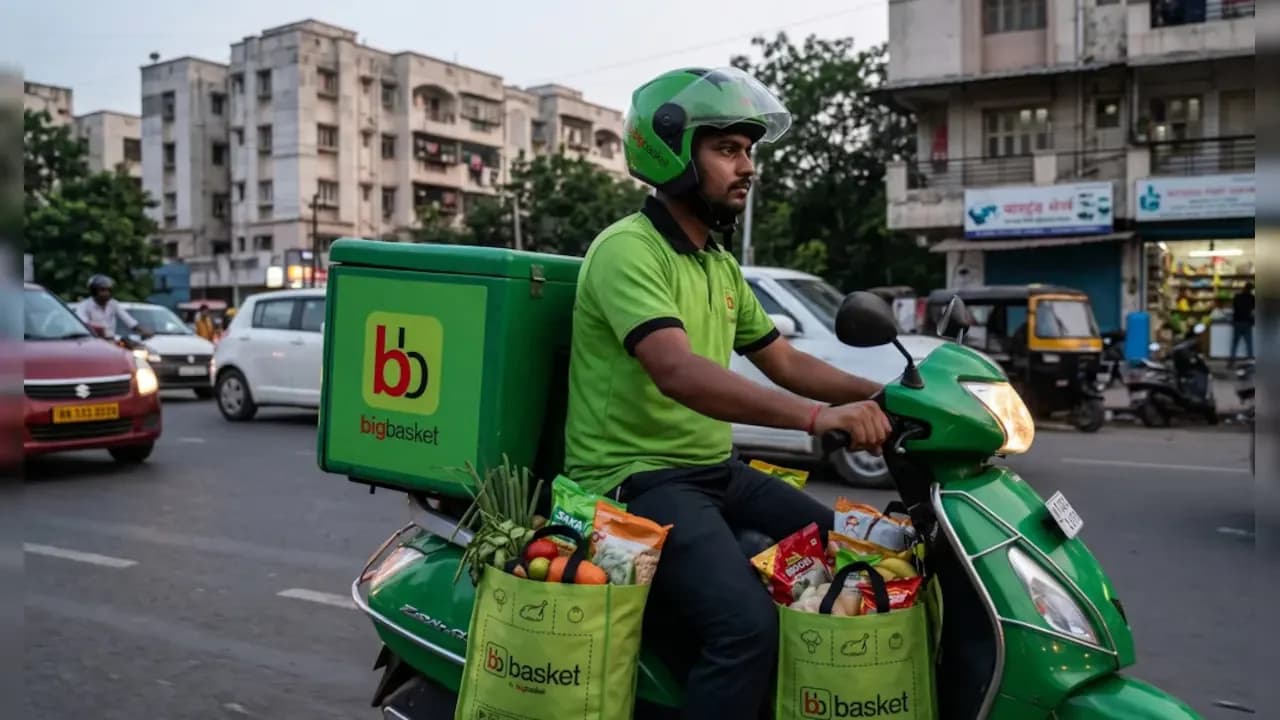
Tata-owned BigBasket cofounder Hari Menon has stepped down as chief executive of the e-grocery firm after nearly 15 years of leadership, marking the first time an external executive will lead the Tata group-backed grocery-delivery platform. According to reports from Mint, Menon's exit comes after the platform publicly denied succession-planning reports nearly 10 months ago, when it said there were "no plans to hire a new CEO for BigBasket." The transition brings in Amazon veteran Amit Nanda, who previously oversaw the e-commerce giant's marketplace seller ecosystem during his 11-year stint, to take over as CEO after spending over 11 years with the tech titan. Menon co-founded BigBasket in 2011 along with Vipul Parekh, VS Sudhakar, Abhinay Choudhari and VS Ramesh as a scheduled-delivery business, with Choudhari being the only founding member to have exited following the Tata acquisition. As per Mint, Menon expressed satisfaction with building the platform from inception to its current position as one of India's most trusted consumer platforms, stating his confidence in Nanda's selection based on his deep understanding of consumers, strong track record of building and scaling businesses, and extensive experience across e-commerce and consumer sectors.
As Menon steps down, BigBasket is shifting its strategic focus from market share to profitability, with the company targeting break-even within 12-15 months. According to Business Standard, Menon revealed that the company's fundamental direction will be chasing profitability rather than market share, stating "If you chase profitability, market share will come because in this business of qcom, unless you have scale, you will not be profitable." The company's approach centers on achieving a very healthy average order value as the key metric for profitability. Menon emphasized that the platform will double down on its physical presence, expanding from 900-plus stores to 1,000-plus stores in the next month or two, while being very careful in opening new stores to ensure store-level profitability is achieved very quickly. The company will also introduce newer models like subscriptions, having already integrated BB Daily, its milk subscription business, into the main app.
As reported by Mint, Menon revealed his regret about BigBasket's delayed entry into quick commerce, stating he was "completely in denial of quick commerce" initially and wondered who needed groceries in 10 minutes. "We all wondered who needed groceries in 10 minutes. But the market started moving, and customers began adopting, and we realized, we can't not be in it. So in hindsight, maybe I should have done it faster," Menon told Mint. He also criticized the company's approach of maintaining two separate offerings - slotted deliveries and quick commerce - which created "cognitive overload" on new customers. "At the time, we thought that there would be customers for slotted deliveries and a set of customers for quick commerce because one caters to planned buys and the other to emergencies. So we maintained two separate doors. I probably needn't have done that because a lot of new, younger customers came in through quick commerce," Menon added. According to Mint, the company lost four to six months by maintaining separate offerings when it should have gone straight to a single quick-commerce door. Nanda expressed excitement about joining BigBasket, stating his admiration for the organization and looking forward to partnering with the leadership team to drive shared vision and capture growth opportunities.
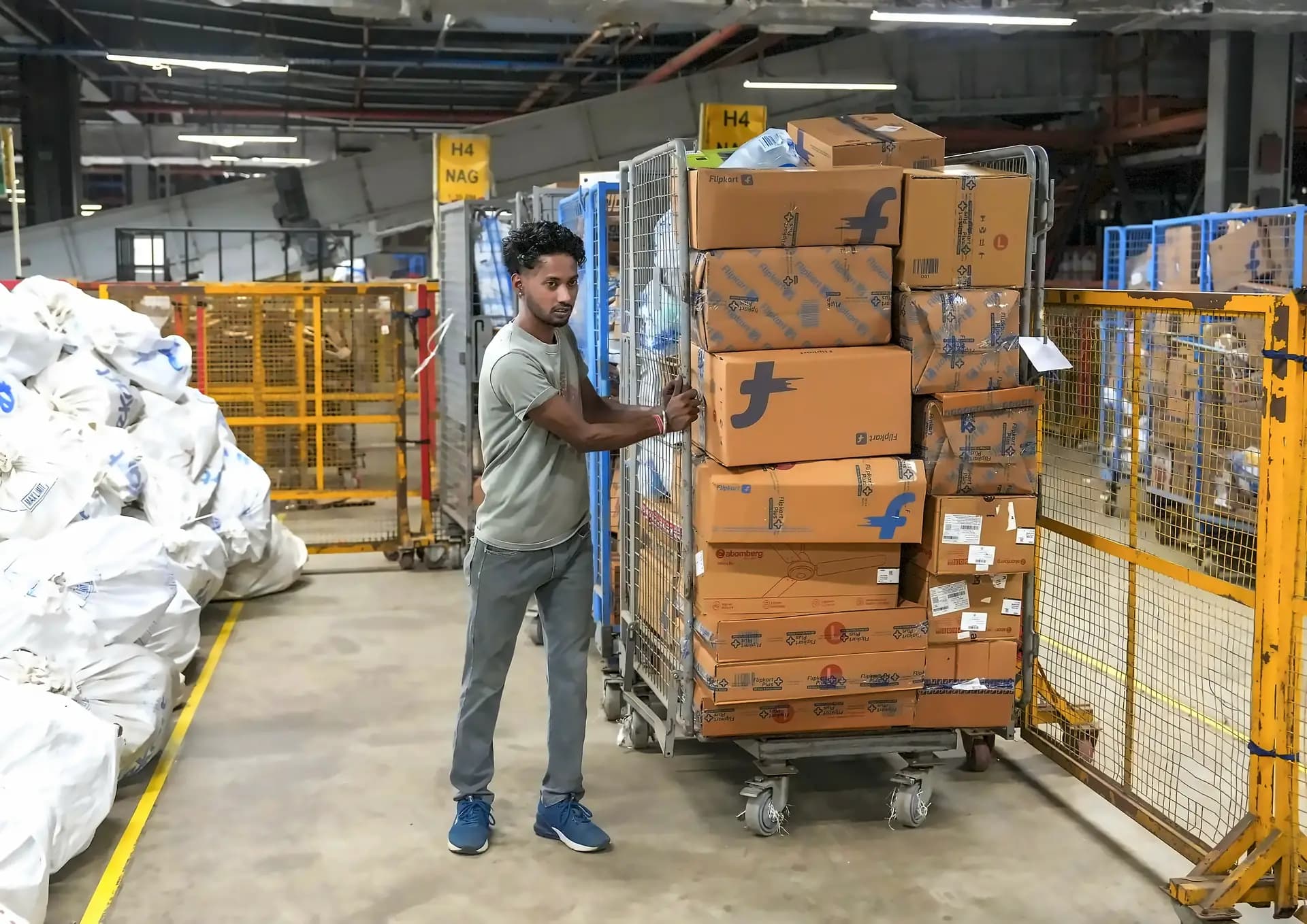
The change in guard comes as the Tata Group looks to sharpen BigBasket's positioning in the hyper-competitive quick commerce market against established players including Blinkit, Swiggy Instamart, Zepto, and Flipkart Minutes. According to Mint, Menon acknowledged the company's slow speed may have been a rare concern, stating "Maybe in a very, very rare case, speed could have been an issue. But that's not really something that's bothered us." The company faces intense competition with Blinkit controlling roughly 46% of the country's quick-commerce market by gross merchandise value, followed by Swiggy Instamart at 27% and Zepto at 21%, while BigBasket's BB Now accounts for just about 7%, according to industry estimates. Despite its early lead in the online grocery segment, BigBasket's delayed push into rapid delivery allowed rivals to gain significant market share. The sector is also entering a new phase of consolidation and capital-market scrutiny, with Zepto last valued at about $7 billion and planning to seek a valuation of around $7-8 billion in its IPO, while Flipkart Minutes plans to operate about 1,200 dark stores across 250 cities.
The Tata Group acquired a majority stake in BigBasket in 2021, buying out the entire holding of its then-largest shareholder, Alibaba, in a deal that valued the company at between $1.5 billion and $2 billion. In fiscal 2025, BigBasket's annual turnover declined as competition from quick commerce rivals intensified. According to Tata Sons' FY25 annual report, Innovative Retail Concepts, the company's B2C unit, reported a 3% decline in turnover to ₹7,673 crore, while Supermarket Grocery Supplies, its B2B unit, saw turnover fall 7% to ₹2,227 crore. Losses at Innovative Retail Concepts widened to ₹1,851 crore in FY25 from ₹1,267 crore a year earlier. In 2024-25, BigBasket reported revenue of ₹9,866.7 crore, down 1.9% from a year ago, while its net loss widened 41.8% to ₹2,006.8 crore. Unlike rivals that have prioritized aggressive expansion, BigBasket has focused on profitability, with co-founder Vipul Parekh stating the company was willing to sacrifice market share to improve profitability, arguing that long-term sustainability mattered more than ranking among the sector's largest players.