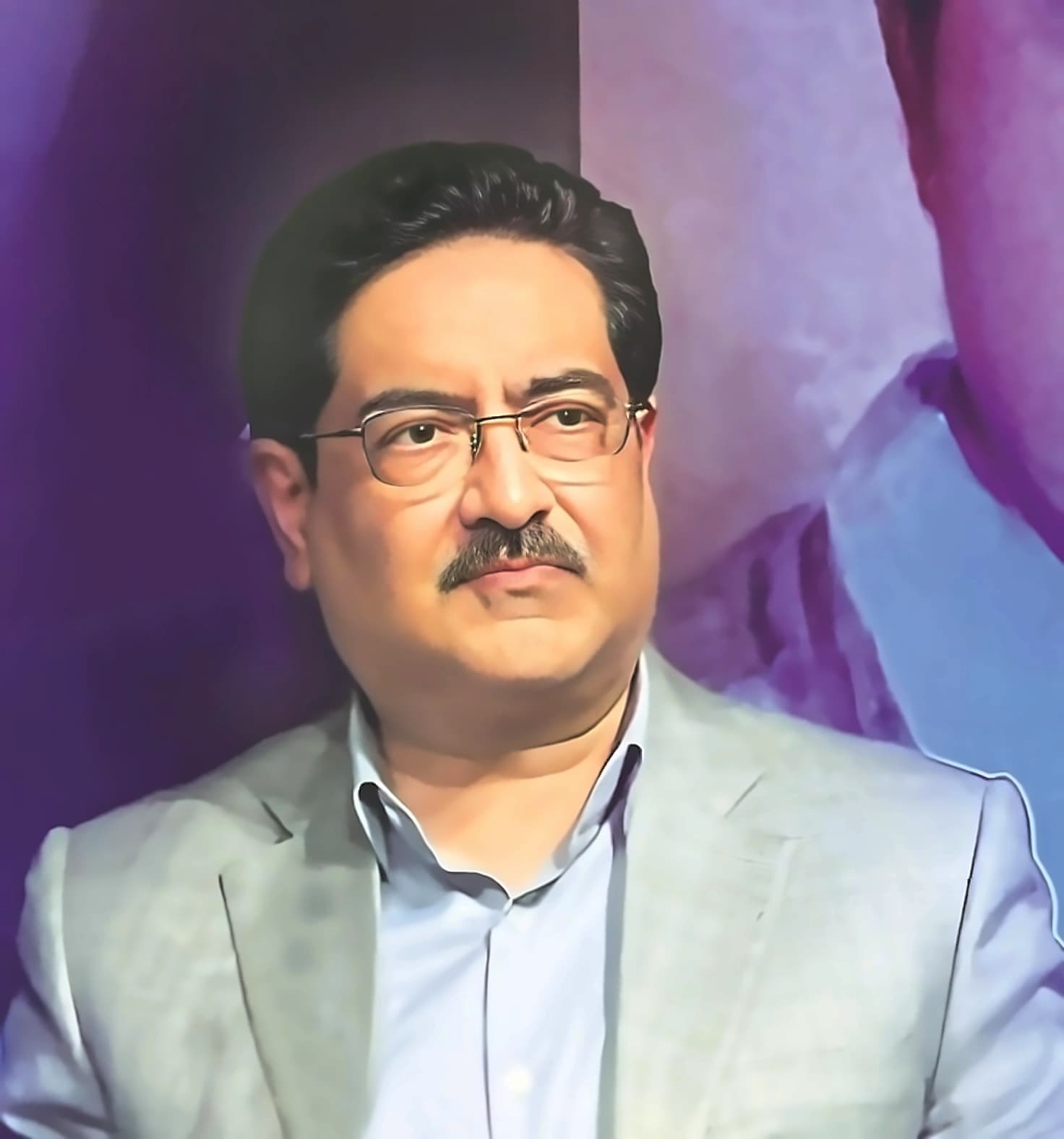
Kumar Mangalam Birla doesn't do cautious. The chairman of the Aditya Birla Group recently announced plans to invest up to $30 billion over the next two to three years. This isn't a rainy-day fund. It's an aggressive expansion push across India and overseas, spanning metals, cement, financial services, retail, and now renewables. The group generated $72 billion in revenue in FY26, with 42% of sales coming from outside India. Operating in 41 countries means every headline about US tariffs or the Middle East war hits the balance sheet somewhere.
The US Tariff Puzzle and the Alabama Bet
A significant chunk of this capital—about $5 billion—is headed to Novelis' aluminum recycling and rolling plant in Bay Minette, Alabama. This raises an obvious question: why double down on the US when trade policies are unpredictable? The answer lies in the numbers. The North American market is capacity constrained, and Novelis is the world's largest aluminum recycler. The 600 kilotonne facility, the first of its kind in the US in over 40 years, will serve beverage packaging and automotive markets with long-term customer agreements already secured.
But tariffs are biting. Novelis' tariff impact jumped to about $70 million in Q1 FY27, up from $24 million the previous quarter. Management expects some impact to continue for a couple of quarters until supply chains are reconfigured. The plant itself is largely a sunk cost—$3.8 billion of the $5 billion has already been spent. Once operational in Q1 FY28, domestic production should reduce reliance on imports, potentially easing tariff exposure. However, the short-term pain is real. Hindalco's consolidated net debt-to-EBITDA has risen to 1.95x, with Novelis sitting at 4.47x.
The group expects leverage to decline once the plant ramps up and free cash flow turns positive by Q4 FY27. Transcript +2
UltraTech: Self-Funded Expansion and Margin Pressure
While Hindalco grapples with overseas leverage, UltraTech Cement is taking a different path. The cement giant plans to invest about ₹17,000 crore over the next 2-2.5 years, targeting capacity of 242.5 MTPA by FY28.
Operating cash flow was ₹15,316 crore in FY26 and could exceed ₹20,000 crore next year. Net debt-to-EBITDA stands at a comfortable 0.87x, expected to stay below 1x. Transcript +2
Margins face near-term headwinds. Q1 FY27 standalone EBITDA margin dipped to about 19.6% from 21.7% a year ago. Management guided Q2 cost pressure at ₹130-140 per tonne, citing fuel, monsoon-related deleverage, and disruptions from the West Asia conflict. However, the long-term trajectory remains upward. FY26 operating EBITDA per tonne rose to ₹1,103, and management expects further gains as acquired assets mature. The company is also entering the wires and cables business with a ₹1,800 crore investment, leveraging its distribution network of 34,000+ dealers. Investor Presentation +2
Grasim's New Frontiers: Paints, Renewables, and Leverage
Grasim Industries is the group's diversification engine. Birla Opus (paints) and Birla Pivot (B2B e-commerce) are growing fast but still burning cash. Opus revenue hit ₹1,661 crore in Q1 FY27, up 64% year-on-year, but losses are narrowing only gradually. Management targets profitability at ₹10,000 crore revenue. Pivot, with an annualized run rate above ₹10,000 crore, aims for EBITDA break-even by FY27-end. Grasim's standalone capex for FY27 is ₹3,157 crore, with ₹411 crore earmarked for Opus. Investor Presentation +2
The bigger move is in renewables. Grasim's subsidiary, Aditya Birla Renewables, is acquiring Shell's Indian renewable platform (Sprng Energy) for an enterprise value of ₹17,200 crore ($1.8 billion). The portfolio includes 5.0 GWp of capacity.
This oversubscription signals strong lender confidence. Grasim's own equity contribution in FY27 will be under ₹1,000 crore, with Global Infrastructure Partners (GIP) injecting up to ₹3,000 crore. Grasim's consolidated net debt-to-EBITDA is 1.45x, and management reaffirmed it will stay below 2x. Other +1
The Financial Services Layer and AI Caution
Aditya Birla Capital adds a different risk dimension. The NBFC's assets under management grew 28% to ₹1.67 lakh crore, with Stage 3 assets at 1.30%. Capital adequacy is robust at 24.52%, and debt-to-equity fell to 4.40x after a recent equity raise. However, this business doesn't directly fund the industrial capex. It operates as a separate ring-fenced entity, rated AAA for long-term borrowing. Its cost of funds is 6.52%, with a net interest margin of 6.07%. Investor Presentation +2
On the technology front, Birla is surprisingly cautious about AI.
For a multi-business conglomerate, he argues, there is no "one cap fits all." AI applications vary by business—customer interactions in some, manufacturing efficiency in others, net interest margins in financial services. Aditya Birla Capital is already seeing gains, with Gen AI boosting underwriting productivity by 35-40%. But in capital-intensive sectors like cement and metals, the group relies more on conventional cost programs. Hindalco, for instance, is running a $300 million structural cost reduction initiative. This measured approach avoids wasteful spending but risks slower adoption compared to competitors. Transcript +1
Balancing Act: Growth vs. Flexibility
The $30 billion plan is a high-wire act. On one side, the group is building massive assets—Bay Minette, cement capacity, renewable platforms—that promise long-term returns. On the other, leverage is rising in some pockets, and global volatility is a constant threat. The group's strategy relies on distinct guardrails: Hindalco around 2x net debt-to-EBITDA, Grasim below 2x, UltraTech under 1x. Sequencing is key. Novelis capex should drop sharply in FY28, while India capex rises. The Shell deal is structured with long-tenor debt and outside equity partners to limit cash outflow. Transcript +2
The group's 42% international revenue exposure creates a natural hedge but also amplifies geopolitical risks. The Middle East war and US tariffs are not abstract threats—they directly impact Novelis' costs and supply chains. Yet, Birla's logic is clear: standing still is not an option. The $30 billion is a bet that scale, cost efficiency, and strategic diversification will outlast the current cycle. If the bets pay off, the Aditya Birla Group will emerge larger and more resilient. If not, the leverage built up during this expansion phase could become a heavy burden. For now, the chairman is pushing forward, undeterred by the storms.